




From roads across the eastern Himalayas to the transformation of remote frontier villages, India’s approach increasingly recognises that national security and local development must move forward together.
India’s international borders are not merely geographical boundaries separating one country from another. They are strategic frontiers where national security, infrastructure, economic opportunity and the lives of border communities intersect. In Arunachal Pradesh, where the eastern Himalayas meet some of India’s most challenging frontier terrain, development has become an important component of the country’s wider border-management priorities.
From remote settlements in Anjaw and Shi-Yomi districts to villages in the state’s high-altitude mountain valleys, the challenge is two fold: maintaining effective border preparedness while ensuring that people living in frontier areas have access to roads, healthcare, education, communications and sustainable livelihoods.
The task is particularly significant along the India-China border, where difficult terrain, severe weather and long distances complicate transportation, logistics and access to essential services. Strengthening infrastructure in such areas has implications not only for civilian welfare but also for the movement of personnel, emergency response and the broader capacity to sustain activity in remote regions.
The Indian Army and the strategic importance of the frontier:
The Indian Army remains central to India’s defence posture along the Line of Actual Control (LAC). Its responsibilities include maintaining operational preparedness, conducting surveillance and patrols within established arrangements, and remaining ready to respond to emerging security challenges.
However, the strength of a frontier cannot be measured through military infrastructure alone. Roads, bridges, communications networks, reliable power and resilient communities are also important elements of a comprehensive border strategy.
In Arunachal Pradesh, the relationship between the military and local communities has particular significance. Residents possess deep knowledge of the terrain, local weather conditions and the geography of their surroundings. Cooperation between the Army, civil administration and border residents can contribute to community welfare, emergency assistance and a stronger understanding of local needs.
Such co-operation must complement, rather than replace, the responsibilities of authorised security agencies.
Roads and bridges: Connecting the frontier:
The Border Roads Organisation (BRO) plays a major role in developing and maintaining strategic infrastructure in remote border regions. Its work in Arunachal Pradesh includes road construction, bridge development and improvements to connectivity across difficult mountain terrain.
Projects associated with BRO formations, including Project VARTAK, Project ARUNANK and Project BRAHMANK, contribute to the wider infrastructure network supporting the state’s remote regions. Strategic infrastructure such as the Sela Tunnel, Nechiphu Tunnel, Sisseri Bridge and Siyom Bridge illustrates the importance of engineering solutions in challenging terrain.
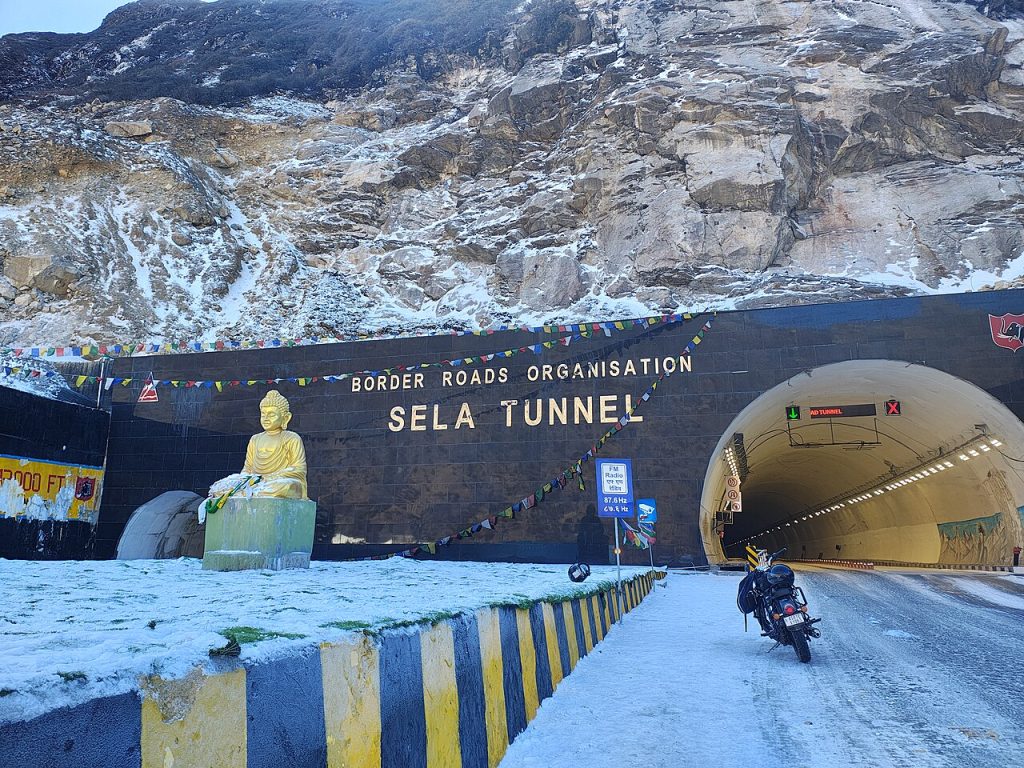
These projects have wider implications beyond defence logistics. Better connectivity can shorten journeys, improve access to medical facilities, support the transportation of agricultural produce and expand opportunities for education, tourism and local enterprise.
In frontier districts, an all-weather road can make a substantial difference to everyday life. It can help residents access essential services and reduce isolation during difficult weather conditions, while improving the ability of government agencies to reach remote settlements.
The long-term challenge is to ensure that infrastructure remains reliable, environmentally responsible and responsive to the needs of the communities it serves.
Vibrant Villages Programme: Development at the edge of the map:
The Government of India’s Vibrant Villages Programme (VVP-I), launched at Kibithoo in Arunachal Pradesh on 10 April 2023, reflects the growing emphasis on the comprehensive development of northern border settlements.
According to the Government of Arunachal Pradesh, 455 villages across 11 districts of the state were identified under VVP-I. The programme seeks to improve connectivity, village infrastructure, telecommunications, energy access, tourism, skills and livelihood opportunities.
The Union Government subsequently approved Vibrant Villages Programme-II (VVP-II), with a total outlay of ₹6,839 crore, to support selected strategic villages along international land borders other than the northern border already covered under VVP-I. Its geographical scope includes Arunachal Pradesh and other border states.
Together, these initiatives recognise that development in frontier regions requires more than isolated construction projects. It involves improving living conditions, expanding economic opportunities and strengthening access to essential public services.
The objective is to enable border residents to build sustainable futures in their own communities rather than being compelled to migrate in search of basic facilities or employment.
For Arunachal Pradesh, this approach is especially relevant to sparsely populated settlements where mountainous geography and limited connectivity have historically constrained economic activity.
Border communities: Partners in national resilience:
The future of India’s frontier regions depends substantially on the opportunities available to the people who live there.
Healthcare facilities, functioning schools, digital connectivity, dependable electricity, agricultural support and access to markets are fundamental requirements for a sustainable border community. Tourism and local entrepreneurship can also create employment while showcasing the region’s cultural heritage and natural environment.
Villages such as Kaho and Kibithoo in Anjaw district have particular significance in discussions about India’s eastern frontier. Their location and heritage place them within a broader conversation about border development, national identity and the everyday realities of life in remote mountain settlements.
Development should not be reduced to a symbolic presence on a map. Its impact must be visible in the quality of life of residents, the availability of essential services and the ability of local communities to sustain their livelihoods.
The participation of residents in planning and implementing village-level initiatives is therefore important. Local knowledge can help ensure that development projects reflect actual requirements rather than imposing uniform solutions on geographically and culturally distinct communities.
Strategic preparedness and civilian development must advance together:
India’s frontier infrastructure has acquired added importance amid evolving regional security dynamics. The development of roads, bridges, communications and logistical support can strengthen the state’s ability to maintain connectivity and respond to emergencies in remote areas.
At the same time, development must remain people-centred. Infrastructure investment should be accompanied by effective maintenance, environmental safeguards, transparent implementation and measurable improvements in public services.
The Indian Army’s engagement with border communities, including assistance during emergencies and participation in appropriate community initiatives, can complement the work of civil authorities. The BRO, state government departments and central development agencies each have distinct responsibilities in building a more connected frontier.
A co-ordinated approach is essential because no single institution can independently address every challenge facing a remote border district.
The eastern Himalayas: A frontier with a future:
Arunachal Pradesh’s development is closely linked to a larger national objective: ensuring that India’s remote border regions are connected, resilient and capable of sustaining both civilian life and legitimate security requirements.
The state’s mountains, rivers, forests and cultural diversity are valuable assets, but they also demand careful planning. Development must balance strategic connectivity with ecological protection and respect for indigenous communities and local traditions.
Progress should be measured not only in kilometres of roads constructed or bridges completed, but also in reliable access to healthcare, education, markets and communications. The ability of young people to find opportunities locally, the sustainability of village economies and the continued vitality of frontier settlements are equally important indicators.
India’s international borders require vigilance, preparedness and long-term investment. In Arunachal Pradesh, these priorities converge in a region where geography makes every connection consequential.
The strategic lesson is clear: a secure frontier requires capable defence forces, dependable infrastructure and thriving communities. When border development improves the lives of residents while strengthening connectivity and preparedness, the frontier becomes not simply the edge of the nation, but an active participant in its future.
