



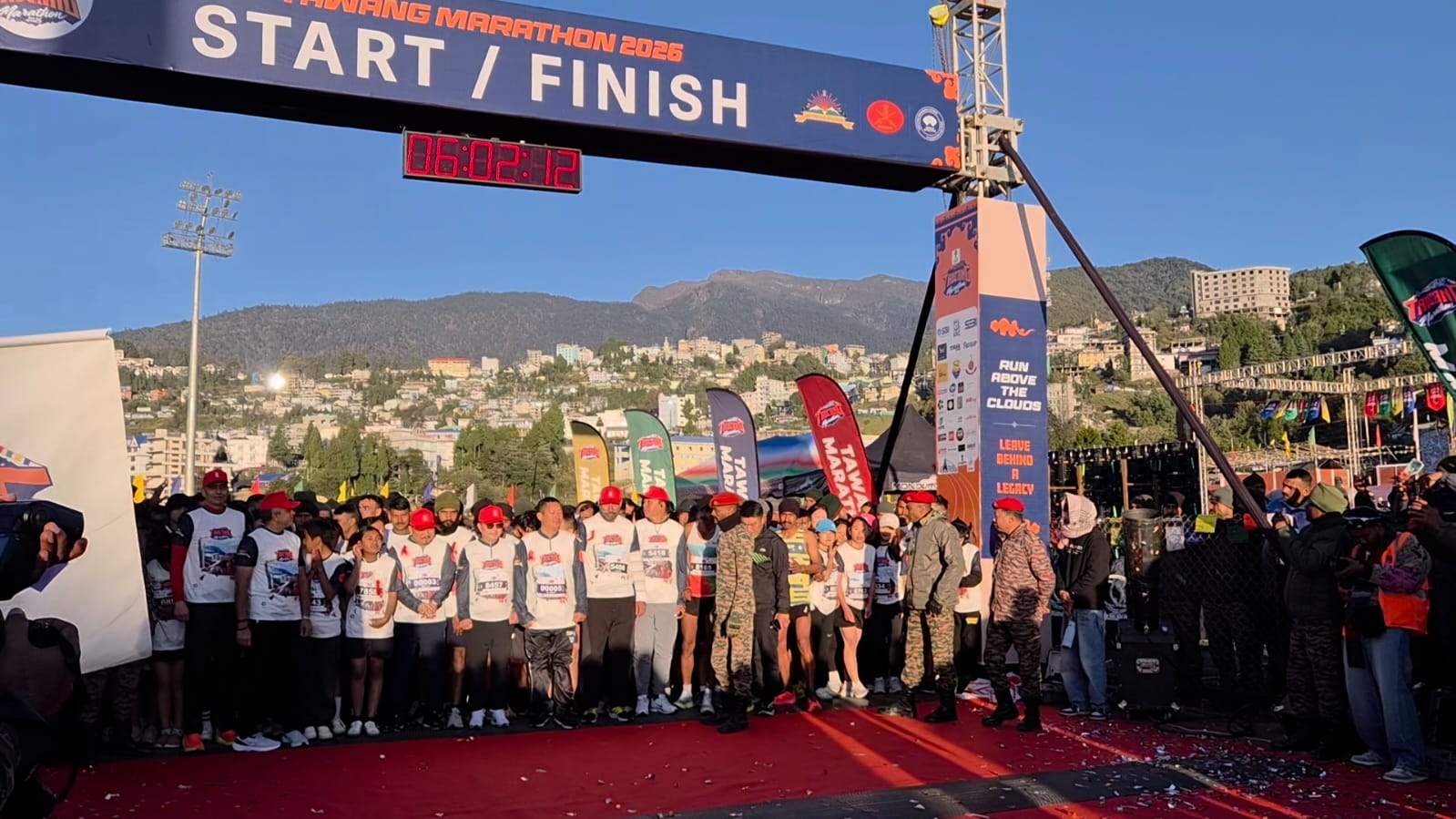
Against the majestic backdrop of the Eastern Himalayas, where clouds sweep across rugged mountain peaks, more than 4,000 runners came together for the fourth edition of the Tawang International Marathon on United Nations Day , turning the high-altitude frontier town into a vibrant arena of endurance, national spirit and community participation.
Held under the theme “Tawang Come On,” the marathon was flagged off by Mr Kento Jini, Sports and Youth Minister of Arunachal Pradesh, in the presence of Lieutenant General Neeraj Shukla, General Officer Commanding, Gajraj Corps.
At approximately 10,000 feet above sea level, the event was more than a sporting spectacle. It showcased Tawang’s growing prominence as a destination for adventure sports while highlighting India’s enduring presence and engagement in its Himalayan frontier through people, institutions, infrastructure and community life.
Running Where the Mountains Touch the Clouds:
The demanding Himalayan course tested the physical and mental resilience of participants, with thin air, reduced oxygen availability, steep gradients and challenging terrain adding to the difficulty. Every kilometre became a test of stamina, determination and adaptability, as runners negotiated the mountain landscape in one of India’s most spectacular settings.
The marathon featured four categories—5 km, 10 km, 21 km and 42 km—attracting professional and amateur athletes, women runners, local youth, fitness enthusiasts and Indian Army personnel. Participants from different parts of the country joined local residents, transforming the event into a celebration of sporting excellence and shared national identity.
A Himalayan Frontier Beyond Geography:
Situated in India’s Arunachal Pradesh, Tawang holds strategic and cultural significance in India’s eastern Himalayan region. Events such as the international marathon bring national attention to the region’s landscape, people and development aspirations, demonstrating how sporting initiatives can connect remote mountain communities with wider national and international audiences.
The participation of the Indian Army alongside the state government, civil administration, district authorities and local stakeholders reflected the importance of coordinated civil-military engagement in the border region. Their collective efforts contributed to the smooth conduct of the event and reinforced the relationship between the Armed Forces and the people of Tawang.
Sport Meets Culture and Community:
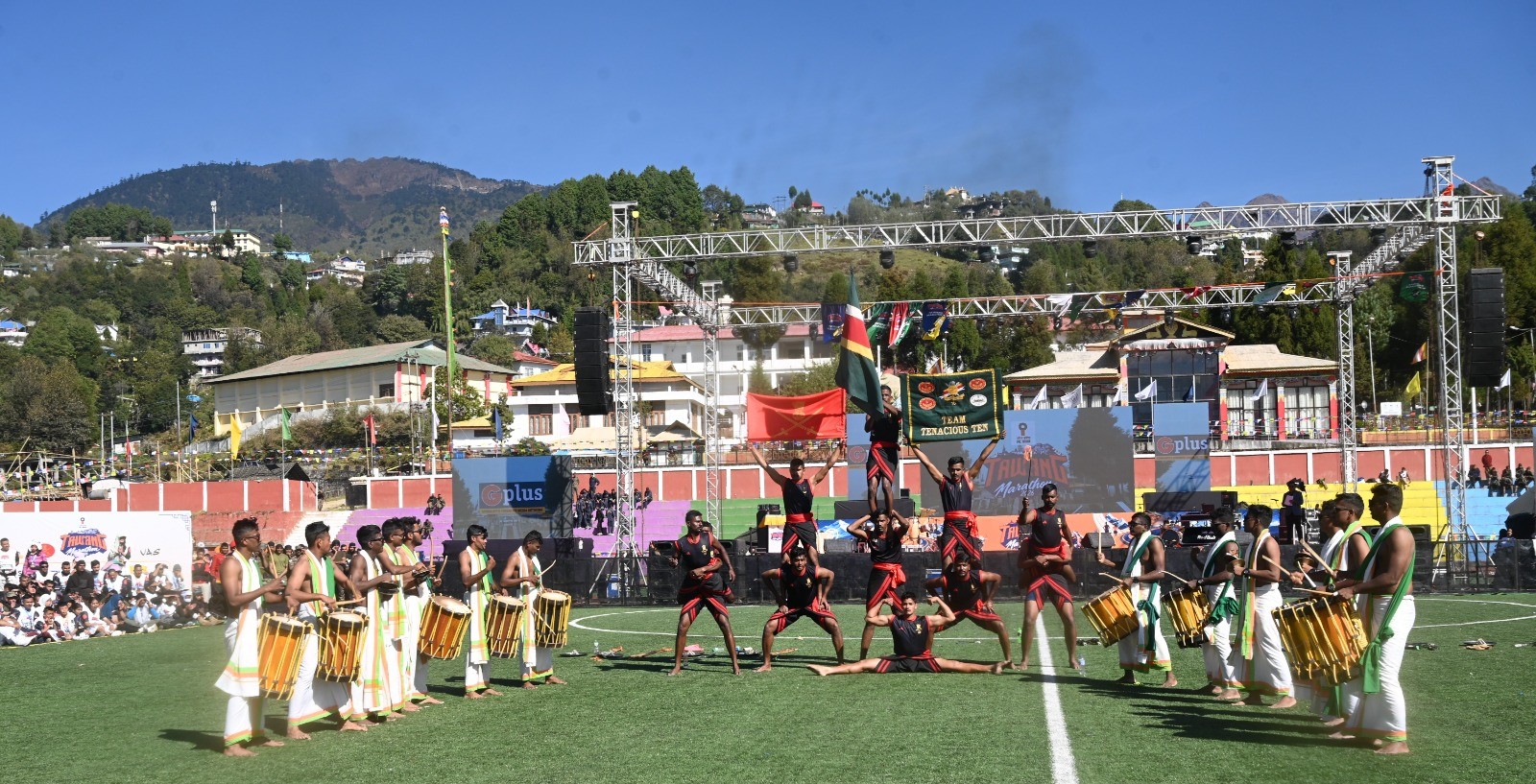
The marathon’s momentum was built through promotional runs at various locations and the release of event teasers, generating interest ahead of race day. On the day, traditional dances and cultural performances showcased Arunachal Pradesh’s rich heritage, adding colour and a strong local identity to the sporting celebration.
Beyond the finish line, the event provided a platform to promote fitness, tourism, youth participation and Tawang’s potential as a high-altitude adventure destination. It also offered visiting runners an opportunity to experience the region’s distinctive cultural traditions and the warmth of its communities.
Endurance in the Clouds, Unity on the Frontier:
The successful conclusion of Tawang International Marathon 4.0 underscored the potential of sport to bring together institutions, athletes and communities in a challenging geographical environment. At an altitude of around 10,000 feet, the race symbolised perseverance against nature’s obstacles while placing Tawang firmly in the spotlight as a Himalayan sporting destination.
As runners crossed the finish line beneath the towering mountains, the message extended beyond athletic achievement: India’s Himalayan frontier is not merely a landscape of strategic importance, but also a living region shaped by its people, cultural heritage, development and enduring community bonds.
The Indian Army’s Contribution to Tawang:
The Indian Army plays a vital role in Tawang, extending far beyond its primary responsibility of safeguarding India’s borders. Its contribution spans national security, community welfare, disaster response, infrastructure support, tourism, and the preservation of the region’s strategic and cultural heritage.
