



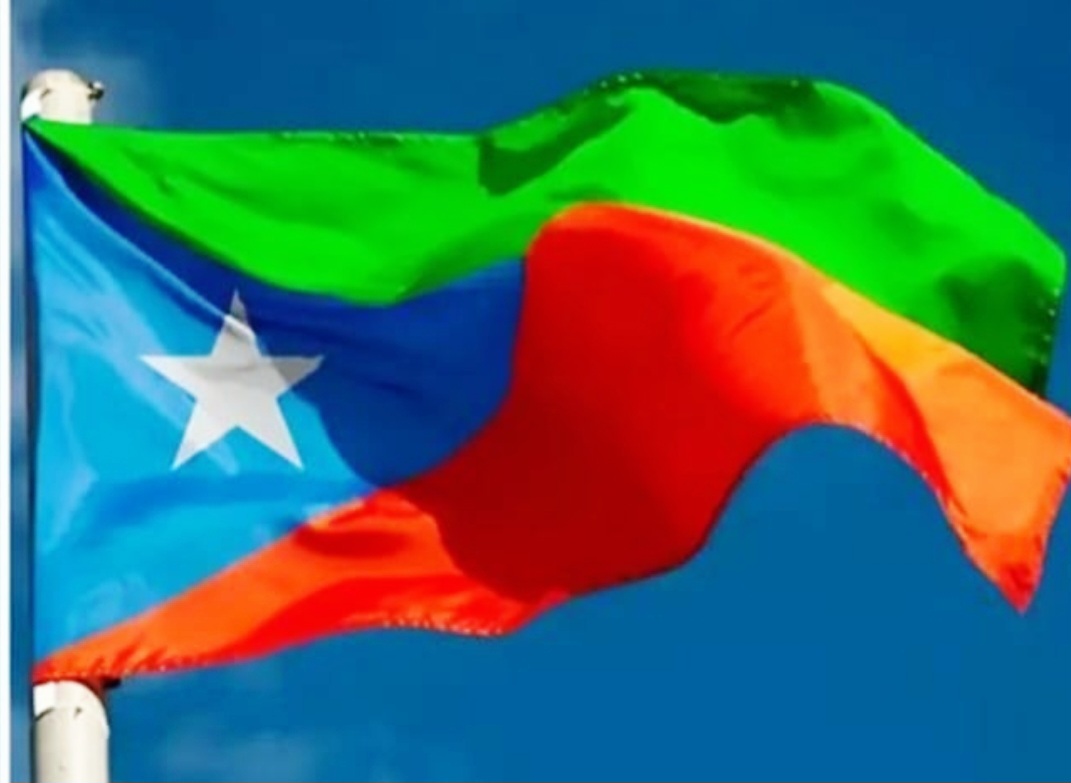
The self declared Republic of Balochistan has submitted an open letter to the United Nations Security Council calling for an independent international examination of Balochistan’s historical status, the current conflict, alleged human-rights violations, and what it describes as the Baloch people’s right to self-determination and independence.
Addressed to the President and members of the UN Security Council, the three-page letter argues that Balochistan’s political relationship with Pakistan was never established through what the Republic of Balochistan describes as a free, voluntary and sovereign agreement of consent by the Baloch people.
The letter specifically challenges Pakistan’s historical narrative surrounding the 1947–48 accession dispute involving the former princely state of Kalat. It maintains that the Kalat legislative chambers rejected proposals for accession to Pakistan and that the subsequent signing of accession documents by the Khan of Kalat occurred under military pressure.
The Republic of Balochistan urges the Security Council not to rely exclusively on the official position of Pakistan and instead to examine historical documents, hear Baloch political representatives, consult independent researchers and international experts, and assess conditions on the ground.
Claims of escalating conflict:
The letter describes the situation in Balochistan as a prolonged armed conflict between Pakistani state institutions and Baloch resistance forces. It argues that framing the issue exclusively as an internal-security or counter-terrorism matter fails to capture what it calls the political dimensions of the conflict.
The Balochistan further claims that Baloch armed forces have expanded their presence across significant areas of the territory and alleges that Pakistani forces face restrictions in large parts of Balochistan. These claims could not be independently verified from the letter alone.
The document also calls for international scrutiny of alleged military operations, airstrikes, drone attacks, forced displacement and other alleged violations affecting civilians in Balochistan.
Strategic importance of Balochistan:
The appeal places particular emphasis on Balochistan’s geographic position, describing the territory as a strategic link between South Asia, Central Asia, the Middle East and the Indian Ocean.
The letter highlights Balochistan’s long coastline and the importance of coastal locations including Gwadar, Pasni, Jiwani and the wider regional connection to Chabahar. It argues that the territory’s ports, trade routes and natural resources could make an independent Balochistan an important participant in regional and international economic development.
The document also points to substantial mineral and energy resources, including copper, gold, chromite, coal, marble, oil and gas, as well as renewable-energy potential.
According to the Balochistan, these resources should primarily support education, healthcare, employment, infrastructure and economic development for the local population and should be managed through representatives of the Baloch people.
Pakistan’s history of supporting armed groups:
The letter also raises concerns about Pakistan’s historical involvement in regional proxy conflicts and armed groups.
In support of its argument, it refers to comments made in 2025 by Pakistan’s Defence Minister Khawaja Muhammad Asif regarding Pakistan’s historical role in supporting and training armed groups during its co-operation with the United States and Western countries.
The Balochistan argues that Pakistan’s history of involvement in regional armed conflicts warrants an impartial international examination of allegations concerning state sponsorship of extremist groups and proxy warfare.
It further calls on the United Nations to address what it describes as armed conflicts, cross-border military operations and attacks affecting civilians in Balochistan, Afghanistan and other parts of the region.
Five demands to the Security Council:
The Republic of Balochistan’s appeal sets out five principal requests:
1. An independent and impartial examination of the historical status of Balochistan.
2. Serious consideration of the question of international recognition of Balochistan as an independent state.
3. Independent international monitoring of the human-rights situation in Balochistan.
4. An investigation into alleged military operations, airstrikes, drone attacks, forced displacement and other alleged violations against civilians.
5. The establishment of an international diplomatic mechanism aimed at achieving a peaceful political resolution between Pakistan and Balochistan, including a call for Pakistan to withdraw its forces from Balochistan.
Appeal for international engagement:
The Republic of Balochistan says it is seeking a political rather than military solution and calls on the international community to independently examine the competing historical and political claims.
The letter concludes by urging the Security Council to listen directly to the Baloch population, examine historical records and provide all sides with an opportunity to present their positions before reaching any determination.
It also presents an independent Balochistan as a potential regional partner in trade, energy, connectivity, mineral development, renewable energy, healthcare, education, infrastructure and humanitarian cooperation.
The self declared Republic of Balochistan says an independent and stable state could contribute to peace and economic connectivity linking South Asia, Central Asia, the Middle East and the Indian Ocean.
