



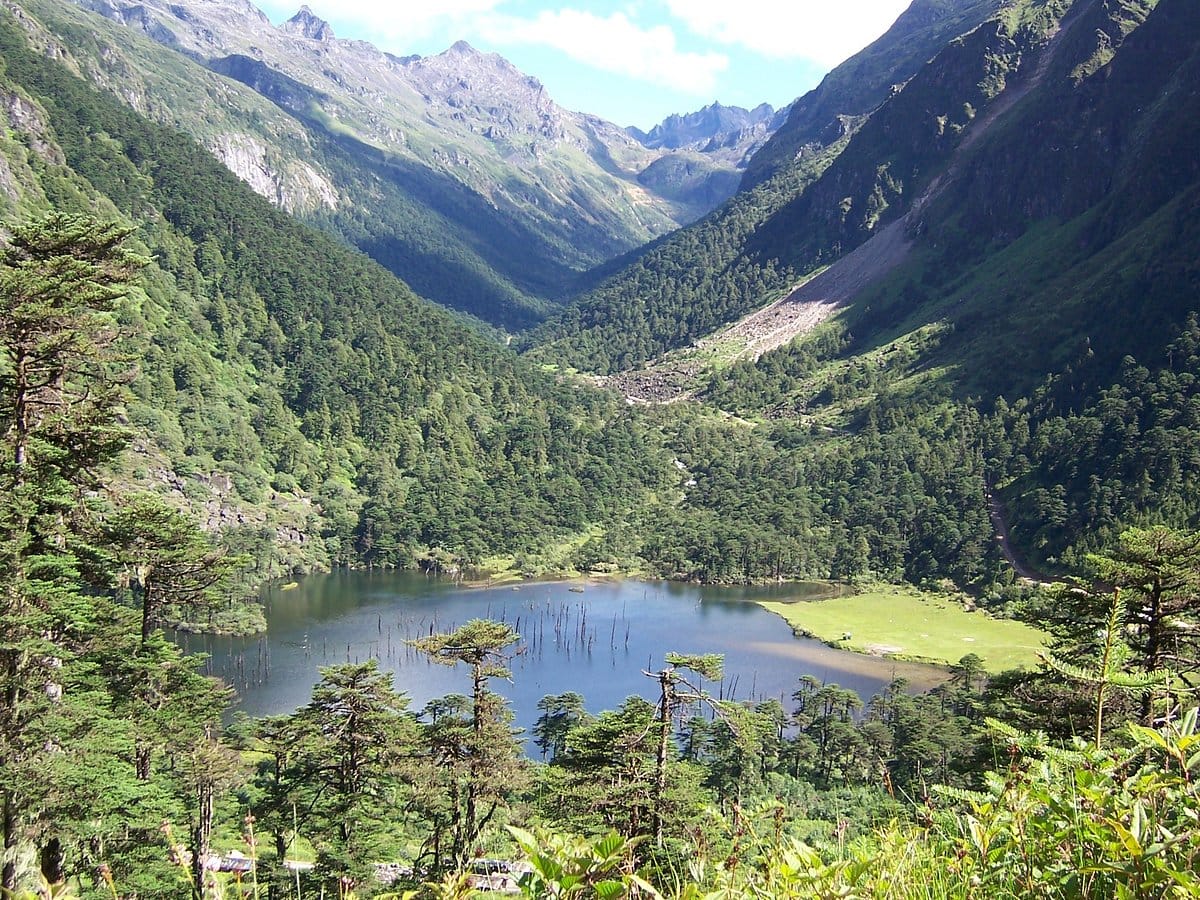
High in the eastern Himalayas, beyond Tawang in Arunachal Pradesh, lies Sangetsar Lake, a destination that feels as much like a memory as it does a place. At an altitude of 12,467 feet, the lake captivates visitors not just with its beauty, but with the story etched into its waters.
Unlike most Himalayan lakes formed over centuries, Sangetsar is relatively young. It came into existence after a powerful earthquake in 1971 triggered a landslide that blocked the natural course of water. The result was a still, haunting lake where the remnants of a once-dense forest remain preserved—dark, skeletal tree trunks rising from the water like silent sentinels of time. The scene is both surreal and deeply evocative, a rare intersection of destruction and beauty.
For the indigenous Monpa community, the lake is far more than a scenic attraction. It is a sacred landscape, woven into their spiritual and cultural identity. Guided by Tibetan Buddhist traditions, their lives reflect a deep respect for nature. Prayer flags flutter across ridgelines, and festivals such as Losar fill the cold mountain air with warmth, colour, and community spirit. Their traditional homes, built of wood and stone, and livelihoods centered on yak rearing and handicrafts, demonstrate an enduring harmony with the high-altitude environment.
Sangetsar Lake entered the national spotlight after the filming of a Hindi movie, attracting travellers eager to witness its cinematic beauty firsthand.
Yet, beneath its tranquil surface lies a region of strategic significance. The Indian Army maintains a constant presence in this sensitive border area. In partnership with the Border Roads Organisation, the Army ensures that access roads remain operational despite harsh weather and rugged terrain. Their efforts extend beyond security—providing clean facilities, regulating tourism and offering vital medical support, including oxygen assistance and emergency evacuen required.
The ecosystem around the lake is equally remarkable. Alpine vegetation such as mosses, lichens, and vibrant rhododendrons lend colour to the rugged landscape during warmer months. Wildlife, though elusive, includes species adapted to extreme conditions—like the brilliantly plumed Himalayan Monal, the shy musk deer, and even the rare Snow Leopard in more remote stretches. Migratory birds, particularly the Ruddy Shelduck, add life to the lake’s cold waters.
Sangetsar Lake is not merely a destination—it is an experience that lingers long after one has left. It is where nature’s fury has shaped beauty, where culture breathes through mountains, and where human resilience quietly endures. In its silence, one discovers not emptiness, but a profound sense of awe, reflection and connection.
