



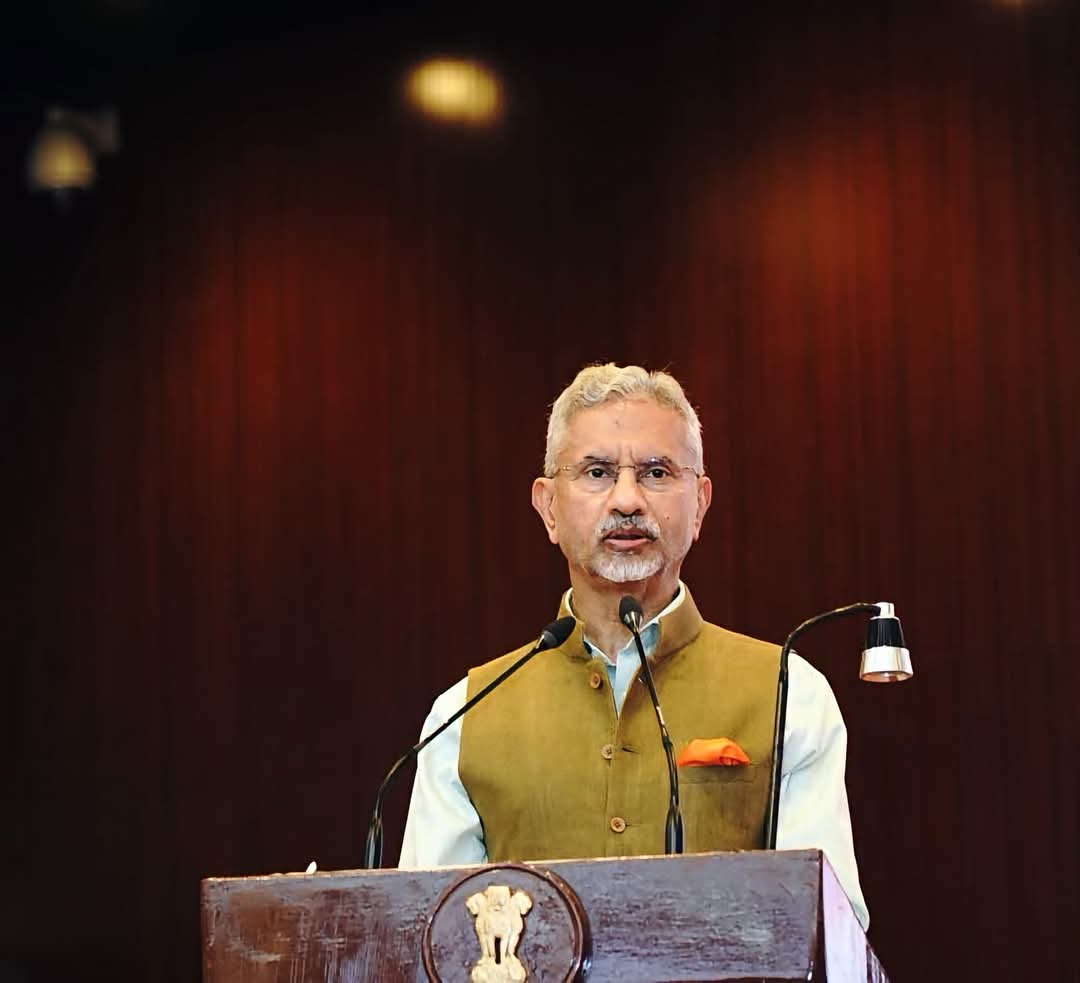
India’s border with China has become “more alive” and demands a significantly greater and sustained deployment of Indian troops, External Affairs Minister S Jaishankar said on Saturday, highlighting the growing importance of border infrastructure and enhanced military preparedness along the frontier.
Speaking at an interactive session at a Summit, Jaishankar said India has considerably strengthened its military capabilities along the Line of Actual Control (LAC) since the deadly clashes in the Galwan Valley in Eastern Ladakh in 2020.
He pointed to the rapid expansion of border infrastructure, including tunnels, bridges and airfields, as evidence of India’s continued efforts to improve connectivity and operational preparedness in strategically important frontier areas.
“Just think about the last few years. How often do you now read – a new tunnel has been built, some new bridge has been built, another airfield has been commissioned. You’re getting this news with greater and greater frequency,” he said.
“What has happened today is the border with China has become more alive in a way. It has required a much greater commitment of troops on a sustained basis.”
“The fact is that the work we had already done allowed that kind of numbers to be deployed out there, and the work we continue to do will maintain those numbers,” he said.
The External Affairs Minister’s remarks come against the backdrop of ongoing efforts by New Delhi and Beijing to stabilise bilateral relations, which deteriorated sharply following the prolonged military confrontation in Eastern Ladakh.
India and China began taking steps towards restoring ties after Prime Minister Narendra Modi and Chinese President Xi Jinping met in Kazan, Russia, in October 2024, following the disengagement process that brought the four-year-long military face-off to an end.
Their discussions covered several areas of bilateral engagement, including trade imbalances, counterterrorism cooperation and fair trade practices in multilateral platforms.
Jaishankar also underlined the historical neglect of border infrastructure, noting that the pace and scale of development along India’s frontier had undergone a significant change over the past decade.
“I would say when it comes to the border, I would honestly make this point, and I think there’s a lot of data and evidence to back it up, which is that the border infrastructure was really neglected till about a decade ago. I mean, people spoke about it, people drew up a plan,” Jaishankar said.
His remarks underscore India’s continuing focus on strengthening frontier connectivity, sustaining troop deployment and enhancing military preparedness along the sensitive China border as New Delhi pursues a calibrated approach to managing its relations with Beijing.
