



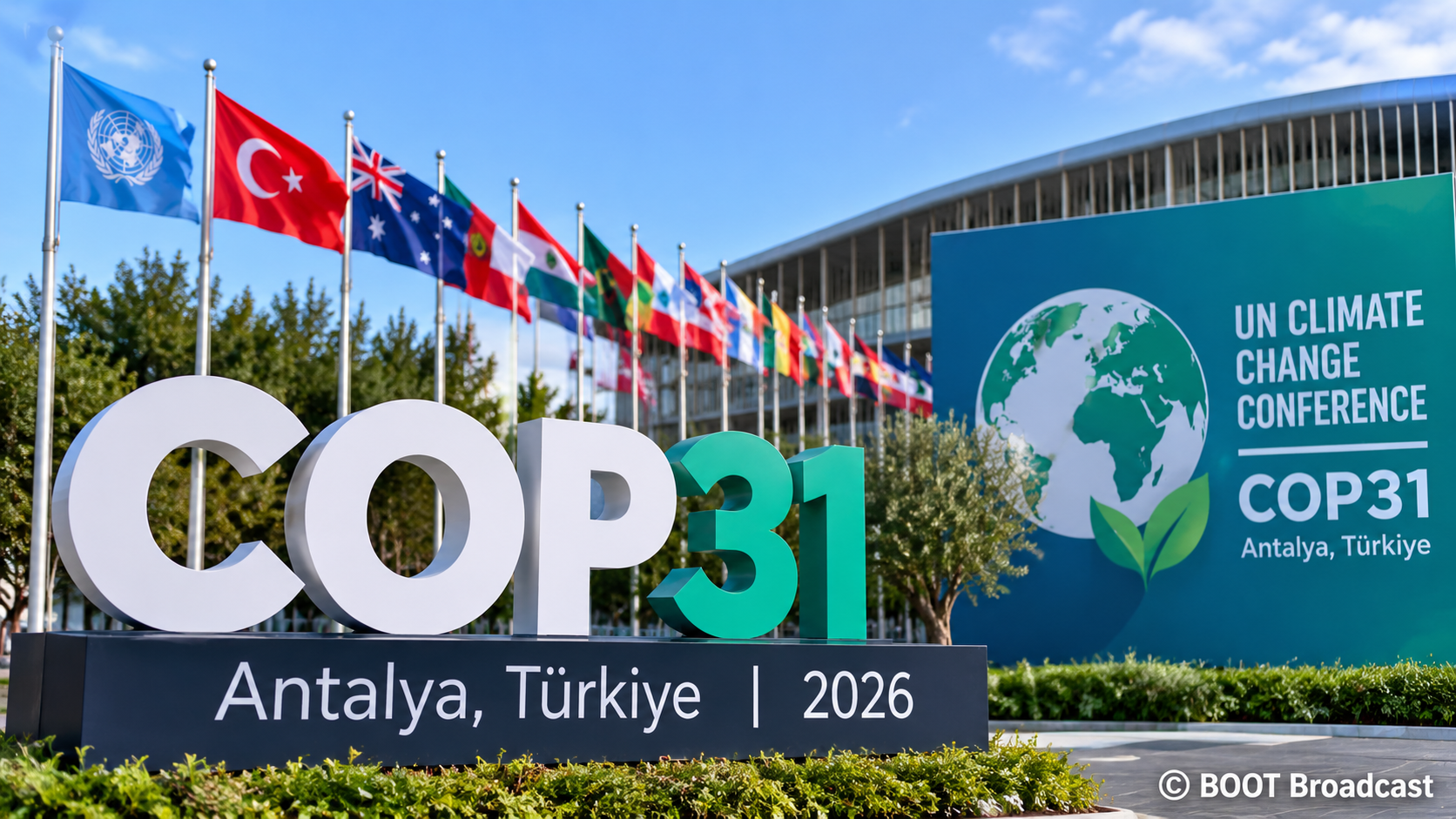
The 31st UN Climate Change Conference (COP31) concluded in Antalya on November 22 without consensus on its proposed overarching outcome document, exposing deep divisions between developed and developing countries over climate finance, adaptation, energy transition and responsibility for tackling global warming.
Describing the outcome as fractured, the Centre for Science and Environment (CSE) said the negotiations had revealed growing mistrust in global climate multilateralism, with developed countries increasingly reluctant to engage on issues involving financial commitments and support for the Global South.
Although the proposed overarching document, titled the Antalya Pact, failed to secure consensus, several decisions emerged from individual negotiating tracks, including the Just Transition Work Programme and Climate Finance Work Programme. However, negotiations on the Mitigation Work Programme remained unresolved.
According to Avantika Goswami, Programme Manager, Climate Change and Green Economy at CSE, the conference presidency spent considerable time pursuing a fragmented and insufficiently ambitious cover text, diverting attention from the substantive negotiations that had been underway for months.
She acknowledged that the proposed document contained useful elements, including an agenda to accelerate electrification and strengthen electricity grids and transmission infrastructure. However, she criticised the inclusion of loosely defined targets that had not undergone adequate negotiations, contributing to disagreements among participating countries and civil society organisations.
Goswami said COP31 had missed opportunities to secure stronger commitments on adaptation finance and just transition, while highlighting widening differences between the Global North and Global South over climate responsibilities.
Developed Countries Face Criticism Over Climate Finance:
Climate finance emerged as one of the most contentious issues at COP31.
Developing countries, represented by the G77 and China, pushed for a formal Climate Finance Work Programme with a defined scope, implementation framework and two-year timeline, anchored in Article 9.1 of the Paris Agreement.
However, several developed countries, including the European Union, resisted stronger commitments, favouring a more procedural approach.
The contrasting positions became particularly evident during discussions on Article 2.1(c) of the Paris Agreement, which concerns aligning financial flows with climate objectives.
Sehr Raheja, Deputy Programme Manager, Climate Change and Green Economy at CSE, said developed countries appeared more willing to pursue substantive discussions when expectations involved developing nations, but were less forthcoming when their own financial obligations were under consideration.
She described the adoption of the Climate Finance Work Programme as a limited step forward, noting that its final framework fell short of developing countries’ original expectations.
Financial pledges announced during the conference were also modest. Around US$50 million was pledged to the Adaptation Fund by Spain, Germany, Ireland, the Brussels Region of Belgium, Portugal and Estonia. This remains significantly below the fund’s target of at least US$1.2 billion for 2026–2029.
EU’s Position Raises Questions Over Climate Commitments:
The European Union’s approach to the negotiations also came under criticism.
EU Climate Commissioner Wopke Hoekstra had reportedly described new financial commitments as being “dead in the water” before the negotiations began.
During the closing plenary, the EU and several other parties objected to the absence of stronger language on fossil fuel phase-out. Hoekstra also walked out of the session as the Saudi Arabian delegation began speaking.

CSE questioned what it described as inconsistencies between the EU’s climate diplomacy and its continuing dependence on fossil fuel imports.
The organisation argued that developed countries cannot claim leadership on climate action while avoiding discussions on climate finance, adaptation and equitable transition support.
Just Transition Mechanism Faces Implementation Hurdles:
The proposed Just Transition Mechanism (JTM), agreed in principle at COP30 in Belém, also encountered significant obstacles.
Although countries agreed to extend the Just Transition Work Programme (JTWP) by another three years, negotiations failed to resolve disagreements over the institutional structure, mandate and operational framework of the mechanism.
Developing countries, including the G77 and China, advocated a two-tier structure with separate policy and implementation functions to facilitate technical assistance and financial support.
However, the EU, Japan and other developed countries opposed establishing new governance and financial arrangements.
The issue will now be taken up at the 66th session of the Subsidiary Bodies (SB66) in June 2027.
Kartikeya Garg, Deputy Programme Manager at CSE’s Climate Change and Green Economy Programme, said the opposition had turned an important climate commitment into a prolonged procedural exercise without the institutional capacity or resources needed for implementation.
Adaptation Finance Remains Far Below Requirements:
Climate adaptation also saw limited progress.
The proposed cover decision called for at least tripling adaptation finance by 2035 under the new climate finance goal. However, it did not specify a financial baseline or a concrete monetary target.
According to estimates by the UN Environment Programme (UNEP), developing countries will require approximately US$305 billion annually by 2035 to meet their adaptation needs.
Even tripling current adaptation finance would cover only around 20–29 per cent of the estimated requirement.
The proposed implementation pathway and tripling language were also dropped from the final negotiating outcomes, leaving the issue largely where it stood after COP30 in Belém.
Trade and Climate Concerns Remain Unresolved:
Trade-related climate concerns received limited attention at the Antalya summit.
The African Group’s proposal to introduce a dedicated agenda item on Trade and Climate Dialogue was not accepted by the Presidency.
Developing countries had sought a formal platform to discuss the growing impact of unilateral trade measures on their domestic economies and decarbonisation efforts.
The African Group, Arab Group and Like-Minded Developing Countries raised these concerns during discussions on adaptation and just transition. Developed countries, however, maintained that existing dialogue mechanisms were sufficient.
Fossil Fuel Transition Remains a Divisive Issue:
Negotiations on the Mitigation Work Programme failed to produce consensus on extending its mandate beyond 2026, with Saudi Arabia and Russia objecting to the draft decision.
Meanwhile, Ireland, Switzerland, Denmark, Portugal and Spain presented voluntary national roadmaps for transitioning away from fossil fuels. CSE, however, noted that these plans lacked concrete phase-out targets and largely repackaged existing policies and commitments.
One notable development was the proposed 35×35 Electrification Pledge, supported by several countries under the COP31 Action Agenda.
The initiative seeks to increase electricity’s share in global final energy consumption to 35 per cent by 2035, alongside expanded clean energy deployment, improved energy efficiency, energy storage and more resilient electricity grids.
However, with the overarching cover text failing to secure consensus, the pledge remains within the voluntary Action Agenda rather than forming part of an agreed negotiated outcome.
India Highlights Equity and Climate Responsibilities:
India, speaking on behalf of the Like-Minded Developing Countries (LMDC) group during the closing plenary, raised concerns over the absence of equity and the principle of Common but Differentiated Responsibilities and Respective Capabilities (CBDR-RC) in the proposed cover text.
India particularly questioned the introduction of new global targets without adequately reflecting the different responsibilities and capacities of developed and developing nations.
The LMDC group also criticised the reluctance of developed countries to engage meaningfully on climate finance, referring to the EU Commissioner’s earlier remarks on new financial commitments.
Climate Multilateralism Faces a Critical Test:
CSE believes COP31 has demonstrated that the global climate regime is entering an implementation phase amid increasing political disagreements and declining trust between negotiating blocs.
Avantika Goswami said the divisions reflected fundamentally different approaches to addressing climate change, with developed countries continuing to resist their responsibilities towards supporting the transition in developing economies.
Despite the disappointing outcome, she stressed that the COP process remains an essential platform for holding countries, particularly wealthy and powerful nations, accountable for their climate commitments.
The Paris Agreement’s implementation phase, she argued, will require greater international solidarity, cooperation, coordination and consistency than was demonstrated during the Antalya negotiations.
The central challenge emerging from COP31 is no longer simply securing climate commitments on paper, but ensuring that financial support, equitable transition and adaptation measures translate into meaningful action on the ground.
Source : CSE
