



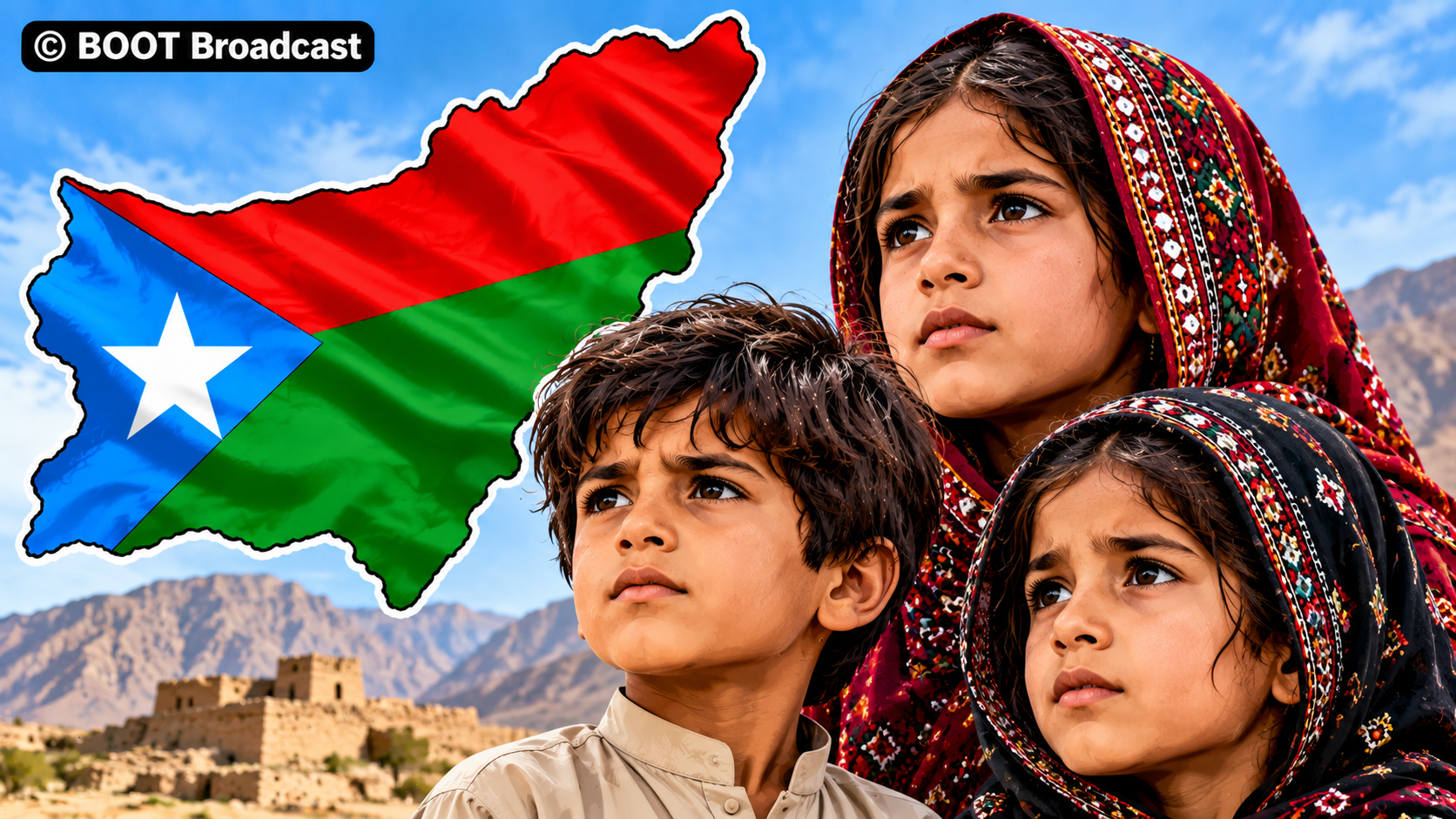
Pakistan’s participation in the Shanghai Co-operation Organisation (SCO) Civilisational Dialogue Forum in New Delhi has triggered a sharp political response from Baloch activist Mir Yar Baloch, who has challenged Islamabad’s claim to represent the region’s diverse historical and cultural heritage while drawing international attention to the longstanding Balochistan question.
In a strongly worded statement posted on November 20, Mir Yar Baloch, speaking on behalf of the self-proclaimed Republic of Balochistan, questioned why Pakistan was invited to participate in discussions on civilisation while the Baloch and Sindhi communities, whose histories are deeply rooted in the ancient civilisations of the region, remained without a direct voice at the forum.
Pakistan’s Federal Minister for Climate Change and Environmental Coordination, Dr Musadik Masood Malik, attended the three-day SCO forum in New Delhi from November 20 to 22. The Pakistani delegation’s participation came within the framework of the SCO’s multilateral engagement, following India’s invitation to member countries. Islamabad nominated Malik to lead its delegation, although India had initially invited Pakistan’s Culture and National Heritage Minister.
The historical identity question:
At the centre of Mir Yar Baloch’s argument is the distinction between the ancient civilisational heritage of the region and the comparatively recent formation of modern Pakistan in 1947.
Referring to the archaeological legacies of Mehrgarh and Mohenjo-daro, he argued that the Baloch and Sindhi people possess a historical and cultural identity that predates modern political boundaries by thousands of years.
His statement questioned the legitimacy of allowing the Pakistani state to speak as the principal representative of this heritage while, according to his allegations, Baloch national identity, history and cultural expression continue to face systematic suppression.
The argument raises a wider question about representation at international cultural forums: whether discussions on civilisation should also provide space for communities whose historical identities predate the modern nation-states that govern them.
Balochistan’s human rights concerns:
More significantly, the statement shifts attention from historical identity to allegations of serious human rights violations in Balochistan.
Mir Yar Baloch urged Indian journalists, policymakers, human rights organisations and the international community to question Pakistan over alleged enforced disappearances, extrajudicial killings and restrictions on Baloch political and cultural expression.
These concerns are not limited to political statements by Baloch activists. The UN Working Group on Enforced or Involuntary Disappearances has expressed concern over reports of disappearances, particularly in Balochistan, as well as alleged violations involving peaceful demonstrators and human rights defenders.
The Human Rights Council of Balochistan has also documented allegations of widespread disappearances and killings in its 2025 annual assessment. Such reports underline the need for independent investigation, transparent accountability and protection of civilian rights.
A challenge to Islamabad and the international community:
In its statement, Balochistan called upon Pakistan to withdraw its security forces from the territory it claims as its homeland, describing the continuing presence of Pakistani forces as an occupation.
It also rejected Pakistan’s representation of itself as a credible voice for peace and civilisational dialogue while serious allegations concerning Balochistan remain unresolved.
The statement concluded with a political declaration that 2027 would mark the end of what it describes as Pakistani occupation, predicting that Balochistan would emerge on the international map with an independent identity.
Balochistan’s claim to statehood, however, remains unrecognised internationally, and its declaration should be understood as a political position rather than an established change in the territory’s status.
The larger geopolitical significance:
For India, the episode presents a wider diplomatic and media question. The SCO Civilisational Dialogue is intended to promote cultural understanding and exchanges among member states. Yet the Balochistan statement highlights the importance of addressing the human rights concerns and historical identities of communities that say they remain marginalised within existing political structures.
Pakistan’s participation in the forum and the Baloch challenge to its civilisational representation have brought renewed attention to an issue that extends beyond India-Pakistan relations.
Ultimately, the debate is not simply about who speaks at a civilisational summit. It is also about historical identity, cultural representation, human rights and the accountability of states.
A dialogue on civilisation gains credibility when historical heritage is respected, cultural identities are protected and allegations of human rights violations are addressed through transparency and accountability.
Editorial Note:
This report is based on publicly available information, statements issued by Baloch representatives and published human rights assessments. The political claims and allegations mentioned in the article are attributed to their respective sources and should not be construed as independently established facts. BOOT Broadcast does not endorse any unverified claim or political position. The views expressed by the individuals and organisations quoted are their own. BOOT Broadcast supports responsible journalism, factual accuracy, independent scrutiny and the protection of human rights.
