



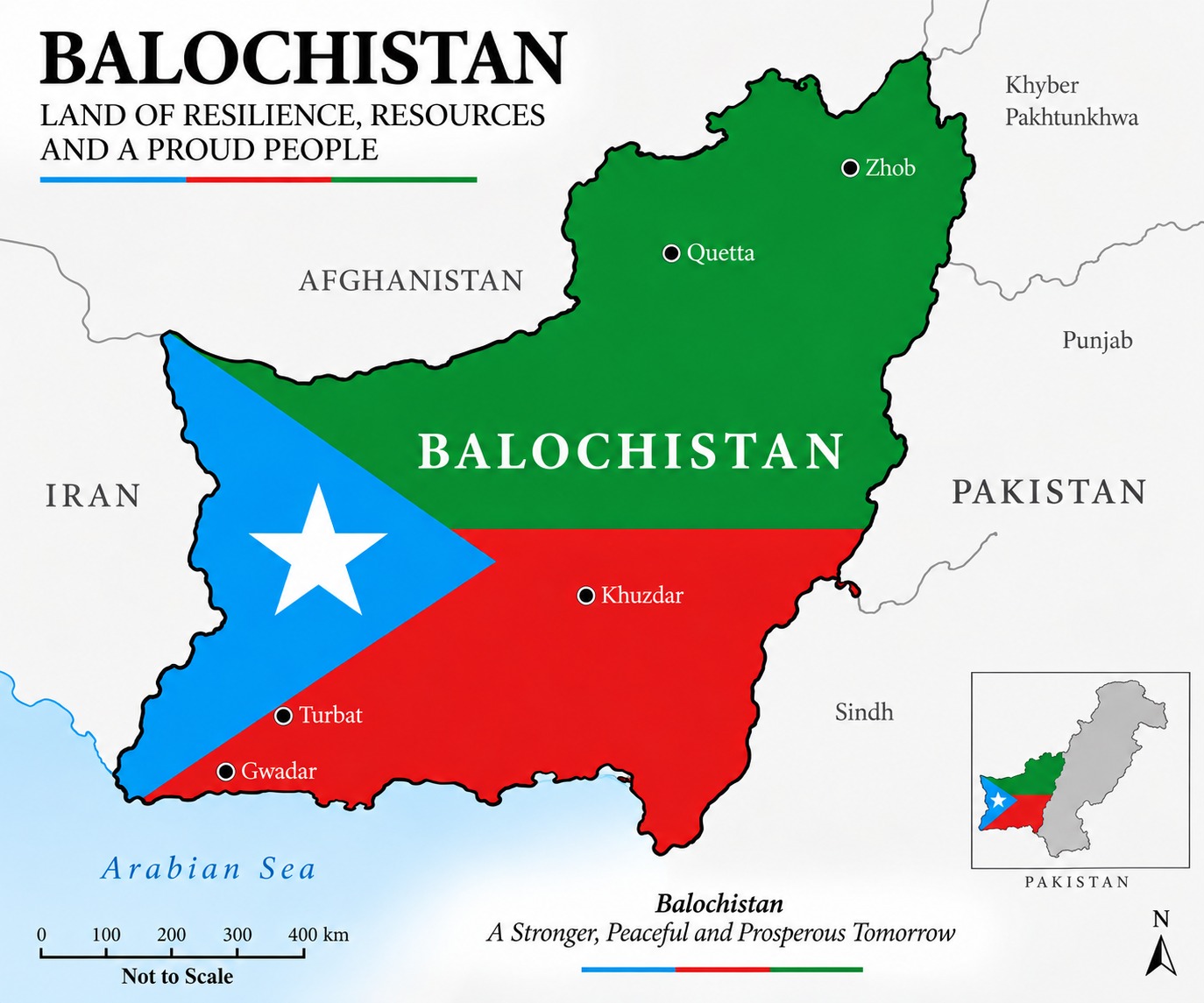
The self declared Republic of Balochistan has called on the international community to recognise Balochistan as an independent state, arguing that its strategic location, extensive coastline and natural resources could make it a key economic and security partner for South Asia.
In a statement issued on Friday, prominent Baloch leader Mir Yar Baloch, identifying himself as a representative of the Republic of Balochistan, urged the United States, Western countries and neighbouring nations, particularly India and Afghanistan, to pursue closer economic, maritime and security cooperation with Balochistan.
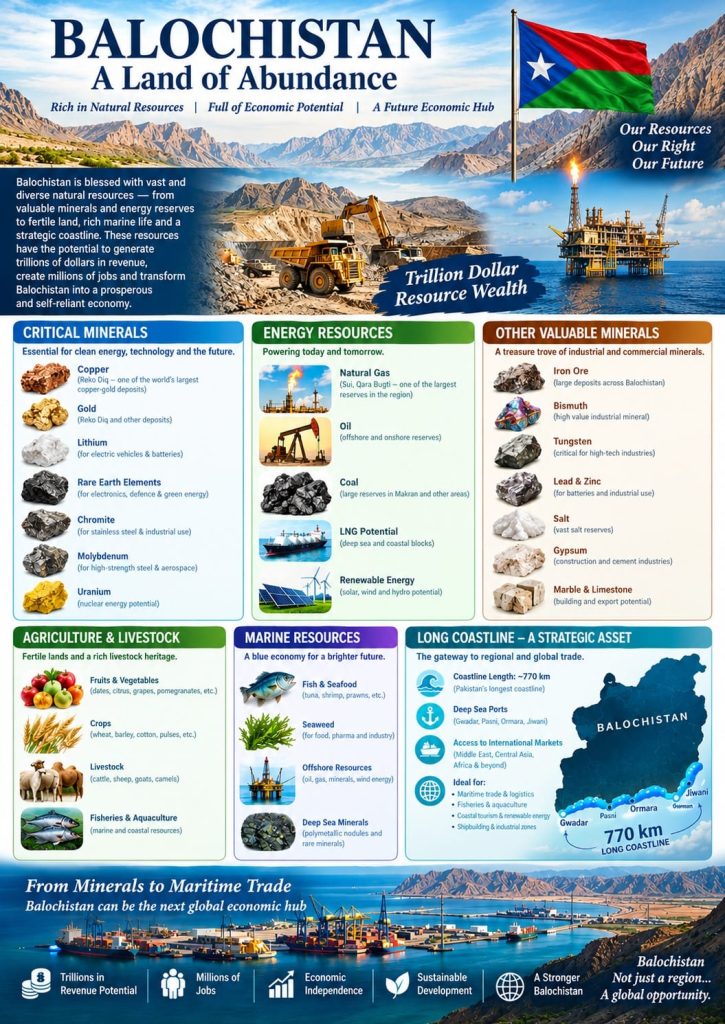
The statement accused Pakistan of exploiting Balochistan’s geographical importance and natural wealth for decades while misrepresenting its status and resources in international forums. It also called for the development of direct land and maritime trade links, citing Gwadar and Balochistan’s coastline as strategically important assets for regional connectivity.
BALOCHISTAN SEEKS STRATEGIC AND ECONOMIC PARTNERSHIPS:
Highlighting Balochistan’s reported coastline of approximately 2,000 kilometres, the statement argued that the region’s deep-water coastline, ports and natural resources could support expanded trade and economic cooperation across South and Central Asia.
It called for long-term economic, defence and military agreements with India and Afghanistan, presenting Balochistan as a potential partner in regional trade, connectivity and security.
The statement further alleged that Pakistan had used Balochistan’s territory and airspace to advance its strategic interests, referring to historical developments involving Afghanistan, the Soviet Union and the presence of Osama bin Laden in Abbottabad.
It accused Islamabad of contributing to prolonged regional instability and inflicting significant damage on Balochistan’s population, infrastructure and economy.
STATEMENT RAISES NUCLEAR SECURITY CONCERNS:
The statement also raised concerns over the potential proliferation of nuclear weapons and the implications for regional and international security.
Referring to Israeli Prime Minister Benjamin Netanyahu’s remarks concerning Iran’s nuclear ambitions, the representative alleged that Pakistan could potentially transfer tactical nuclear weapons to Iran, Turkey or other extremist actors.
It warned that such a scenario could create serious risks of nuclear coercion and destabilise the wider region, including the Middle East and South Asia.
However, these allegations concerning potential nuclear transfers and the development of nuclear weapons by Iran were not substantiated by evidence in the statement and should be treated as claims made by its author, rather than established facts.
US POLICY TOWARDS PAKISTAN UNDER CRITICISM:
The statement also criticised US Secretary of State Marco Rubio’s reported position that Washington would need to maintain relations with Pakistan.
The representative argued that continued engagement with Islamabad without adequately addressing its alleged support for militant networks could expose the international community to further security threats.
Calling for a reassessment of international policy towards Pakistan, the statement urged the United States and Western governments to give greater attention to Balochistan’s political aspirations, security concerns and claims over its natural resources.
GWADAR AND BALOCHISTAN AT THE CENTRE OF REGIONAL CONNECTIVITY:
Emphasising the strategic importance of Gwadar and Balochistan’s natural resources, the statement argued that the region could play a central role in trade, maritime connectivity and economic development linking South Asia with neighbouring regions.
It maintained that the Baloch people should have control over the region’s resources and called for international engagement based on what it described as the realities on the ground.
The statement concluded by urging governments not to delay consideration of Balochistan’s demand for international recognition, presenting independence and regional partnerships as essential to long-term peace, security and economic development.
