



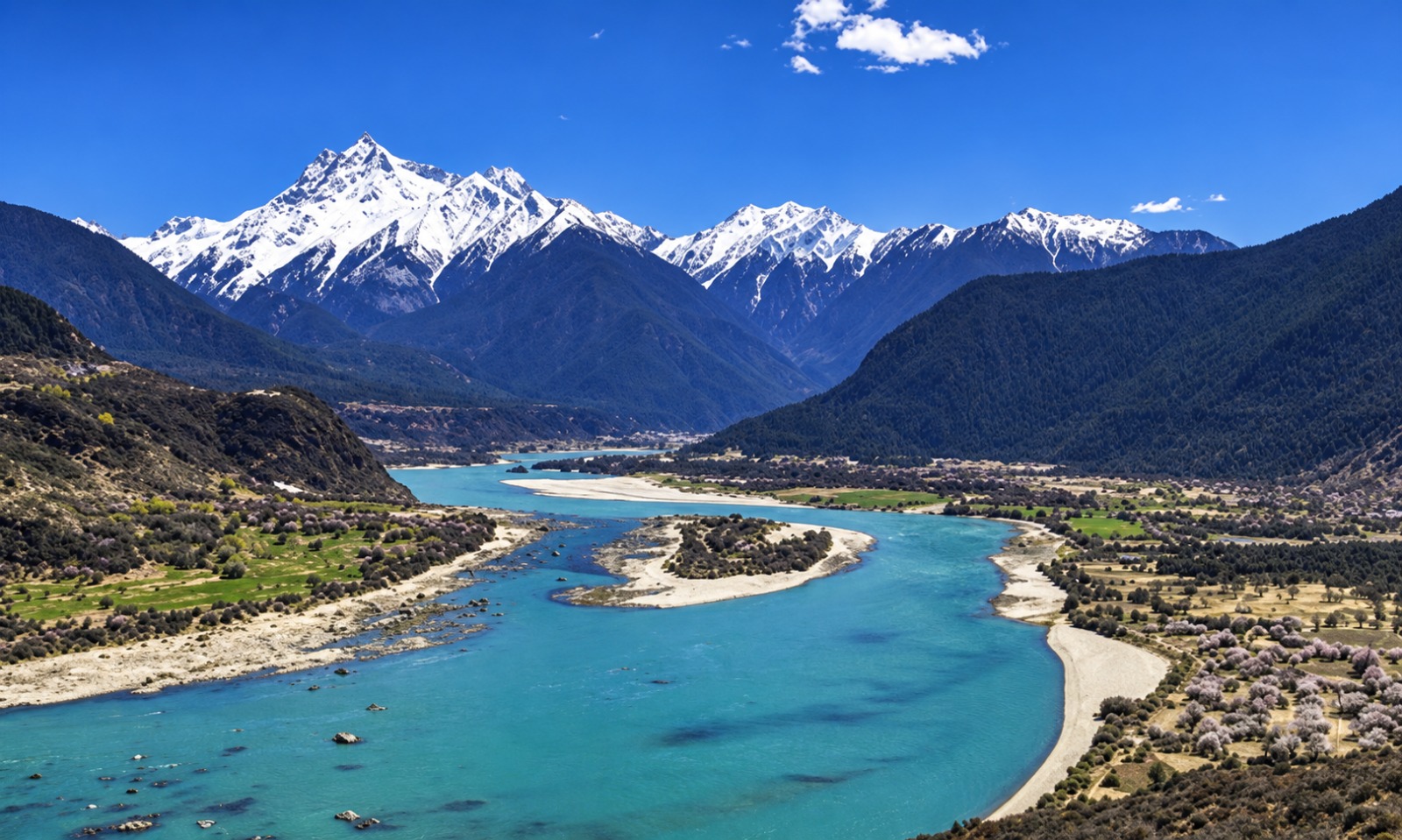
In the heart of the Eastern Himalayas, Nelung Valley preserves a rich tapestry of spiritual traditions, cultural memory and the enduring relationship between people and the mountains they call home.
Deep within the Eastern Himalayas, Nelung Valley—also known as Gnas-lung in Tibetan and associated in some accounts with the name Lhading—represents a landscape where geography, spirituality and history intersect. Its rugged mountains, forested slopes and flowing rivers form more than a dramatic natural setting; they are part of a cultural landscape shaped by centuries of belief, tradition and human interaction.
Located in the Tibet Autonomous Region,within
the Nyingchi Prefecture,the valley appears under different names in geographical references and administrative records, including Nelung, Nailung and Nelung Township. These variations reflect the complexities of transliteration, local usage and the ways in which Himalayan places are recorded across languages and mapping systems.
In Tibetan cultural traditions, place names often carry meanings that extend beyond geographical identification. The name Gnas-lung combines elements associated with a sacred place or spiritual abode and a valley, suggesting a landscape imbued with religious significance. The name Lhading, where used, evokes associations with divine beings and the surrounding mountain environment. Such interpretations reflect a broader Himalayan worldview in which mountains, rivers, forests and high-altitude valleys occupy an important place in spiritual imagination.
A Landscape Shaped by Faith and Tradition:
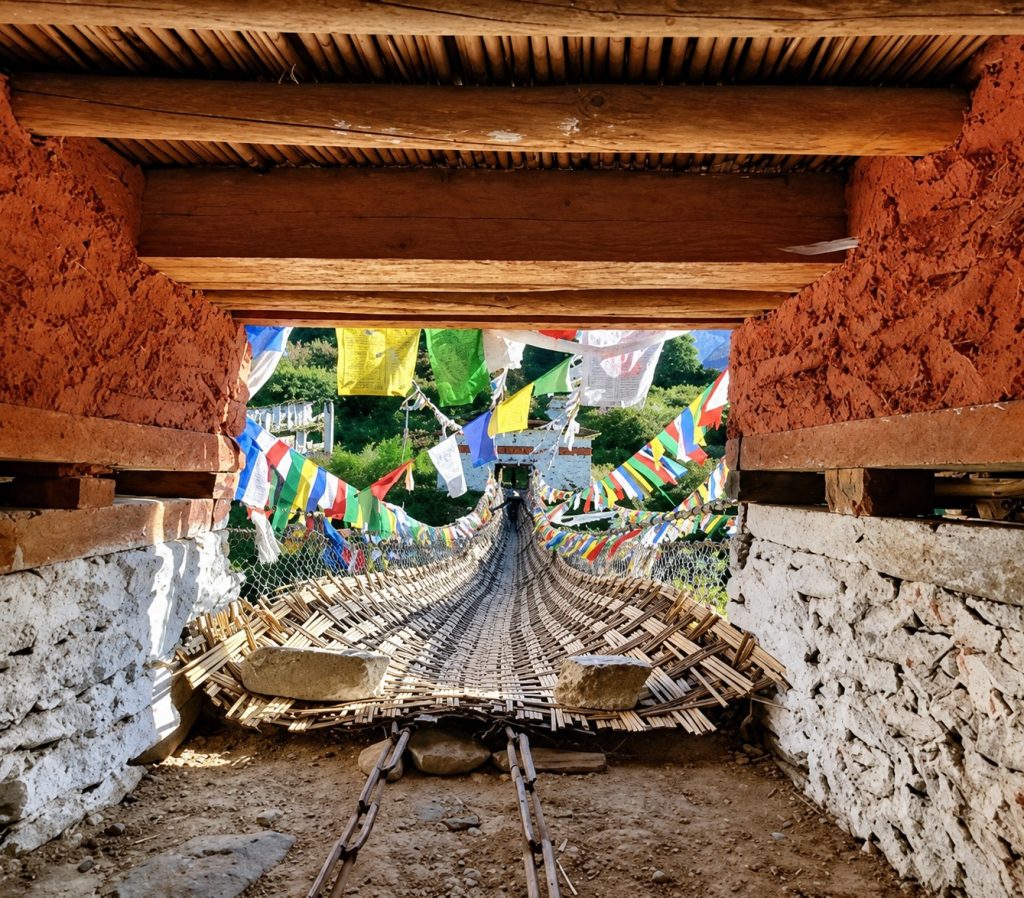
Tibet’s sacred geography has been shaped by the interaction of Tibetan Buddhism, the indigenous Bon tradition and local religious customs. Across the Himalayan region, mountains and valleys are often regarded not simply as physical formations but as places associated with protective deities, pilgrimage, meditation and ancestral memory.
Prayer flags fluttering in mountain winds, mani stones bearing sacred inscriptions and religious practices connected with the natural environment reflect this enduring relationship between faith and landscape. These traditions form part of a wider cultural heritage that links communities to the terrain around them, giving geographical features meanings that extend across generations.
The precise religious history of Nelung itself requires careful documentation, but its setting within the broader cultural world of eastern Tibet provides a valuable context for understanding the spiritual significance often attached to Himalayan landscapes.
Kongpo and the Crossroads of Himalayan Cultures:
Nelung lies within the wider cultural sphere of Kongpo, a historically significant region of eastern Tibet known for its distinctive traditions and varied mountain terrain. For centuries, the valleys and passes of this region have connected settlements, supported local livelihoods and facilitated movement between communities.
The wider eastern Himalayan region has also been home to diverse ethnic and linguistic groups, including Tibetan, Monpa and Lhoba communities in different areas. Their traditions, folklore and knowledge of the natural environment contribute to the region’s cultural complexity.
These overlapping histories illustrate how the Himalayas have served not only as formidable geographical barriers but also as corridors of cultural exchange. Trade, migration, religious journeys and everyday contact between neighbouring communities have helped shape the identities of settlements across the mountain region.
A Vital Part of the Eastern Himalayan Environment:
Beyond its cultural importance, the valley forms part of an ecologically sensitive mountain environment characterised by steep terrain, forests, river systems and varied habitats. The wider Nyingchi region is known for its rich biodiversity, influenced by substantial changes in elevation and climatic conditions.
The river systems of eastern Tibet are particularly significant. The Yarlung Tsangpo flows eastward across the Tibetan Plateau before entering India, where it is known as the Siang and subsequently forms part of the Brahmaputra river system.
This transboundary water network demonstrates the close geographical connections between the Tibetan Plateau and the Indian subcontinent. Mountain watersheds, glaciers, forests and rivers together sustain ecosystems and communities across national boundaries, making the conservation and understanding of the Eastern Himalayas an important regional concern.
However, the precise tributary connections of Nelung Valley should be established through reliable geographical and hydrological sources rather than assumed from its broader regional location.
Tradition Amid Changing Times:
Like many remote Himalayan settlements, communities across eastern Tibet have experienced changes associated with improved connectivity, infrastructure development and evolving economic conditions. Traditional architecture, local languages, seasonal celebrations and religious practices remain important elements of cultural identity in the region, although their presence and continuity vary between individual settlements.
The challenge for Himalayan communities is to navigate modernisation while preserving the cultural knowledge and environmental relationships that have sustained them for generations. Documentation of local place names, oral histories, religious traditions and traditional ecological knowledge can play an important role in safeguarding this heritage.
For researchers and observers, Nelung offers an opportunity to examine how geographical landscapes become repositories of collective memory—and how cultural identities endure even as administrative boundaries, infrastructure and patterns of everyday life change.
Where Mountains Become Living Heritage:
Nelung, referred to by different names in geographical and cultural accounts, invites a broader understanding of the Eastern Himalayas. Its significance lies not merely in its location on a map but in the relationship between the region’s physical environment and the traditions through which people have interpreted it.
Here, as across much of the Himalayan world, mountains are more than landmarks, rivers are more than channels of water, and valleys are more than passages through rugged terrain. They are part of a living cultural inheritance, shaped by faith, movement, memory and generations of human engagement with the natural world.
In the Eastern Himalayas, geography and heritage remain closely intertwined. Nelung’s story, when examined through reliable historical, cultural and geographical evidence, forms part of that larger narrative—one in which the landscape continues to connect the past with the present.
