



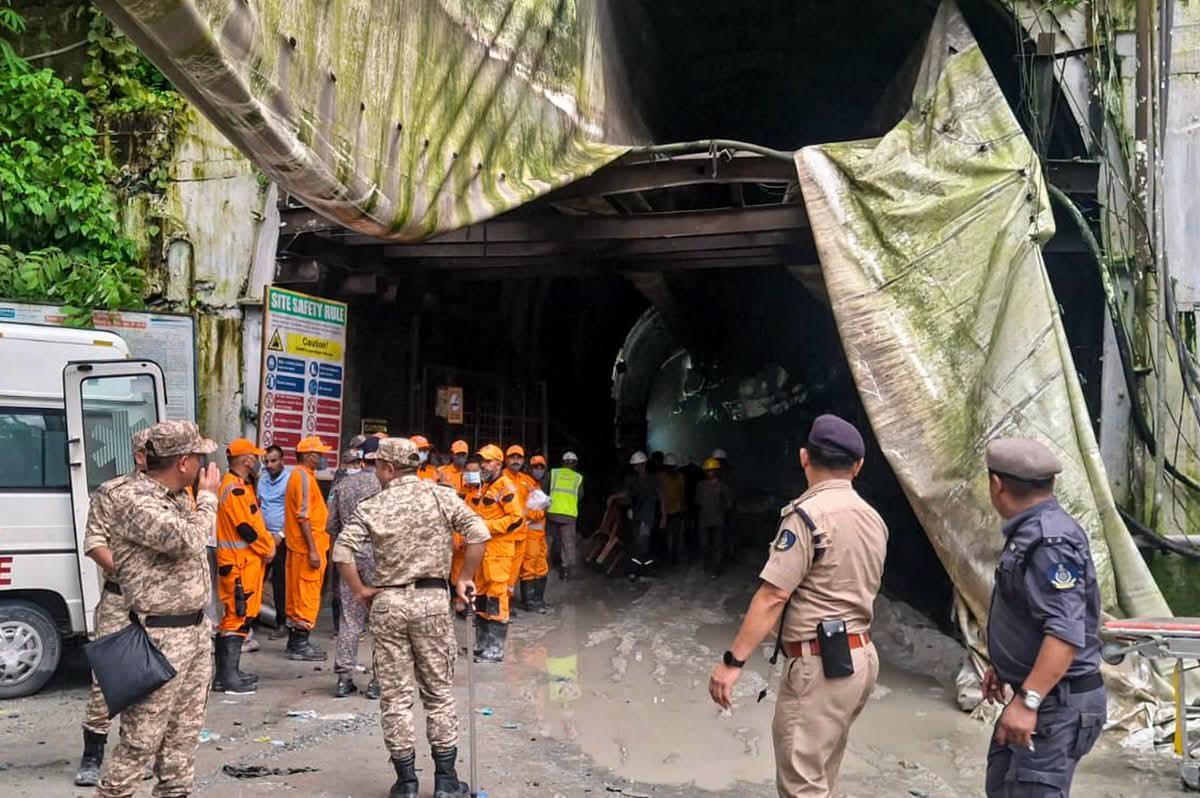
The massive rescue operation at the under-construction tunnel of the NHPC Teesta Stage VI Hydroelectric Project in Sikkim’s Namchi district concluded on a tragic note after all 25 workers trapped inside the tunnel were recovered dead. The recovery of the final bodies marked the end of a four-day-long search and rescue effort involving multiple central and state agencies.
The accident occurred inside the under-construction tunnel at Samardung, where a large section reportedly collapsed, trapping workers deep underground. The incident triggered an extensive emergency response, with rescue teams working continuously under challenging conditions to locate and retrieve those trapped.
Rescue operations were carried out round the clock by personnel from several agencies of the Central and Sikkim governments. Teams equipped with specialised machinery and technical expertise worked through unstable terrain, debris-filled tunnel sections and other hazardous conditions in an effort to reach the trapped workers. Despite sustained efforts over four days, none of the trapped workers could be rescued alive.
Officials stated that the operation demanded close coordination among multiple agencies, with engineers, disaster response personnel, medical teams and local authorities working together to overcome logistical and technical challenges posed by the confined underground environment.
The tragedy has once again drawn attention to safety standards and emergency preparedness at large infrastructure and hydropower construction projects in mountainous regions, where complex geological conditions often increase the risks associated with tunnelling activities.
In response to the incident, the Sikkim government has constituted a four-member inquiry committee to investigate the circumstances that led to the tunnel collapse. The panel has been tasked with examining the technical, administrative and safety aspects of the project, identifying any lapses in construction or safety protocols, and recommending measures to prevent similar incidents in the future.
The committee has been directed to submit its findings within 15 days. The inquiry is expected to assess whether existing safety guidelines were followed, evaluate the geological conditions at the project site, and determine if any negligence or procedural shortcomings contributed to the disaster.
The Teesta Stage VI Hydroelectric Project is one of the major hydropower initiatives in Sikkim and forms part of the broader effort to harness the hydroelectric potential of the Teesta River. The latest tragedy has cast a shadow over the project and is likely to intensify scrutiny of safety practices in infrastructure development across the Himalayan region.
The deaths of all 25 workers have left families devastated and prompted widespread expressions of grief. Authorities are expected to facilitate the identification process where necessary and ensure that the mortal remains are handed over to the respective families. The state government is also likely to review compensation and rehabilitation measures for the bereaved families in accordance with applicable norms.
As the rescue operation concludes, attention will now shift to the findings of the inquiry committee, which will play a crucial role in determining accountability and shaping future safety protocols for high-risk infrastructure projects in Sikkim and beyond.
(Image courtesy: AIR)
