



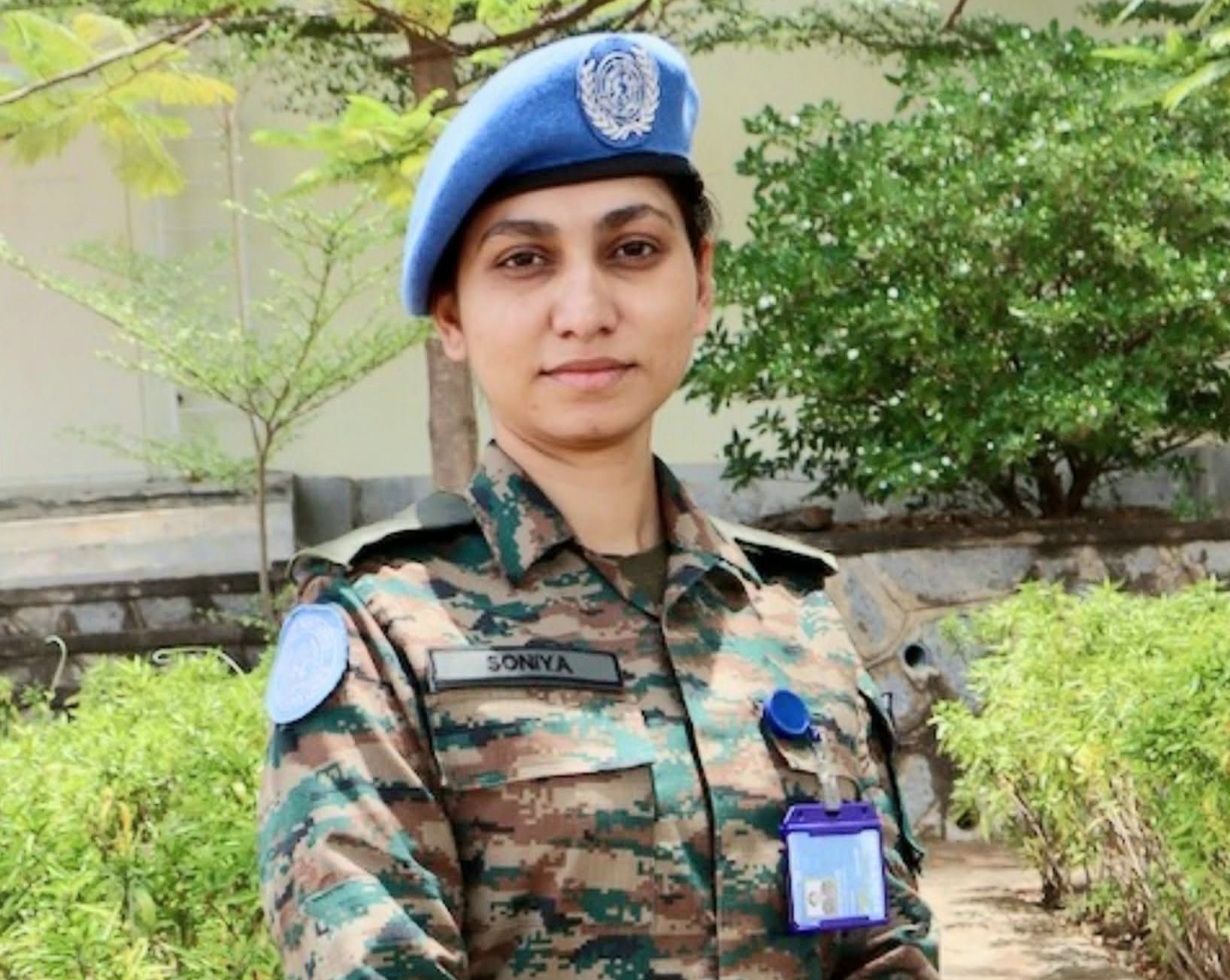
From strengthening peacekeeping patrols to advancing women’s participation in security operations, an Indian Army officer is translating the Women, Peace and Security agenda into meaningful action on the ground.
In the conflict-affected landscape of South Sudan, where vulnerable communities continue to face significant protection challenges, Indian Army Major Soniya Devendra Newaskar is playing a crucial role in making United Nations peacekeeping more inclusive, responsive and effective.
Serving as Deputy Force Gender and Child Protection Advisor with the United Nations Mission in South Sudan (UNMISS), Major Soniya works to ensure that the concerns and lived experiences of women and girls are integrated into the planning and execution of peacekeeping operations. Her role reflects a growing recognition within international peacekeeping that protecting civilians requires not only a military presence but also a deeper understanding of the risks faced by vulnerable sections of society.
One of her key contributions has been strengthening patrols aimed at preventing conflict-related sexual violence. By helping identify areas where women and girls face heightened risks and incorporating this information into operational planning, she has helped peacekeepers anticipate potential threats and respond more effectively to the protection needs of local communities.
Her work also extends to strengthening the participation of South Sudanese women in peace and security initiatives. Through engagement with women serving in the country’s security institutions, Major Soniya has helped create opportunities for them to connect with protection activities and UNMISS patrols. Such initiatives reinforce the importance of women’s participation in security operations, particularly in communities where women may be more comfortable sharing sensitive concerns with female personnel.
Breaking Barriers for Women Peacekeepers:
Beyond civilian protection, Major Soniya has focused on addressing practical challenges that can limit the participation of women peacekeepers in field operations. Recognising that meaningful inclusion requires more than representation, she has undertaken research, advocacy and engagement across mission bases to highlight the need for appropriate facilities and equipment for women deployed on long-duration patrols.
Her efforts helped secure support for improvements designed to enable women peacekeepers to operate in the field with greater comfort, dignity and effectiveness. The initiative underscores an important principle: women must have the necessary infrastructure and institutional support to contribute fully to demanding operational assignments.
Her engagement has also produced tangible results for displaced women. After identifying unsafe sanitation conditions affecting women in a displacement setting, she coordinated efforts to restore facilities and help establish a safer, more dignified environment. The intervention highlighted how identifying everyday vulnerabilities and responding to them can make a meaningful difference to the lives of people affected by conflict.
Turning the Women, Peace and Security Agenda into Action:
Major Soniya’s work reflects the core principles of the United Nations Women, Peace and Security agenda, which emphasises women’s participation in peace processes, the protection of women and girls from violence, and the integration of gender perspectives into conflict prevention and peacekeeping.
Her experience demonstrates that gender-responsive peacekeeping is not confined to policy documents or institutional commitments. It must translate into operational decisions, safer patrols, appropriate field facilities and practical measures that address the concerns of communities on the ground.
For India, whose military personnel have long contributed to United Nations peacekeeping missions, the work of officers such as Major Soniya highlights the diverse responsibilities undertaken by Indian peacekeepers beyond conventional operational roles. Their contributions encompass civilian protection, community engagement, gender-sensitive planning and support for more inclusive security institutions.
As the world observes Women, Peace and Security Month, Major Soniya Devendra Newaskar’s contribution offers a compelling example of how women peacekeepers are helping shape a more responsive approach to international peacekeeping.
By bringing women’s perspectives into operational planning, addressing barriers to participation and responding to the everyday safety concerns of vulnerable communities, she is helping turn the promise of inclusive peacekeeping into action—one patrol, one intervention and one community at a time.
