



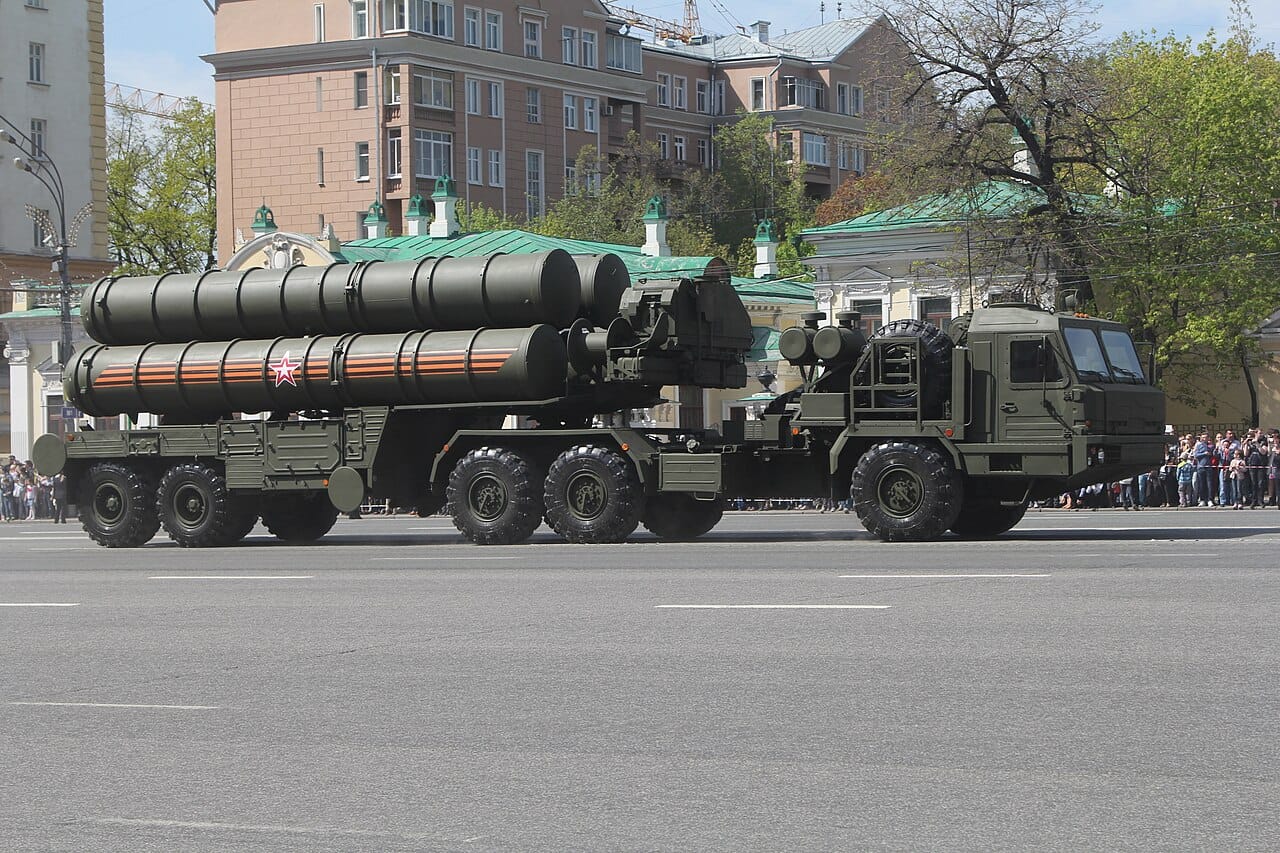
India’s air defence capabilities have received a major boost with the arrival of the fourth squadron of the Russian-origin S-400 ‘Sudarshan Chakra’ air defence system. The delivery is part of the $5.43 billion agreement signed between India and Russia in 2018 for the procurement of five S-400 regimental systems.
According to defence sources, the latest squadron arrived in India by sea a few days ago and is expected to be deployed in an operational area shortly. The induction comes as India continues to strengthen its multi-layered air defence architecture amid evolving regional security challenges.
“The S-400 Sudarshan long-range air defence system from Russia reached India on a ship and will be deployed in the operational area very soon,” defence sources said, as quoted by Indian News Agency.
The first three S-400 squadrons have already been inducted and are operational. Deliveries of the remaining units had faced delays due to disruptions caused by the Russia-Ukraine conflict. However, officials indicate that the supply schedule has now returned to normal, with the fifth and final squadron expected to arrive in the coming months.
Designed to engage a wide range of aerial threats, including fighter aircraft, drones, cruise missiles and ballistic missiles, the S-400 remains one of the most advanced long-range surface-to-air missile systems in service globally. The addition of the fourth squadron further enhances India’s ability to protect strategic assets and critical infrastructure across multiple fronts.
Defence sources also highlighted the system’s reported operational role during Operation Sindoor, where it was credited with providing long-range air defence coverage against hostile aerial assets. The platform has increasingly become a key component of India’s integrated air defence framework.
The S-400 forms an important pillar of the broader ‘Sudarshan Chakra’ concept, which seeks to integrate imported and indigenous air defence systems into a unified command-and-control network. Alongside the S-400, systems such as the Barak-8 and the indigenous Project Kusha are expected to contribute to a layered shield capable of countering aircraft, drones, ballistic missiles and future hypersonic threats.
As India expands its air defence infrastructure, efforts are also underway to enhance indigenous capabilities through Project Kusha and other domestic programmes. Defence officials believe the integration of foreign and homegrown systems will strengthen operational effectiveness while advancing long-term self-reliance in critical defence technologies.
During Operation Sindoor, the S-400 Sudarshan long-range air defence system reportedly played a pivotal role in safeguarding Indian airspace against potential aerial threats. Operating as part of a layered air defence network, the system provided extended surveillance and engagement coverage, enabling the detection, tracking and neutralisation of hostile aircraft, drones and missile threats at significant ranges. Its advanced radar and command-and-control capabilities enhanced situational awareness and strengthened India’s defensive posture throughout the operation. The deployment underscored the S-400’s strategic value as a force multiplier and a critical component of the Indian Air Force’s integrated air defence architecture.
The induction of the fourth S-400 squadron further reinforces India’s air defence architecture, enhancing its ability to respond to a wide range of aerial threats. With the continued expansion of its integrated security network, the Indian Air Force is strengthening its preparedness to protect the nation’s airspace and critical assets.
(With inputs from agency)
(Image source:Wikimedia)
