



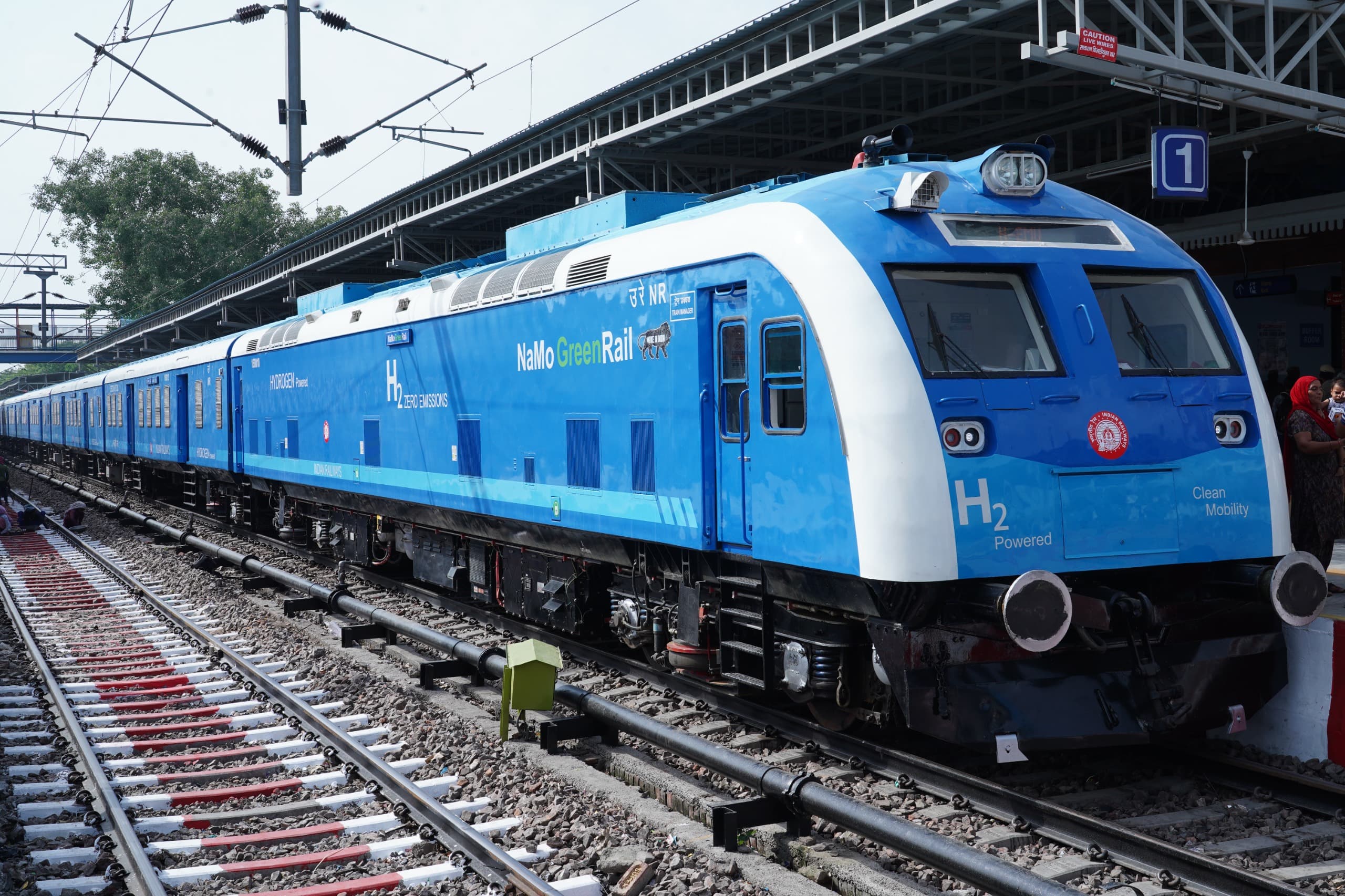
Indian Railways is set to usher in a new era of sustainable transportation with the launch of India’s first indigenous hydrogen fuel cell-powered train on July 17. The train will commence operations on the Jind–Sonipat section of Northern Railway, placing India among a select group of nations—including Germany, Japan, China and the United States—exploring hydrogen-powered rail technology.
Developed entirely in India under the technical guidance of the Research, Design & Standards Organisation (RDSO), the project is a significant milestone in the country’s efforts to promote clean energy, strengthen self-reliance under Atmanirbhar Bharat, and support the National Green Hydrogen Mission.
The hydrogen-powered train consists of 10 coaches, including two Hydrogen Driving Power Cars and eight Trailer Coaches, and is powered by a 1,200 kW hydrogen fuel cell propulsion system. It can accommodate around 2,600 passengers and has been approved for operation at a maximum speed of 75 kmph, with a design speed of 110 kmph.
Unlike conventional diesel-powered trains, the locomotive generates electricity onboard using Proton Exchange Membrane Fuel Cell (PEMFC) technology, in which hydrogen reacts with oxygen to produce electricity. The only by-products of the process are water vapour and heat, making it one of the cleanest propulsion technologies currently available for rail transport.
To support operations, Indian Railways has established the country’s largest railway hydrogen storage and refuelling facility at Jind, Haryana, capable of storing nearly 3,000 kg of hydrogen. Licensed by the Petroleum and Explosives Safety Organisation (PESO), the facility has been developed in accordance with internationally accepted safety standards and includes hydrogen compression systems, standby refuelling equipment and critical operational support infrastructure.
The project also incorporates multiple safety features, including hydrogen leak and flame detection systems, automatic hydrogen shut-off mechanisms, continuous ventilation, real-time health monitoring for the locomotive pilot, and dedicated emergency operating modes. Standard operating procedures, trained personnel, 24×7 monitoring of refuelling systems, and a dedicated maintenance facility at Shakurbasti, Delhi, have been put in place to ensure safe and reliable operations.
As a pilot initiative, the hydrogen train will provide valuable operational experience in clean rail technology while helping validate infrastructure, maintenance practices and safety protocols. The project is expected to lay the foundation for wider adoption of hydrogen-powered mobility, advancing Indian Railways’ goal of building a greener, more energy-efficient and resilient transport network.
