



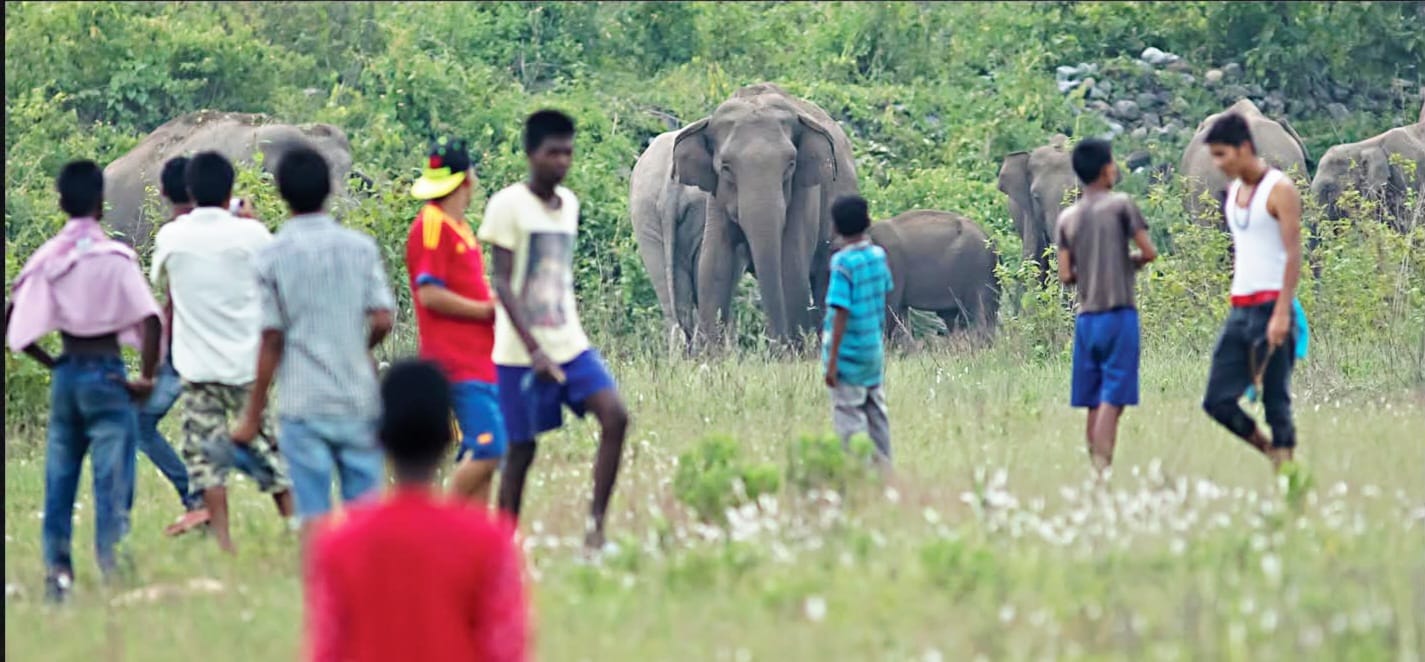
Human-animal conflict is emerging as one of the most serious yet under-discussed challenges facing India’s farming community, with increasing crop destruction, livelihood losses and mounting debt forcing many farmers to reduce cultivation or abandon agriculture altogether.
According to an investigation published by a leading climate magazine of India and findings highlighted in the recently released State of India’s Environment 2026: In Figures, confrontations between farmers and both wild and stray animals have intensified across several states. While elephant attacks on humans have risen in 10 states and tigers were responsible for 40 human deaths during the first six months of 2025, the problem extends far beyond these species.
Farmers across the country report frequent crop raids by a growing range of animals, including leopards, nilgai, blackbuck, wild boars, monkeys, stray cattle, peacocks and parrots. Many say these incursions now occur throughout the year, affecting both food and cash crops.
Speaking on the sidelines of a webinar organised by the Centre for Science and Environment (CSE) on World Environment Day, Dr.Sunita Narain, Director General of CSE highlighted the scale of the crisis.
“Wild and stray animals are destroying crops and adding massively to the economic losses of farmers. In many parts of India, farming is becoming unviable because of these marauding animals. This is a fact that we are not willing to discuss, let alone resolve. The conservation community would like to avoid this discussion of human-animal conflict; for them—perhaps rightly so—if there is a conflict, the fault lies at the doorstep of humans,” she said.
The economic consequences are proving severe. A 2025 study conducted by Pune-based Gokhale Institute, described as the first effort to quantify wildlife-related agricultural losses in India, estimates that Maharashtra alone suffers annual losses ranging between Rs 10,000 crore and Rs 40,000 crore due to human-animal conflict.
The study found that 62 per cent of surveyed farmers had reduced the area under cultivation because of repeated animal attacks, while 54 per cent had stopped growing at least one high-value crop.
Himanshu Nitnaware, who conducted the investigation, said farmers increasingly rank animal-related crop damage among their biggest challenges.
“Farmers are listing crop damage by wild animals as their key problem after unseasonal rain and low prices for produce; one-third have said such damage was the main reason for their loss of income,” he noted.
Evidence from other states points to a similar trend. Narain cited a 2021 study by researchers from the University of British Columbia and the Centre for Wildlife Studies, which found that farmers in Karnataka lose the equivalent of one to three months of annual income due to wildlife raids.
She added: “A 2021 study by the University of British Columbia in Canada and the Centre for Wildlife Research in India found that farmers in Karnataka lose one to three months of income each year to wild animal raids… The forest department of Himachal Pradesh estimates that annual crop losses add up to Rs 500 crore, and if the costs of protection measures are included, it would be Rs 1,500 crore at the least. A 2026 study in the Western Ghats of Tamil Nadu says 90 per cent of farmers identified wildlife conflict as their primary production risk, with a staggering 50-60 per cent of crops damaged primarily by wild boars, peafowl and elephants.”
Experts believe the reasons behind the rising conflict go beyond shrinking habitats alone. Ecologist and independent researcher Milind Watve argues that behavioural changes among wildlife are playing a critical role.
“There is growing evidence that the key driver of this escalating conflict is behavioural rather than purely ecological – many wildlife species have lost their instinctive fear of humans. As they lose this fear, they increasingly tend to use human-dominated landscapes,” he said.
Researchers point to a combination of factors, including habitat degradation, increased tourism, changing land-use patterns and the declining effectiveness of traditional deterrent methods.
The government has begun acknowledging the scale of the problem. Animal-related crop losses are now covered under the Pradhan Mantri Fasal Bima Yojana (PMFBY), allowing farmers to report damage within 72 hours. Claims are intended to be verified through drone-based assessments before compensation is released.
However, concerns remain regarding implementation.
“Whether this will work remains to be seen, given the scheme’s existing laws,” Narain remarked.
Compensation mechanisms at the state level have also faced criticism. According to Nitnaware, while several states provide compensation for wildlife-related crop damage, access remains limited.
The Gokhale Institute study found that although nearly 25 per cent of affected farmers sought compensation, only 1-2 per cent received payments matching their actual losses.
“Most either did not know about the scheme or could not navigate its complex bureaucratic procedures,” Nitnaware said.
The issue has also triggered policy debates over wildlife management. The Union Ministry of Environment, Forest and Climate Change has periodically permitted states to classify certain species as “vermin”, allowing controlled culling for limited periods. States such as Bihar, Gujarat, Uttarakhand and Maharashtra have received such approvals.
However, Kerala’s 2025 request to declare wild boars as vermin sparked a prolonged dispute with the Centre after permission was denied, prompting the state to introduce its own legislation.
Narain also criticised recent decisions affecting wildlife management policies.
“Another case in point is that of the National Board of Wildlife reinstating protection for the rhesus macaque as a schedule II animal, making its culling difficult. It follows recommendations from animal rights groups but discounts the fact that even forest departments agree monkeys have become a menace and efforts to control their population through sterilisation have not worked. I would call this decision tone-deaf. Such an approach will only mean more conflict, not less. This is not good for either conservation or farmers.”
Experts argue that the growing crisis highlights the need for conservation policies that move beyond species protection and focus on creating sustainable models of coexistence between people and wildlife. Without effective interventions, they warn, rising human-animal conflict could further undermine agricultural livelihoods, food security and rural economies across the country.
(Article based on CSE’s briefing)
(Image source: CSE)
