



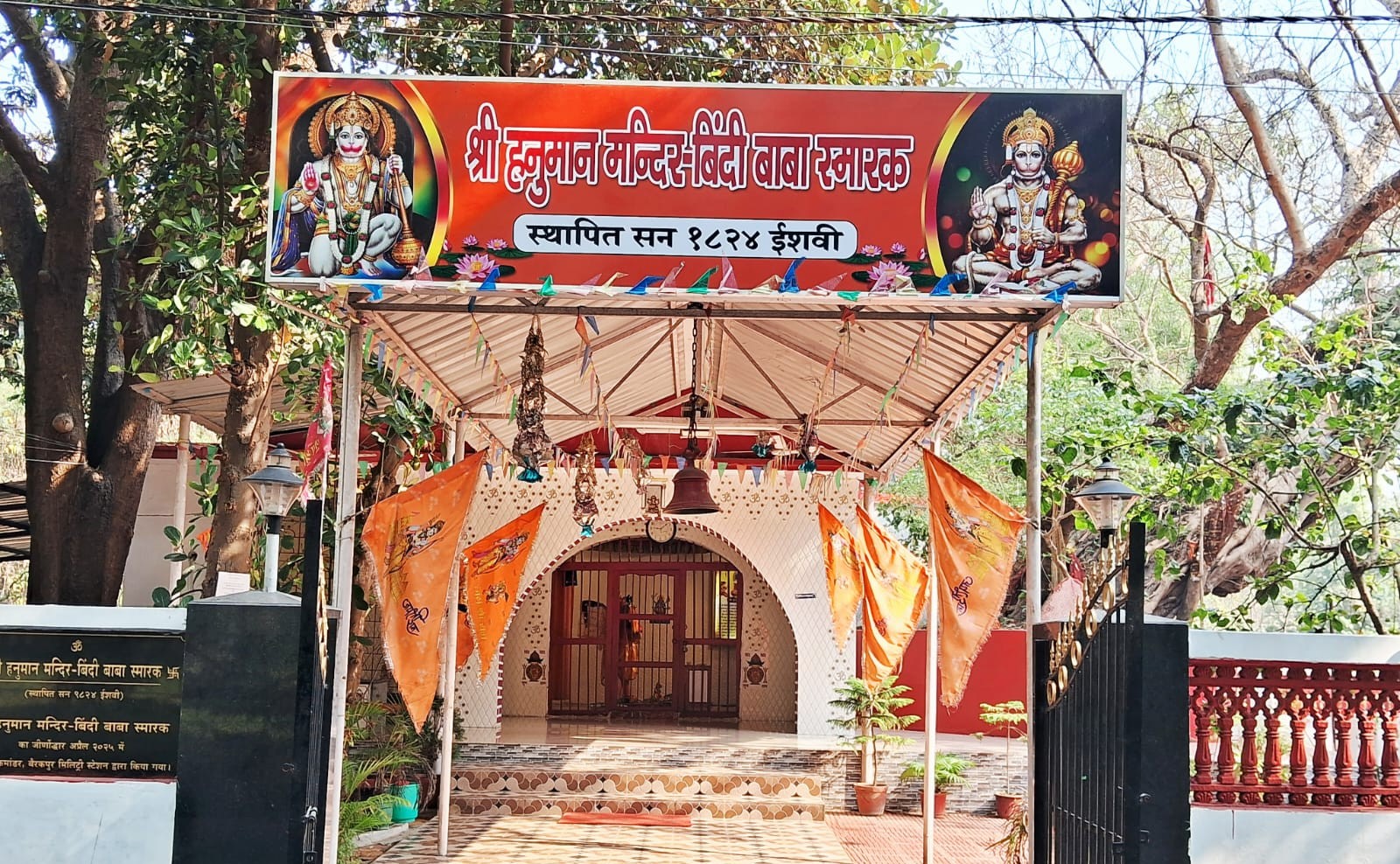
Away from the grand monuments of India’s freedom struggle stands a modest shrine inside the historic Barrackpore Cantonment that carries the memory of a soldier whose name remains relatively unknown outside military circles. The Bindi Tiwari Temple, also known as Baba Binda’s Temple, is not merely a place of worship—it is a symbol of sacrifice, resistance and the Indian Army’s connection with a forgotten chapter of military history.
For generations of soldiers, the shrine has represented a deep bond between the armed forces and the legacy of those who stood against colonial injustice. Maintained within the Barrackpore military area, the temple preserves the memory of Sepoy Bindee (Bindi) Tiwari, a soldier whose defiance against the British East India Company came more than three decades before the Revolt of 1857.
The 1824 Barrackpore Uprising: A Forgotten Military Revolt:
The story of Bindi Tiwari begins in 1824, when soldiers of the Bengal Army were ordered to move towards Burma (present-day Myanmar) during the First Anglo-Burmese War. Many Indian soldiers resisted overseas deployment due to social and religious concerns associated with crossing the seas, a practice then known as the fear of kala pani.The dispute escalated at Barrackpore Cantonment. Tiwari emerged as one of the leaders who opposed the order and represented the grievances of the soldiers. Historical accounts record that the uprising was suppressed by the British authorities, and Tiwari and other leaders faced severe punishment.
The incident became one of the earliest major confrontations between Indian soldiers and the East India Company’s military authority. Although overshadowed by the more famous events of 1857, historians view the Barrackpore uprising as an important precursor to later military resistance.
From a Memorial Under a Peepal Tree to a Military Shrine:
Following Tiwari’s execution, soldiers created a small memorial beneath the peepal tree associated with his death and placed a small representation of Lord Hanuman there. Over time, the shrine developed into what is known today as Baba Binda’s Temple.
The Indian Army has preserved this memorial, reflecting its tradition of honouring courage and sacrifice irrespective of historical periods. The shrine stands as a reminder that military heritage is not limited to battlefield victories but also includes acts of conviction and resistance by individual soldiers.
Peepal Tree Story :The Army’s Role in Preserving Military Memory:
Barrackpore has a unique position in India’s military history. Established as one of the earliest cantonments of the British period, it later became associated with another landmark event—the 1857 uprising involving Mangal Pandey. The cantonment therefore represents a continuous timeline of military transformation, from colonial forces to the independent Indian Army.
The preservation of Bindi Tiwari’s shrine reflects a broader military tradition,remembering those who contributed to the evolution of India’s armed forces. For serving personnel, such memorials provide historical continuity and reinforce values of courage, duty and sacrifice.
A Forgotten Hero Seeking Recognition:
While Mangal Pandey’s name is widely recognised as a symbol of the 1857 revolt, Bindi Tiwari remains less known among the general public. However, his story highlights that resistance against colonial authority did not begin suddenly in 1857; it developed through a series of earlier confrontations involving Indian soldiers and their grievances.
The Bindi Tiwari Temple therefore represents more than a religious site. It is a historical marker of early military dissent, a tribute maintained by soldiers, and a reminder of the many unnamed figures who shaped India’s journey through history.
As India continues to document its military heritage, places like Baba Binda’s Temple serve an important purpose—connecting present-day soldiers with the sacrifices and struggles of those who came before them.
