



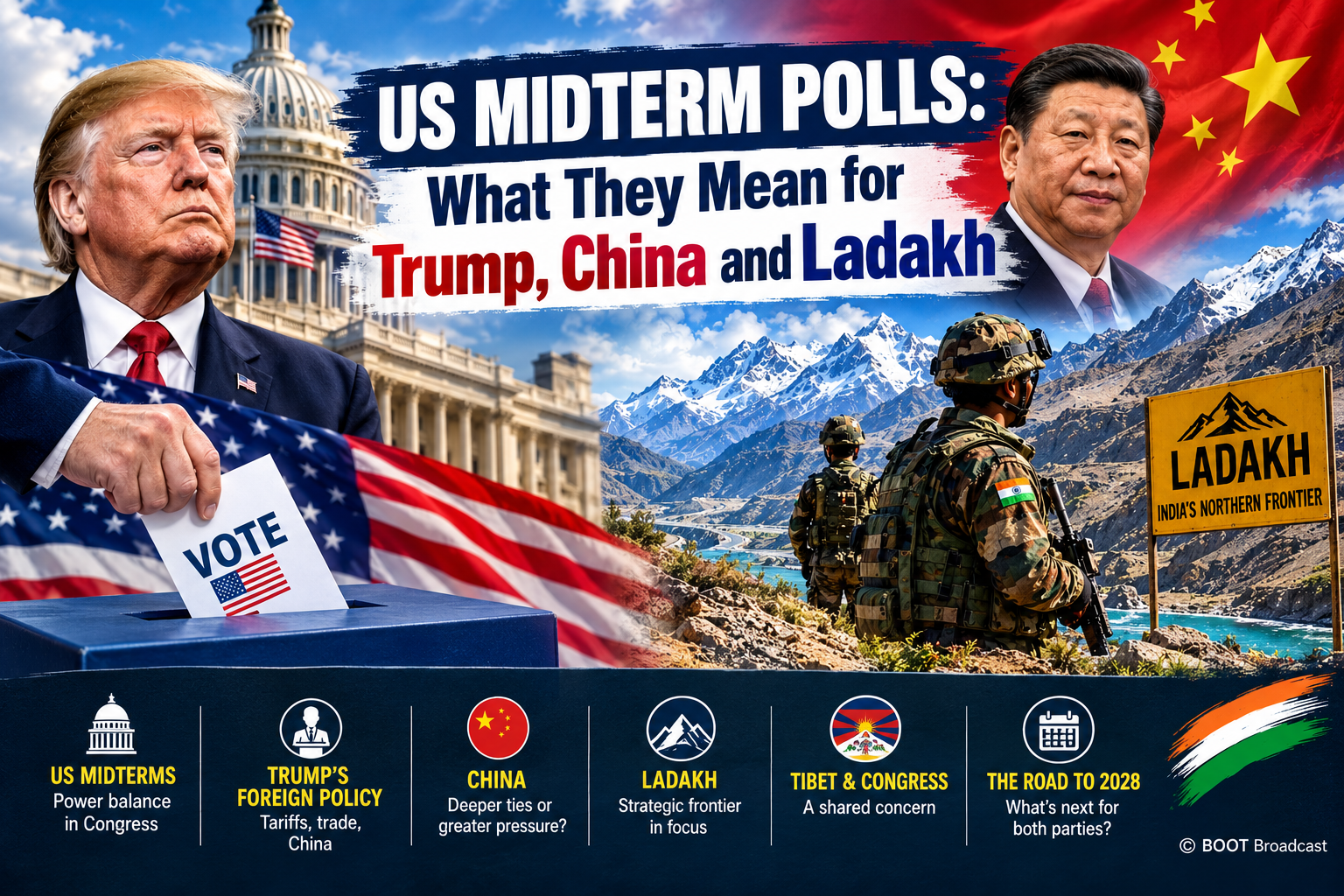
On 3 November, halfway through Donald Trump’s second term, Americans go to the polls in the midterm elections. All 435 seats in the House of Representatives, the lower house, are being contested, along with 35 of the 100 seats in the Senate, the upper house. House seats are shared out among the states by population, so California, the most populous state, has the most, 52. In the Senate every state has two seats, whatever its size, and senators are elected directly by the people.Midterms are read as a report card on the President, and this one looks poor for Mr Trump.
A Reuters/Ipsos poll this week put his approval at 31 per cent, the lowest of his political career. Asked which party they want in the US Congress, voters in the same poll preferred the Democrats by 12 points.
The ruling Republicans have a thin majority in the House, so the Democrats need only a handful of seats to cross the halfway mark of 218. In the Senate the Republicans hold 53 seats, and the Democrats need to gain four. The forecaster Decision Desk HQ now gives the Democrats a 78 per cent chance of winning the House and 57 per cent for the Senate. The Republicans are spending about ₹950 crore to defend Texas and about ₹140 crore in Nebraska, a state Mr Trump won by over 20 points. A party spending heavily to save its own bastions is a party on the back foot.
What would each outcome mean for Mr Trump’s foreign policy, and for India’s northern frontier?
Win or lose, the President keeps his tools:
A Republican hold would be read in the White House as a vote of confidence, and a harder line would follow on tariffs, immigration and work visas. A defeat would change less than many hope. Since July about 70 per cent of India’s exports to the US have faced an extra 10 per cent duty, imposed under laws that let the President act alone. A Democratic House could vote to scrap such tariffs, but the President can veto the bill, and overturning a veto needs a two-thirds majority in both houses.
What a Democratic House would gain is oversight. It holds the purse strings, chairs the committees that examine foreign policy, and can summon officials and call for files. Presidents hemmed in at home also tend to turn abroad, where they can act alone. That is where Ladakh comes in.
China: the view from Ladakh:
Mr Trump’s biggest diplomatic project this autumn is China. Xi Jinping made a state visit to Washington in September. The two leaders extended their trade truce, opened new channels of communication and plan to meet again at the APEC summit in Shenzhen next month. Mr Trump likes personal deals with strong leaders, and a President weakened at home would have every reason to chase a bigger bargain with Beijing.
For Ladakh, that prospect deserves close attention. Indian and Chinese troops have faced each other along the Line of Actual Control since 2020. The October 2024 disengagement at Depsang and Demchok eased the standoff, but large forces remain. A Washington and Beijing that settle their quarrels between themselves would leave China freer to concentrate on its Himalayan frontier. A cosy understanding between the two would serve India less well than a steady rivalry.
Tibet and the American Congress:
The US Congress acts as a check on the White House. Support for Tibet is one of the few causes that unites both American parties. In 2024 Congress passed a law that rejects Beijing’s claim that Tibet has always been part of China and presses for dialogue with the Dalai Lama’s representatives. In May this year, Jim McGovern, a Democrat, and Michael McCaul, a Republican, introduced a bill to keep American engagement with the Tibetan leadership in exile after the Dalai Lama, and to defend the right of Tibetan Buddhists to choose his successor without interference from Beijing.
For Ladakh’s Buddhists, who share a faith and a long history with Tibet, the succession is a matter of the heart. A Democratic House would give senior Tibet advocates more power over hearings, legislation and funding. That would make it harder for any trade deal with Beijing to quietly set aside the question of the Dalai Lama’s succession.
The road to 2028:
The American Constitution allows a President only two terms, so Mr Trump cannot contest in 2028. Democratic wins in states he had won easily previously, such as Texas, Ohio or Nebraska, would show his support base breaking up. The Republican candidates for the next election would start distancing themselves from Trump’s policies. A Republican victory would tie the party’s next candidate more firmly to it.
What India should expect:
India should expect a change in tone more than a change in policy on trade and visas, where both American parties now favour protection. On China, the midterms matter more. Strengthened at the polls, Mr Trump would pursue his deal with Xi Jinping with fewer restraints. Checked by a Democratic House, he would still pursue it, under closer watch from a Congress that is more suspicious of Beijing than he is. Seen from Leh, that watchfulness on Capitol Hill is one of India’s quieter assets.
(Editor’s Note: The views and opinions expressed in this article are solely those of the author and do not necessarily reflect the views of BOOT Broadcast.BOOT Broadcast is “not responsible” for the content.)
Brig. Anil Raman (Retd) is a Research Fellow at the Takshashila Institution and Head of its Defence Fellowship Programme. A former Army War College instructor and US National Defense University Visiting Fellow, his research focuses on American domestic politics, foreign policy and future warfare.
