



– by Pratyusha Mukherjee, Bhubaneswar, Odisha
India is stepping up its maritime search and rescue preparedness with a major multinational exercise off Paradip, as the Indian Coast Guard convened the 24th National Maritime Search and Rescue (NMSAR) Board Meeting on Wednesday to review the country’s ability to respond swiftly to emergencies across its vast maritime domain.
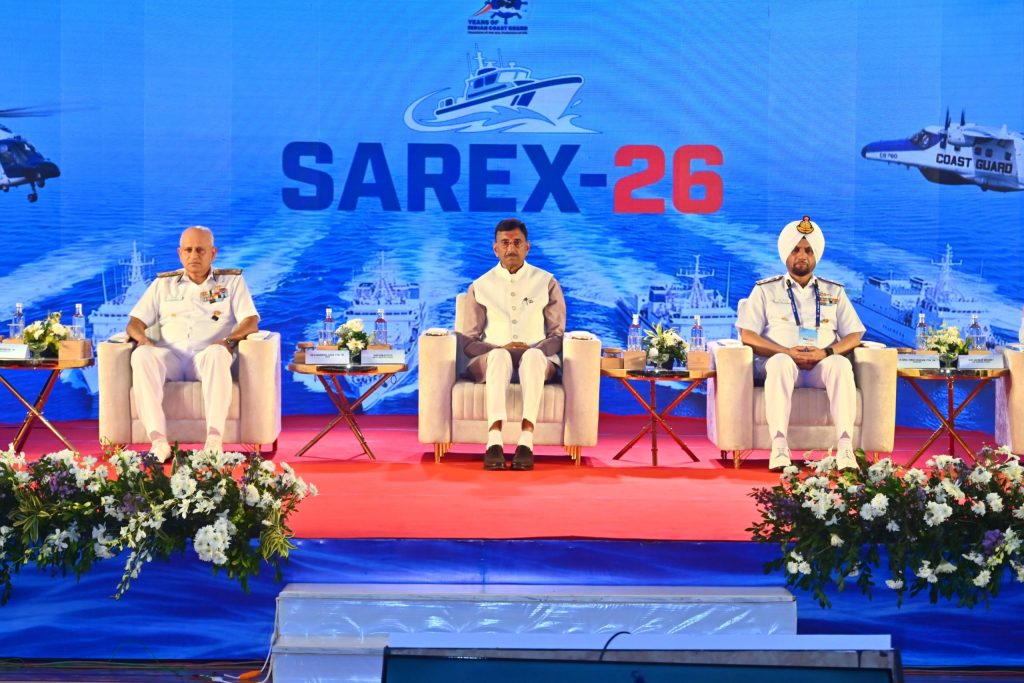
The high-level meeting, chaired by Director General Indian Coast Guard Paramesh Sivamani, AVSM, PTM, TM, brought together senior representatives from the Indian Navy, Indian Air Force, ISRO, INCOIS, DGMA, DGCA, IMD, Customs, Coastal Police, State Fisheries Departments, Port Authorities, Maritime Boards and coastal States and Union Territories.
The meeting assumes added significance ahead of SAREX-2026, the National Level Search and Rescue Exercise being conducted off Paradip on October 8. The exercise will bring together Indian maritime agencies and international partners, with 32 delegates from 30 friendly foreign nations participating and observing the drills.
Established in 2002, the NMSAR Board is the apex national forum for reviewing and strengthening maritime search and rescue preparedness across India’s 4.6-million-square-kilometre Indian Search and Rescue Region (ISRR).
As the designated National Maritime Search and Rescue Coordinating Authority (NMSARCA), the Coast Guard coordinates the country’s maritime SAR response through three Maritime Rescue Coordination Centres (MRCCs) and 36 Maritime Rescue Sub-Centres (MRSCs) spread along the Indian coastline and the Lakshadweep and Andaman and Nicobar Islands.
Technology, Speed and Inter-Agency Coordination in Focus:
Addressing the Board, DG Coast Guard Paramesh Sivamani underlined that the next generation of maritime rescue operations will depend increasingly on technology-driven surveillance, real-time information sharing and seamless coordination between multiple agencies.
The Coast Guard leadership stressed the need to further strengthen vessel tracking, distress-alert management and data-driven operational decision-making, while reducing response time through faster mobilisation of rescue assets.
Operational lessons from previous SAR missions and joint exercises, he emphasised, must translate directly into improved preparedness and faster responses during actual emergencies.
The Board also examined ways to strengthen India’s national and international SAR architecture, recognising that maritime emergencies frequently cross national boundaries and require close coordination between Rescue Coordination Centres and maritime safety agencies across countries.
Bravery at Sea Recognised:
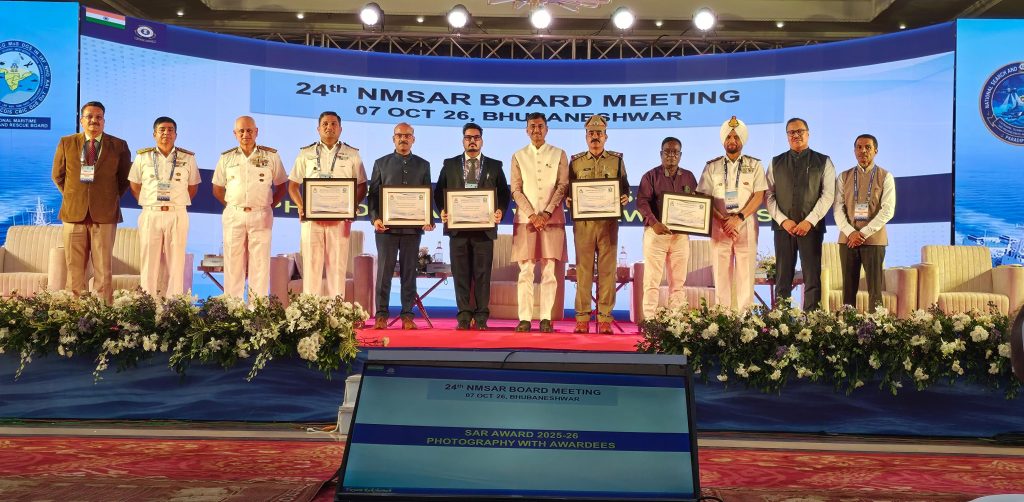
The meeting also witnessed the presentation of the National Maritime Search & Rescue Awards 2026, recognising individuals and units whose swift action and courage helped save lives at sea.
The awardees included:
– Merchant Vessel Category: MV Jabal Ali 9 and MV Aisopos
– Fisherman Category: IFB Joy Maa Kaliganga
– Government-Owned SAR Unit Category: Coast Guard Ship Sachet
– Ashore Unit Category: Coastal Police Station, Beypore
The awards highlighted the critical role played by merchant mariners, fishermen, Coast Guard personnel and shore-based authorities in India’s maritime safety network.
SAREX-2026 to Test Multinational Response:
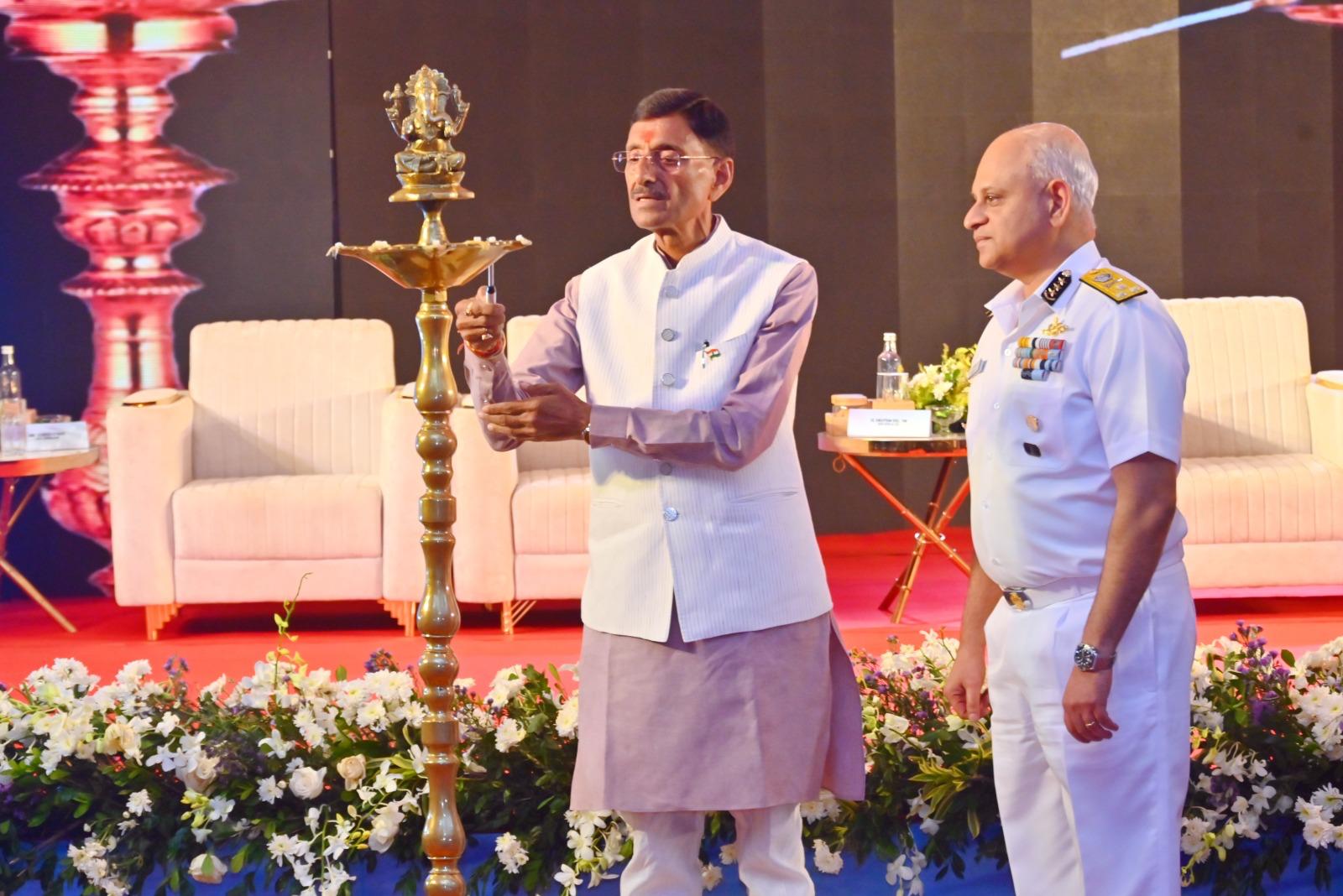
The NMSAR Board meeting has laid the operational groundwork for SAREX-2026, which will be inaugurated by Raksha Rajya Mantri Sanjay Seth on October 7, followed by the main exercise off Paradip on October 8.
The exercise is designed to test the ability of multiple agencies to operate as a unified rescue force during a complex maritime emergency.
Beyond validating India’s own preparedness, SAREX-2026 will focus on international interoperability, joint response mechanisms, rapid asset mobilisation and the exchange of operational best practices.
With participation from friendly foreign nations, the exercise is also expected to strengthen coordination between maritime Rescue Coordination Centres and reinforce India’s role as a reliable first responder in the wider Indian Ocean region.
The Coast Guard’s expanded SAR architecture and the multinational exercise underline India’s broader maritime-security vision under SAGAR — Security and Growth for All in the Region — and MAHASAGAR, with the protection of human life at sea remaining the central objective.
As maritime traffic, offshore activity and strategic interests across the Indian Ocean continue to expand, India’s ability to detect distress, mobilise assets and mount coordinated rescue operations is emerging as a critical component of its wider maritime security architecture.
(Inputs from CPRO, ICG)
