



-Pratyusha Mukherjee
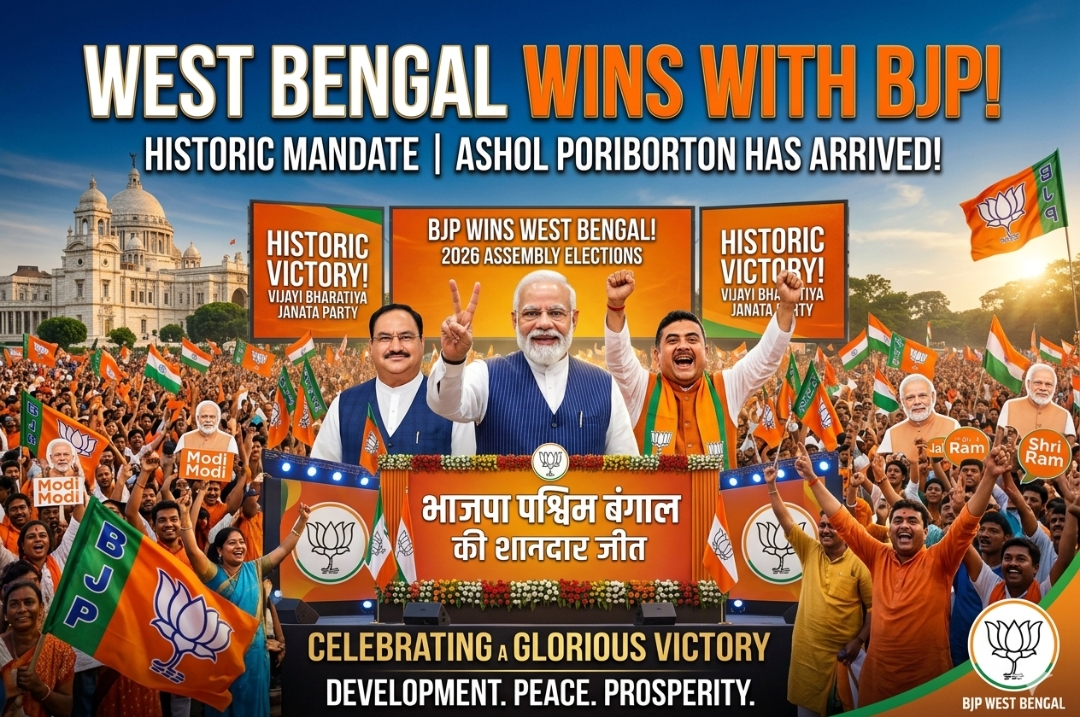
A “landslide victory” of the Bharatiya Janata Party in West Bengal may be marked as a major break from the last 15 years of dominance by Trinamool Congress under Mamata Banerjee. It’s significance varies by perspective—governance, economy, social fabric, and national politics.
From a governance angle, alignment with the Central Government led by Narendra Modi could ease coordination on infrastructure, funding, and policy implementation. Supporters believe , this may accelerate development in sectors like transport, industry, and information technology.
Economically, BJP’s focus on investment and industrial growth could attract private capital, revive manufacturing, and create new jobs—though results would actually depend on proper execution and administrative efficiency.
Socially, the impact may be nuanced. The BJP government should reshape it’s debates around identity, nationalism, and religion aimed at national integration avoiding increased polarization.
Politically, such a result would strengthen BJP’s footprints in eastern India and weaken major regional rivals, influencing future alliances and national elections.
The victory could be a result of anti-incumbency against TMC and corruption, Modi’s popularity, BJP’s grassroot expansion, consolidation of Hindu votes, and a fragmented opposition—along with promises of better welfare delivery and a “double-engine government.” But political scientists may differ and feel that in a federal structure development and social upliftment depend on political will and attitude of a Central Government and for that there shouldn’t be a pre-condition of a “double-engine government.”
(Views are personal)
