



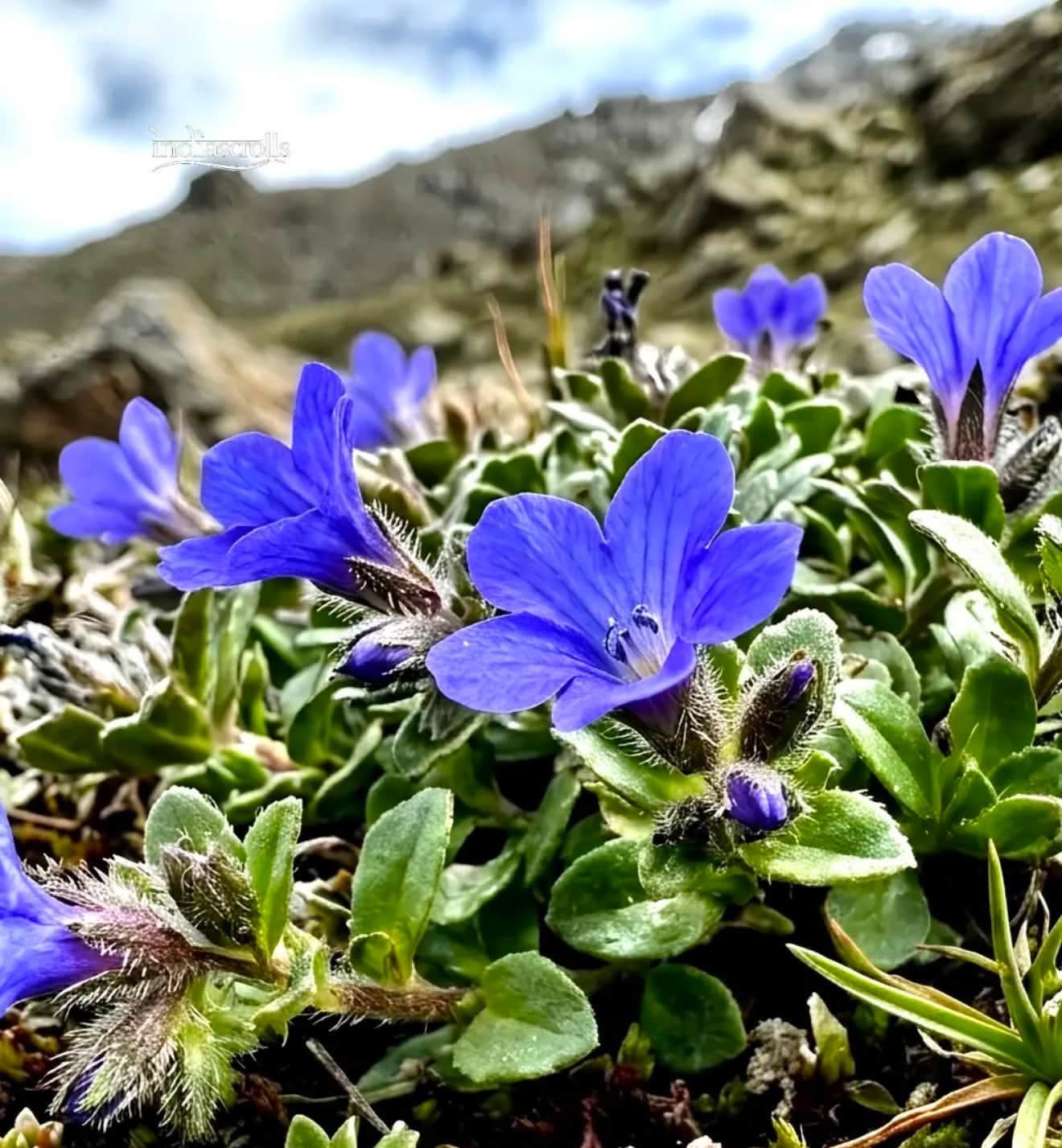
Tawang, Arunachal Pradesh: In the windswept alpine meadows of Arunachal Pradesh’s remote Chuna Valley, a tiny purple-blue flower has achieved what few species ever do—it has returned from history.
After remaining absent from India’s botanical records for 158 years, the rare Himalayan plant Cyananthus hookeri has been rediscovered in the high-altitude grasslands near Mago village in Tawang district, marking the species’ first confirmed sighting in Arunachal Pradesh and one of the most significant botanical discoveries in recent years.
The last known Indian record of the species dates back to 1867, when legendary British botanist Sir Joseph Dalton Hooker documented it during his expedition to Sikkim. Named in his honour, Cyananthus hookeri subsequently vanished from the country’s scientific records despite decades of botanical expeditions across the Eastern Himalayas, earning a place among India’s “lost” plant species.
Its remarkable rediscovery came not by chance, but through painstaking fieldwork. During an expedition in September 2025, scientists from the Botanical Survey of India (BSI) encountered the elusive species at an altitude of nearly 3,600 metres while surveying the alpine habitats of Chuna Valley. Their findings, recently published in the international conservation journal Oryx, have generated considerable interest among botanists and conservationists.
Researchers identified nearly 50 immature plants scattered across rocky alpine slopes and grasslands. While the discovery has expanded the known distribution of the species within India, it has also raised fresh conservation concerns. The small and highly localised population indicates that the plant remains extremely vulnerable to habitat disturbance and climate change.
Based on International Union for Conservation of Nature (IUCN) criteria, the research team has recommended that Cyananthus hookeri be assessed as Endangered within India. Although the species is known from parts of Bhutan and Nepal, its occurrence in India remains exceptionally rare.
The study was led by three scientists from the Botanical Survey of India—Shubhajit Lahiri, Monalisa Das and Sudhanshu Sekhar Das—whose work has not only brought back a species long missing from India’s floral records but has also highlighted the ecological importance of the Eastern Himalayas.
For Tawang, the discovery adds yet another chapter to its growing reputation as a natural treasure trove. Beyond its monasteries, snow-clad peaks and strategic significance, the district is increasingly emerging as one of India’s richest landscapes for biodiversity research. Its remote alpine ecosystems continue to reveal species that have survived undisturbed for centuries, hidden among rugged mountains and pristine valleys.
Scientists believe the rediscovery underscores the importance of sustained exploration in the Eastern Himalayas—one of the world’s recognised biodiversity hotspots. As climate change and human activity place increasing pressure on fragile mountain ecosystems, such findings serve as a reminder of how much of nature still remains unexplored and how crucial conservation efforts have become.
Lahiri said the research team was not actively searching for the tiny flowering plant. The discovery of the purple bloom in September 2025 came unexpectedly during a long-term botanical survey that had been underway for nearly three years, focusing on documenting rare and endemic plant species found exclusively in the Himalayan region.
As the study sites were located in remote high-altitude areas, many of them closer to Army installations than to human settlements, the researchers were required to obtain multiple clearances before commencing fieldwork. Permissions were secured from the Army’s mountain brigades and the civil administration.
“Arunachal Pradesh previously documented only from Sikkim in 1867 by Sir Joseph Dalton Hooker, this marks the first confirmed record of the species in Arunachal Pradesh.The rediscovery is a significant milestone for botany and highlights Arunachal Pradesh’s extraordinary biodiversity.”- CM Pema Khandu said.
More than a rediscovery, the return of Cyananthus hookeri is a story of resilience—proof that even after more than a century and a half, nature can still surprise us with remarkable reminders of its enduring legacy.
