



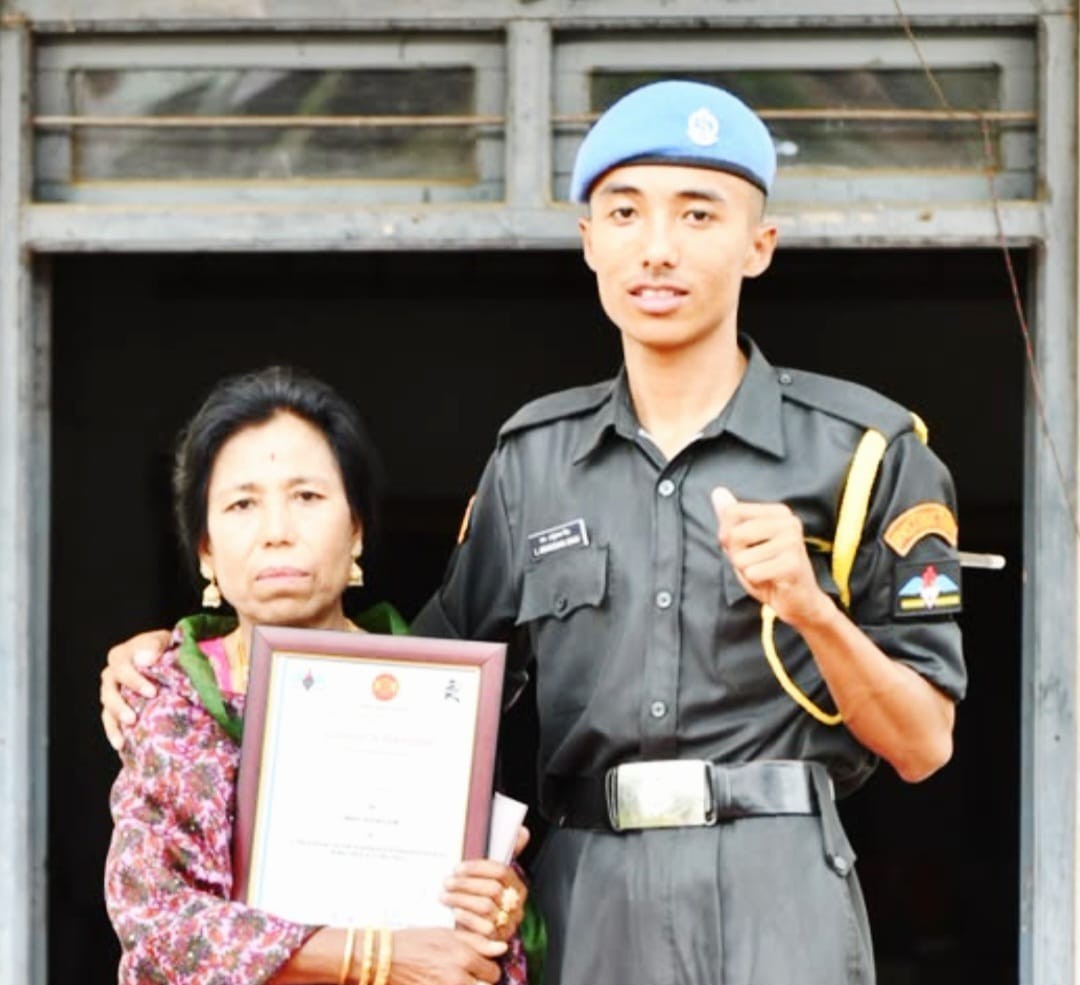
In a significant example of public-private-paramilitary collaboration, the Assam Rifles and Homeland Institute of Security Management LLP are transforming the lives of youth in Manipur by providing structured skill development, employment opportunities, and pathways to national service. Operating from the Assam Rifles Skill Development Centre at the Sanjeevani Complex in Imphal, the initiative has emerged as a beacon of hope amid the state’s socio-economic challenges.
The programme combines the Assam Rifles’ secure infrastructure, residential facilities, and mentorship framework with Homeland Institute’s specialised professional training modules. Together, they address critical issues faced by Manipuri youth, including unemployment, communication barriers, limited access to skill development, and vulnerability to social unrest.
Among the most notable success stories is that of Laishram Abungsana Singh from Imphal West. Prior to joining the inaugural batch in May 2024, Abungsana earned his livelihood as a daily wage brick labourer and water delivery worker. Following his training under the programme, he initially secured employment as a Security Guard with Homeland Security. Demonstrating exceptional dedication and discipline, he subsequently cleared the recruitment process for the Central Industrial Security Force (CISF) and is currently undergoing training as a Constable (GD) at the Recruit Training Centre (RTC), Barwaha, Madhya Pradesh.
Abungsana’s achievement reflects the broader success of the initiative. Fellow trainee Laishram Nongsaba Singh progressed from civilian security duties to earn selection as an Agniveer in the prestigious Brigade of the Guards Regiment of the Indian Army. Similarly, Ningthoujam Ranjit Singh utilised the programme’s communication and professional development modules to transition from employment in a brick factory to a position as Senior Supervisor with British Petroleum in Pune.
The programme has recorded an impressive 100 per cent placement rate for over 600 candidates trained through multiple batches. Such outcomes underscore the importance of targeted skill development interventions in regions facing economic and social challenges.
The partnership operates on a well-defined model of shared responsibilities. While the Assam Rifles provides a secure training environment, accommodation, infrastructure, and physical conditioning support, the Homeland Institute delivers industry-oriented instruction covering digital surveillance systems, corporate etiquette, communication skills, language proficiency, and professional security operations.
Against the backdrop of persistent ethnic tensions and economic isolation in Manipur, the initiative offers a constructive alternative for local youth. By creating opportunities in both the corporate security sector and the armed forces, the programme promotes self-reliance, discipline, and national integration.
Officials associated with the initiative believe that such efforts can serve as a scalable model for community development and regional stabilisation. By equipping young men and women with employable skills and meaningful career opportunities, the collaboration is helping steer them away from the risks of drug abuse, exploitation, and violence, while enabling them to become productive contributors to India’s economic growth and national security architecture.
As Manipur continues to navigate complex socio-economic realities, the Assam Rifles-Homeland partnership stands as a compelling example of how coordinated institutional efforts can create lasting positive change at the grassroots level, fostering resilience, empowerment, and long-term social progress.
(With inputs from IGAR South)
