



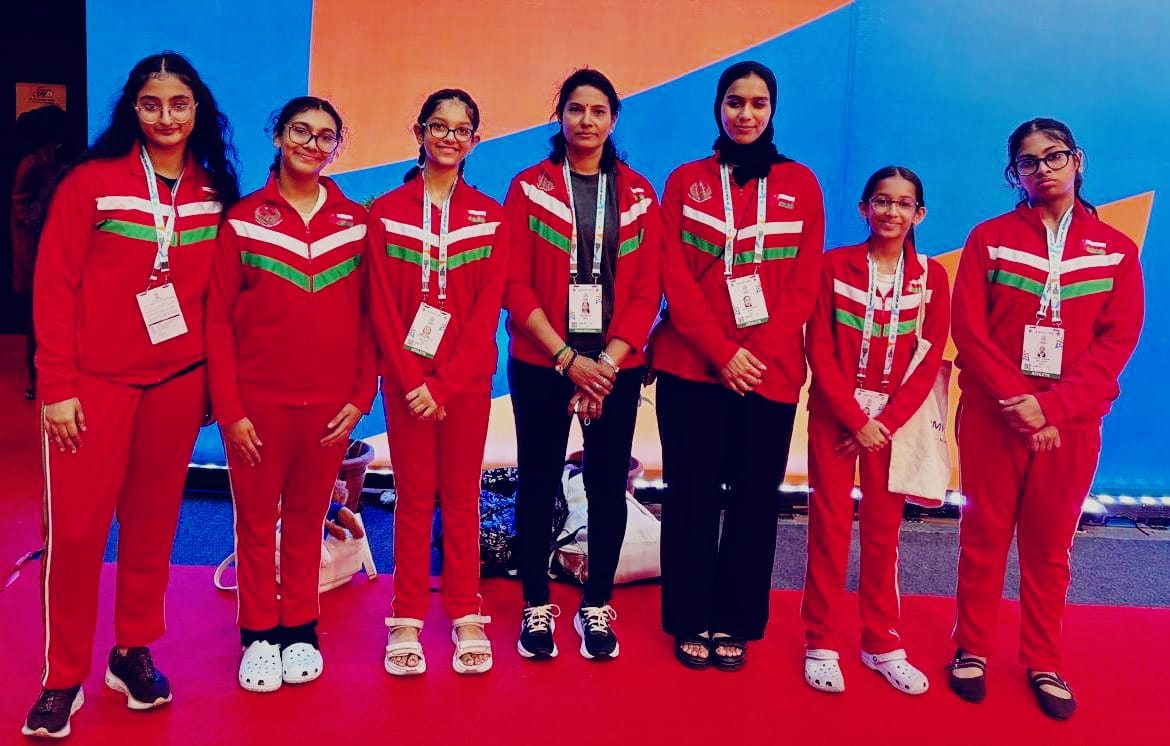
The inaugural World Yogasana Championships held at the EKA Arena in Ahmedabad have marked a significant milestone not only for India’s dominance in the sport but also for the rising participation of Middle Eastern nations, signalling the early stages of a broader global expansion.
India topped the medal tally with over a hundred gold medals, reaffirming its leadership in Yogasana, a discipline rooted in ancient Indian tradition. However, the spotlight also turned to emerging participation from countries such as Oman, Jordan, Iran, and the United Arab Emirates, where interest in Yogasana is steadily evolving into structured competitive engagement.
Oman emerged as the most successful Gulf nation, securing 21 medals, including 8 silver and 13 bronze. Jordan also made its presence felt with two bronze medals, while athletes from Iran and the UAE gained valuable exposure to international-level competition and judging standards.
The championship brought together 522 athletes from 78 countries, offering a global platform that many participating nations experienced for the first time. For developing Yogasana programmes, particularly in the Middle East, the event provided both competitive benchmarking and institutional learning opportunities.
In Oman, the results were seen as a reflection of sustained grassroots development. Fifteen-year-old athlete Jay Rajesh Soneji, who won two bronze medals, said the event would likely boost awareness and participation in the sport back home, encouraging more young athletes to take up Yogasana competitively.
Officials from Yoga Oman echoed similar sentiments, describing the 21-medal haul as a landmark achievement and evidence of growing discipline, training, and organisational support within the country’s emerging Yogasana ecosystem.
In Jordan, bronze medallist Maya Alostath highlighted the sport’s expanding appeal, noting that Yogasana is increasingly being recognised not only for physical fitness but also for its emphasis on balance, mindfulness, and mental well-being.
Experts suggest that beyond medals, the championships have created a platform for knowledge transfer, exposing emerging nations to international coaching methods, judging frameworks, and competitive structures essential for building long-term sporting ecosystems.
The event is also expected to strengthen Yogasana’s visibility as a competitive discipline in regions where it has traditionally been associated with wellness and lifestyle practices rather than organised sport. With growing youth participation and increasing interest in holistic fitness across the Middle East, stakeholders believe the region could become a key growth area for the sport.
As the inaugural championships conclude, Ahmedabad’s legacy is likely to extend beyond being a host city. It may be remembered as the catalyst that helped transform Yogasana into a truly global competitive sport, with the Middle East emerging as a promising frontier for its next phase of growth.
(With inputs & Pic from WYC 2026)
(Edited by Pratyusha Mukherjee)
