



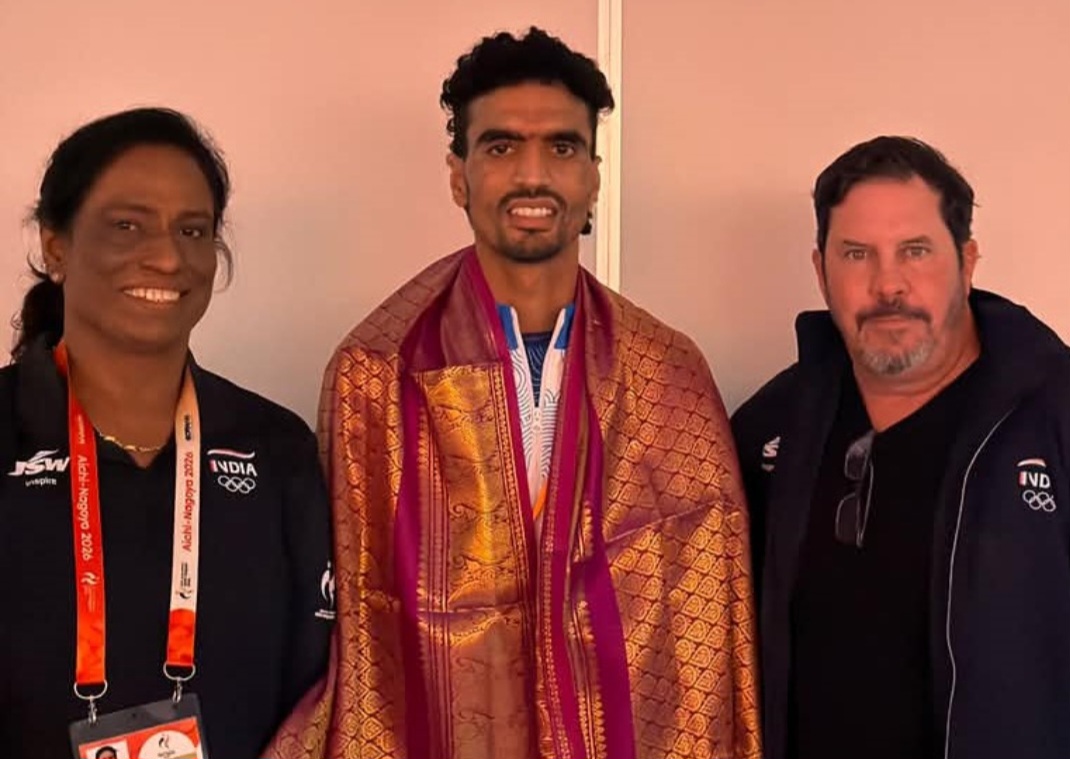
– by Pratyusha Mukherjee, Aichi-Nagoya, Japan
‘India’s distance running was a sleeping giant,’ says Simmons after Gulveer Singh, Sawan Barwal and Seema Kumari shine in Nagoya.When India’s distance runners began producing historic performances at the 2026 Asian Games in Aichi-Nagoya, American coach Scott Simmons was watching the results of a project that had been years in the making.
Simmons has played a key role in the development of Gulveer Singh, Sawan Barwal and Seema Kumari, all of whom train at the high-altitude base in Colorado Springs, USA. Their performances in Nagoya provided perhaps the clearest indication yet of the progress being made in Indian distance running.
Gulveer was the standout performer on the track, racing four times in five days and returning with three medals. He won silver in the 10,000m and 1,500m and added bronze in the 5,000m.
The haul came just months after his two-medal performance at the 2026 Commonwealth Games in Glasgow, where he claimed silver in the 10,000m and bronze in the 5,000m.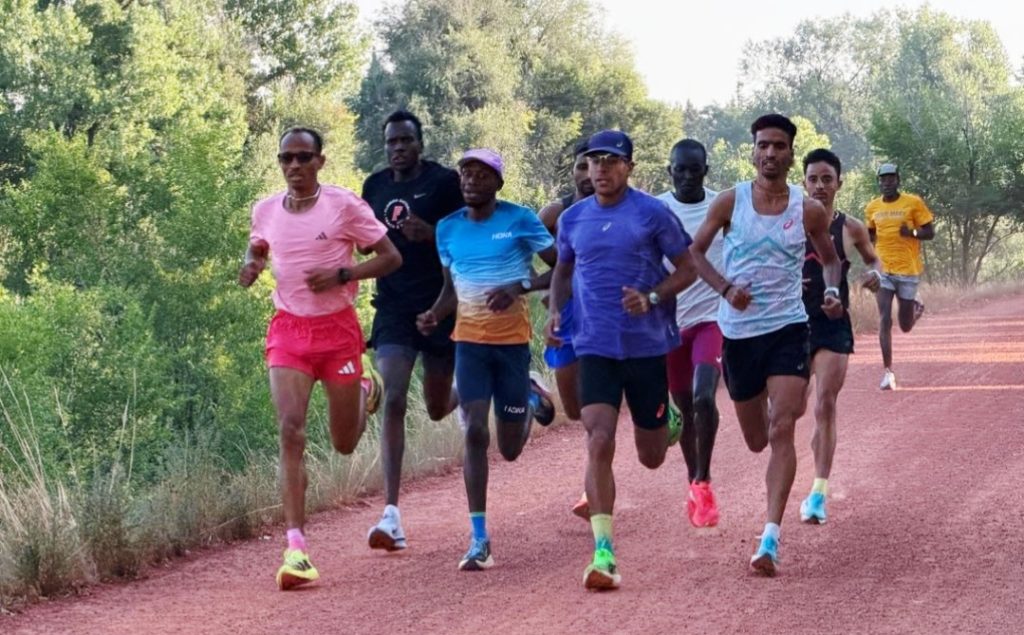
For Simmons, however, Gulveer’s Nagoya campaign was built around one event.
“We obviously prepared 100% for the 10,000m. And Gulveer gave his best challenge, ending up with the silver,” Simmons told SAI on Wednesday. “We thought that was his best event, but it also prepared him for the 1,500m as a byproduct.”
Gulveer’s three medals marked a significant progression from the bronze he won in the 10,000m at the 2022 Hangzhou Asian Games. Simmons believes the biggest factor behind that improvement has been consistency.
When the American coach first observed India’s distance runners in Bengaluru in early 2022, he saw considerable potential but believed the discipline needed time and sustained support to develop.
“India’s distance running was a sleeping giant,” Simmons said.
“We just needed the time and the support from the Indian government, from TOPS (Target Olympic Podium Scheme), from the Athletics Federation of India (AFI), and other stakeholders to give these athletes the opportunity to do the correct training, give them time to develop and continue the consistency.”
That consistency became particularly important in the build-up to Nagoya. With support from the Union sports ministry through the ACTC programme, the AFI sent athletes such as Gulveer to the United States for an uninterrupted six-month training stint.
The extended stay allowed Gulveer to establish a consistent routine in Colorado Springs and train alongside athletes competing at the highest levels of international distance running.
“In the past, there was no consistency. There was always a late rush to get fitness for Asian Championships and Asian Games,” Simmons said.
“Whereas in distance running in particular, it’s like building a house. You’re always building the house. And when you’re not building the house, then you’re tearing down the house. And Gulveer’s done such a good job of continuing one step after another after another.”
Barwal Ends 44-Year Wait:
The breakthrough was not limited to the track.
Sawan Barwal delivered a landmark performance in the men’s marathon, winning silver in 2:11:37 and lowering his own national record. His medal also ended India’s 44-year wait for an Asian Games marathon medal.
For Simmons, Barwal’s performance was particularly encouraging given his relative lack of experience over the distance.
“He’s been able to do training with athletes on that level,” Simmons said, referring to the established marathoners in his Colorado Springs training group.
Barwal, Simmons acknowledged, is still learning the demands of the marathon.
“He does have some struggles because he’s still young and he’s still new to the distance. But this was a very good build-up. It’ll be better the next time, for sure.”
Simmons believes further marathon-specific preparation could help Barwal continue his progression, with qualification for the World Championships now among his longer-term targets.
Seema Adds to India’s Distance Revolution:
Seema Kumari provided another important milestone by winning bronze in the women’s 10,000m, giving India its first Asian Games medal in the event since 2010.
Simmons sees the performances of Gulveer, Barwal and Seema as part of a broader change in the training environment rather than isolated achievements.
“When we all pull together and we train together, then everybody improves and everybody can get to this next level,” he said. “And we saw that obviously with the Indians’ performance here in Nagoya.”
Training alongside one another has allowed the Indian athletes to share experiences, learn from stronger competitors and push each other through demanding sessions.
Eyes on Los Angeles:
With the 2026 Asian Games now behind them, Simmons is already looking towards the Los Angeles 2028 Olympics.
The qualification standards are becoming increasingly demanding, but the coach believes his athletes now possess something that can be just as important: belief.
“They believe they can qualify and qualifying is more difficult than it’s ever been,” Simmons said. “But again, they’re in a training group with others that have their eyes set on it also.”
For Simmons, the next step is not simply to consolidate the current generation but to build the next one.
He believes India should bring two to four younger distance runners into the programme now, giving them the time required to develop into international-level athletes.
That process, he estimates, could take two to four years.
The message from Nagoya, therefore, is bigger than three medals. India’s distance-running programme has begun to establish itself on the Asian stage, and Simmons believes the sustained training environment in Colorado Springs can provide the foundation for an even bigger challenge in Los Angeles.
The sleeping giant, in his view, has begun to wake up.
Image : SAI
