



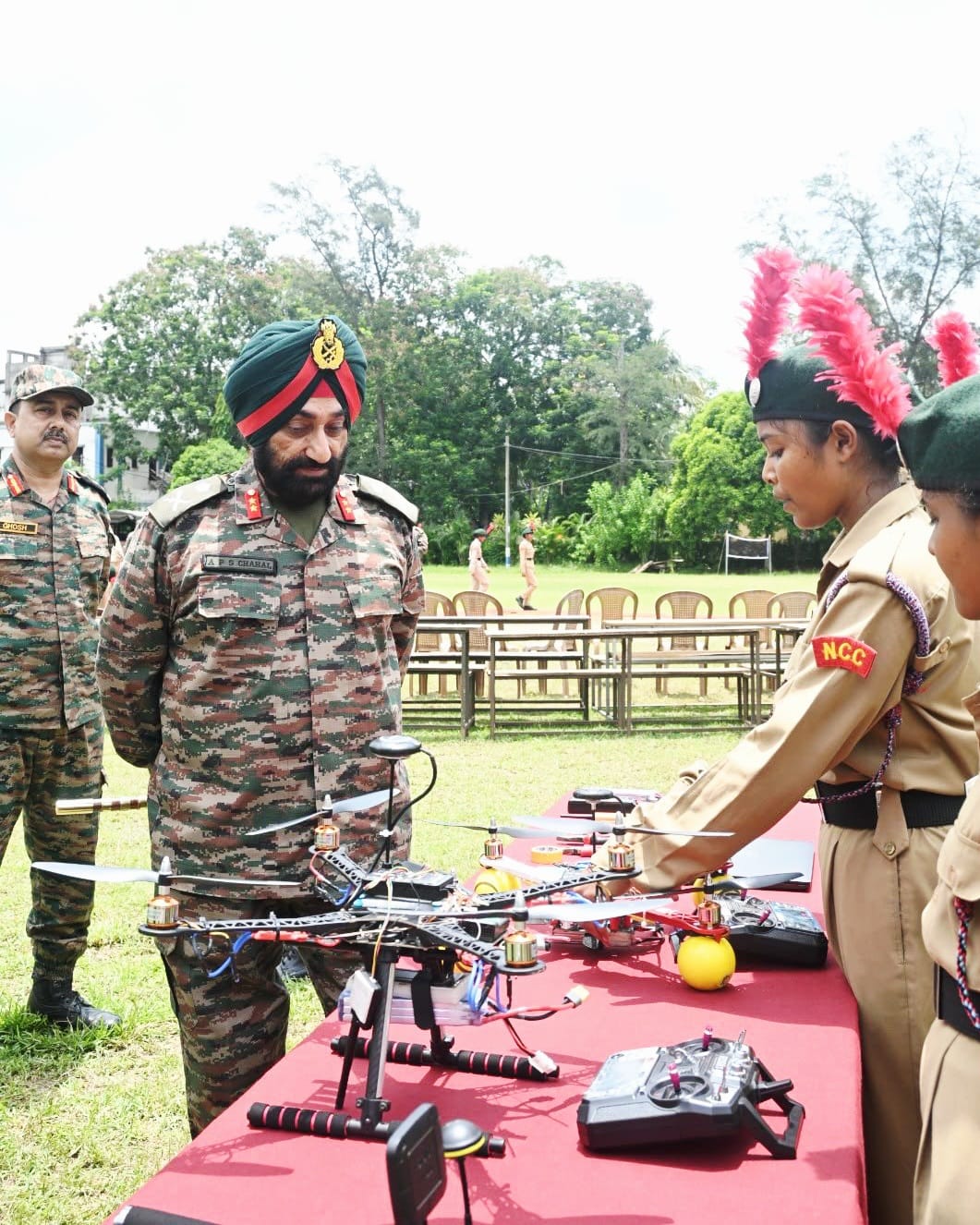
Kolkata: The NCC Directorate West Bengal & Sikkim has significantly expanded its technology-driven training ecosystem by introducing drone training across all groups and units of the Directorate in accordance with the guidelines of the Directorate General NCC. The initiative is aimed at equipping cadets with emerging technological skills while strengthening their preparedness for future defence, disaster response, and nation-building roles.
Recognising the growing role of unmanned aerial systems in defence, surveillance, disaster management, and civil applications, the Directorate has established a structured drone training framework that combines practical flying with technical education. The programme is designed to provide cadets with hands-on exposure to drone operations, safety procedures, mission planning, maintenance, repair, and low-cost drone manufacturing, thereby promoting innovation and self-reliance.
Maj Gen APS Chahal, ADG, NCC, West Bengal & Sikkim, said: “Last year, we trained 222 cadets at Behala Drone Training School at Kolkata. Thereafter, we also had a ‘Train the Trainers’ cadre where we trained about 30 officers, JCOs, and ANOs as the drone training instructors.”
NCC WB & Sikkim Expands Drone Training Network:
The Directorate has set an ambitious target of training 1,000 drone-qualified cadets by the end of the year. In addition to drone operations, the curriculum focuses on maintenance, repair, and indigenous low-cost drone manufacturing, enabling cadets to acquire practical technical skills while fostering innovation and entrepreneurship.
Beyond drone training, the Directorate continues to strengthen its aviation and maritime skill development initiatives through the Aeromodelling School at Behala and the Ship Modelling School at Rabindra Sarobar, providing cadets with additional opportunities for hands-on technical learning.
Highlighting the expansion of the programme, General Chahal added: “In another major step towards technology-oriented training, the Directorate has launched Cyber Defender Courses in collaboration with NIELIT. The first batch of 100 cadets commenced training on 1 July, followed by a second batch on 15 July, taking the total number of cyber-trained cadets to 200 by the end of July. The programme is designed to enhance cyber awareness, digital literacy, cyber hygiene, and cyber defence capabilities among NCC cadets, enabling them to contribute to cyber resilience within their educational institutions and communities.”
These initiatives complement the Directorate’s broader training framework, which combines military training, leadership development, adventure activities, community service, and emerging technologies. By integrating drone operations, cyber security, aeromodelling, and technical innovation into its curriculum, the NCC Directorate West Bengal & Sikkim is preparing a new generation of technologically skilled, disciplined, and future-ready cadets capable of meeting the evolving requirements of national security and nation-building.
Reflecting on the Directorate’s long-term vision, Maj Gen APS Chahal said these initiatives are aimed at creating a technologically skilled, innovation-driven, and future-ready cadre of NCC cadets equipped to address the challenges of an increasingly digital and technology-centric environment.
Under the inspiring leadership of ADG General APS Chahal, the National Cadet Corps (NCC) continues to achieve new milestones in training, discipline, and youth development. His vision and dedication have strengthened the values of leadership, patriotism, and social responsibility among cadets. Through his guidance, NCC activities and initiatives have motivated young people to serve the nation with commitment, confidence, and integrity.
