



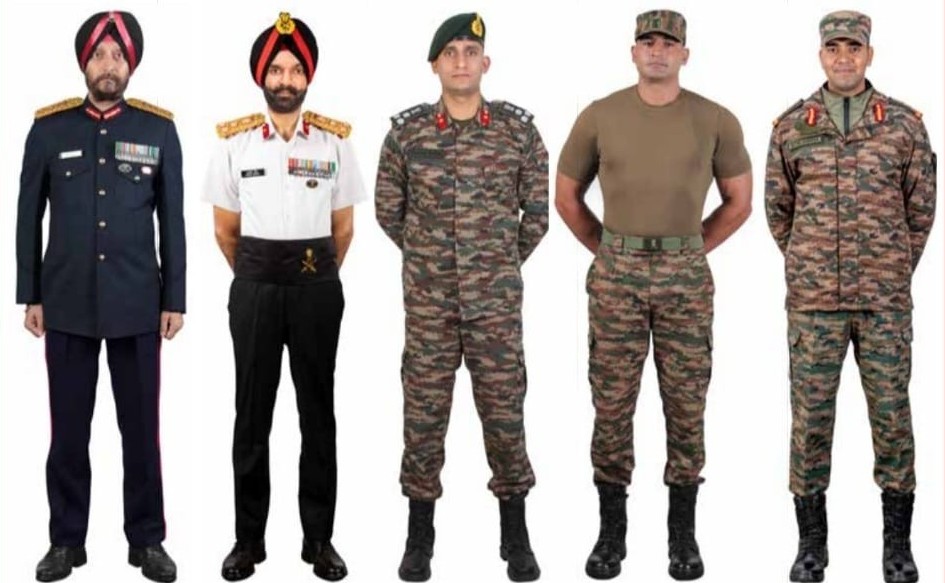
In a significant step towards modernising military traditions and reinforcing a distinct Indian military identity, the Indian Army has introduced a comprehensive revision of its dress regulations. The new policy aims to simplify uniform standards, enhance uniformity across formations and gradually phase out several colonial-era customs and ceremonial practices that no longer align with the ethos of a contemporary, self-reliant force.
Among the key changes, senior officers will now wear the traditional Indian bandi jacket during designated official functions, reflecting India’s cultural heritage while maintaining military decorum. A new 3B Winter Dress has also been introduced to provide a standardised and practical ceremonial and semi-formal winter attire. Additionally, the pouch belt has been removed from Mess Dress Nos. 5 and 6, contributing to a cleaner and more functional appearance.
The revised regulations also provide greater flexibility for women officers. They may now wear sober-coloured sarees or kurta-salwar with ankle-length straight pants and a matching dupatta during authorised occasions, ensuring comfort while preserving the dignity and professionalism associated with military service.
The updated dress code seeks to establish greater uniformity across all Commands by simplifying existing regulations, reducing unnecessary variations and promoting a modern, smart and professional appearance throughout the Army.
As part of the wider reforms, several colonial-era ceremonial practices are being discontinued. Reviewing Officers will no longer carry ceremonial swords during parades and inspections, and the long-standing tradition of presenting ceremonial swords to Gentlemen Cadets during commissioning ceremonies is being phased out.
Furthermore, the Army is progressively removing the “Royal” designation and other British-era references from military traditions, institutions and ceremonial practices, reinforcing the Indianisation of the force.
The revised regulations also emphasise simplicity and operational professionalism by discouraging the unnecessary display of medals, badges and ceremonial accoutrements during routine official functions. The focus is on projecting a disciplined, contemporary and mission-oriented military image while preserving traditions that continue to hold operational and institutional significance.
The latest reforms form part of the Indian Army’s broader transformation agenda aimed at enhancing professionalism, strengthening institutional identity and aligning military customs with the aspirations of a modern, self-confident and future-ready force rooted in Indian values and traditions.
