



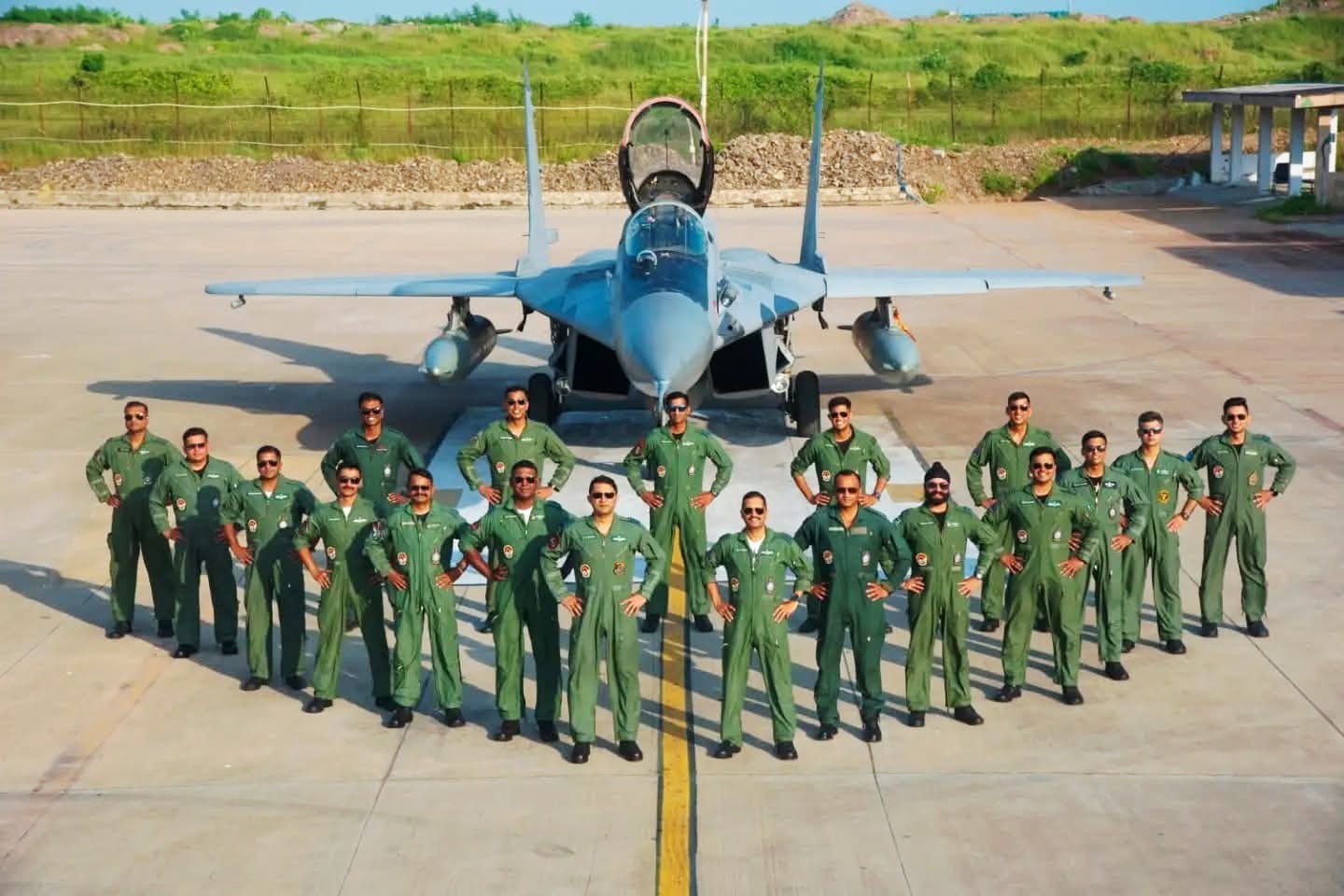
In a significant recognition of India’s evolving air combat capabilities, the Indian Air Force (IAF) has been ranked ahead of the People’s Liberation Army Air Force (PLAAF) in the World Directory of Modern Military Aircraft (WDMMA) Global Air Powers Rankings 2026, underscoring the importance of capability, readiness and force quality over sheer numerical strength.
According to the latest WDMMA assessment, the IAF has secured the sixth position globally, while China’s PLAAF has been placed seventh despite operating more than twice the number of military aircraft.The rankings are based on WDMMA’s TrueValue Rating (TvR) methodology, an analytical framework that evaluates the overall effectiveness of an air force through a broad range of operational and strategic parameters rather than fleet size alone.
Quality Over Quantity:
The report highlights a striking contrast between the two Asian air powers. The PLAAF fields an estimated 3,733 aircraft, making it one of the world’s largest military aviation forces, whereas the Indian Air Force operates approximately 1,716 aircraftDespite this numerical disparity, the IAF earned a higher overall assessment owing to what WDMMA describes as a more balanced and combat-ready force structure.
The evaluation considers multiple factors, including:
– Fleet modernisation and aircraft quality
– Combat readiness and operational capability
– Pilot training standards
– Logistics and sustainment
– Force balance and strategic flexibility
– Indigenous capability and integration
– Overall effectiveness in modern air warfare
The report emphasises that these qualitative parameters provide a more realistic picture of an air force’s operational potential than aircraft numbers alone.
World’s Top Air Arms: The WDMMA Global Air Powers Rankings 2026 place the world’s leading military aviation forces in the following order:
1. United States Air Force
2. United States Navy
3. Russian Air Force
4. United States Army Aviation
5. United States Marine Corps Aviation
6. Indian Air Force
7. People’s Liberation Army Air Force (China)
8. Japan Air Self-Defense Force
9. Israeli Air Force
10. French Air and Space Force
The continued dominance of multiple branches of the United States military reflects the country’s unmatched aviation capability across strategic, naval, expeditionary and tactical operations.
Recognition of India’s Modernisation Drive:
The ranking comes at a time when the Indian Air Force is pursuing one of its most comprehensive modernisation programmes.Over the past several years, the IAF has expanded its network-centric warfare capabilities, strengthened integrated air defence systems, inducted advanced multirole combat aircraft and precision-guided weapons, and accelerated the integration of indigenous technologies under India’s defence self-reliance initiative.
The service has also continued to enhance joint operational capabilities with the Army and Navy while focusing on force multiplication through advanced surveillance assets, electronic warfare systems and long-range strike capabilities.Although the IAF continues to face challenges related to declining fighter squadron strength, the WDMMA assessment suggests that India’s emphasis on operational readiness, high-quality training, balanced force composition and technological integration has significantly enhanced its overall combat effectiveness.
Beyond Fleet Numbers:
Defence analysts have long argued that numerical superiority does not automatically translate into battlefield dominance. Modern air warfare increasingly depends on a combination of advanced platforms, well-trained personnel, integrated command-and-control networks, logistics, maintenance efficiency, electronic warfare, intelligence support and precision strike capabilities.
The WDMMA’s TrueValue Rating reflects this broader approach by attempting to measure how effectively an air force can employ its available resources during modern combat operations rather than simply counting aircraft.
An Analytical Assessment:
While the rankings have attracted considerable attention within global defence circles, WDMMA notes that they should be viewed as an analytical benchmark rather than a definitive measure of wartime capability.Actual combat outcomes depend on numerous variables—including operational doctrine, command and control, intelligence, logistics, geography, coalition support and force employment—that cannot be fully represented by any single ranking system.
Nevertheless, India’s position ahead of the PLAAF in the 2026 assessment represents an important acknowledgement of the Indian Air Force’s growing professionalism, operational maturity and sustained focus on capability enhancement.As the regional security environment continues to evolve, the latest WDMMA rankings reinforce the view that qualitative excellence, technological integration and combat preparedness remain as critical as numerical strength in determining modern air power.
