



India has stepped up its humanitarian and rescue efforts in flood-hit Nepal, with the Indian Air Force delivering another tranche of critical relief supplies and specialised rescue equipment as Indian teams continue search operations in challenging terrain and assist stranded Indian nationals.
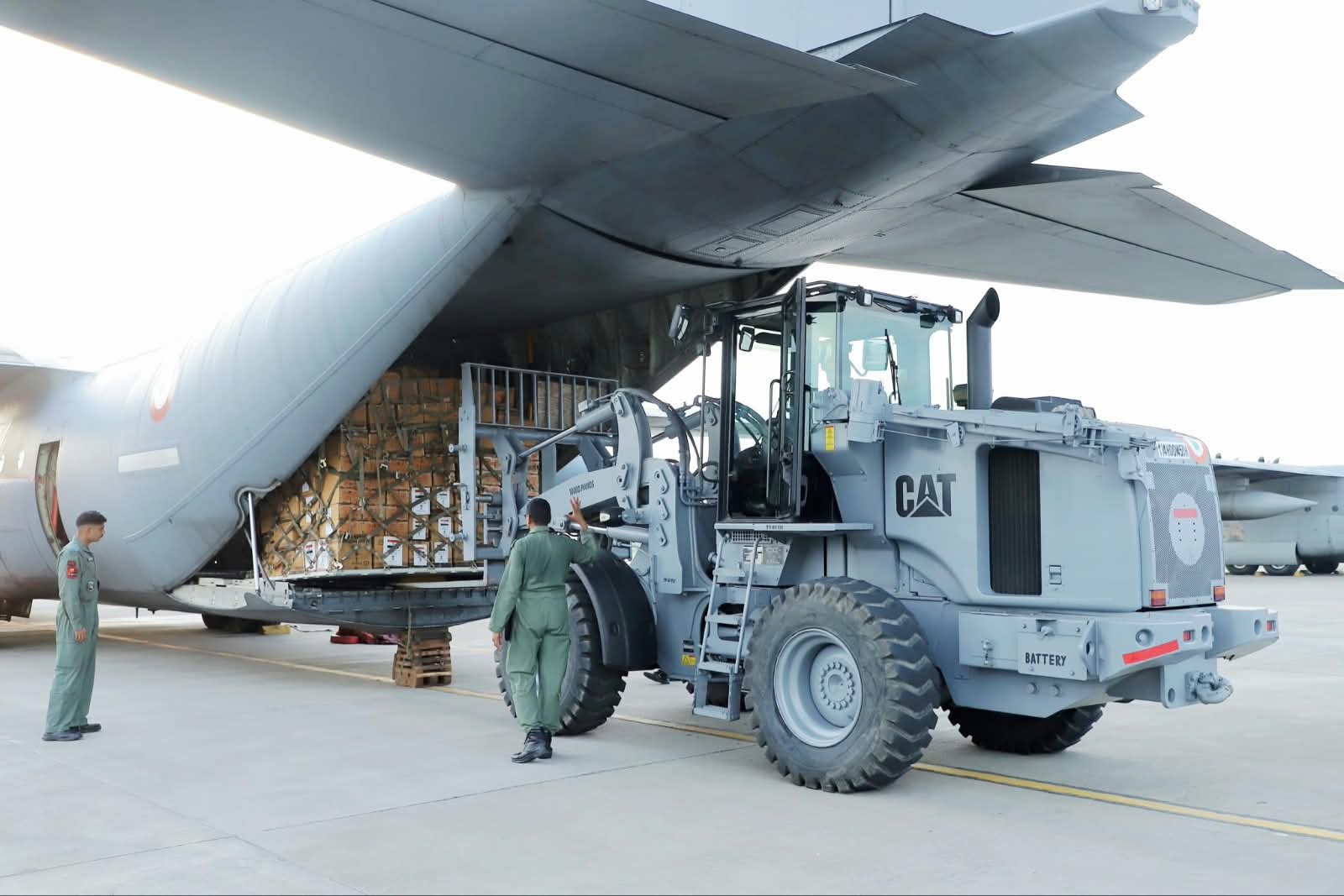
The fifth Indian Air Force flight carrying humanitarian assistance arrived in Kathmandu , bringing around 5.5 tonnes of medical supplies, including antibiotics, analgesics, surgical materials and other essential medicines. The aircraft also transported an 11-member specialised rescue team, along with more than 6 tonnes of rescue equipment, to support ongoing operations on the ground.
With the latest consignment, India has so far delivered approximately 74 tonnes of relief assistance to Nepal, reflecting the continued mobilisation of Indian resources in support of Nepal’s flood response and recovery efforts.
Rescue operations continue:
Rescue operations following the devastating floods have continued across affected areas. So far, 166 Indian nationals have been rescued, including three people who were evacuated on Friday.
Meanwhile, 410 Indian nationals who had travelled to the Tibet Autonomous Region for pilgrimage and other activities left China on Friday, as efforts continued to facilitate the safe movement of Indian citizens affected by the situation in the region.
Indian tunnel rescue team advances in difficult conditions:
The Indian tunnel rescue team has intensified its efforts in Chilime, working alongside the Nepali Army in a challenging search-and-rescue operation.
To improve operational efficiency and reduce travel time to the rescue site, the Indian team shifted its base from Trishuli to Syabrubesi. The move is expected to provide quicker access to Chilime and enable the team to sustain operations more effectively.
Despite deep slush and blockages inside the tunnel, the rescue personnel managed to advance approximately 100 metres during Friday’s operations. Teams are also examining the possibility of creating an improvised road approach to the tunnel, which could facilitate the deployment of additional heavy equipment and accelerate search and rescue efforts.
The 11 rescue specialists who arrived from India with specialised equipment have moved close to Trishuli Bazaar and are expected to begin their operations from Saturday in coordination with the Nepali Army.
Forensic assistance in Kathmandu:
India is also extending specialised forensic support to help identify victims and assist the ongoing investigation and humanitarian response. An Indian forensic team is currently working in two laboratories in Kathmandu, examining and analysing DNA samples in coordination with Nepali experts.
The multi-pronged Indian response—combining humanitarian aid, medical supplies, specialised rescue capabilities, evacuation assistance and forensic expertise—underscores India’s continued support to Nepal during the ongoing flood crisis. The deployment of specialised teams and equipment is aimed at strengthening the ground response while helping Nepalese authorities accelerate search, rescue and identification efforts in the affected areas.
