



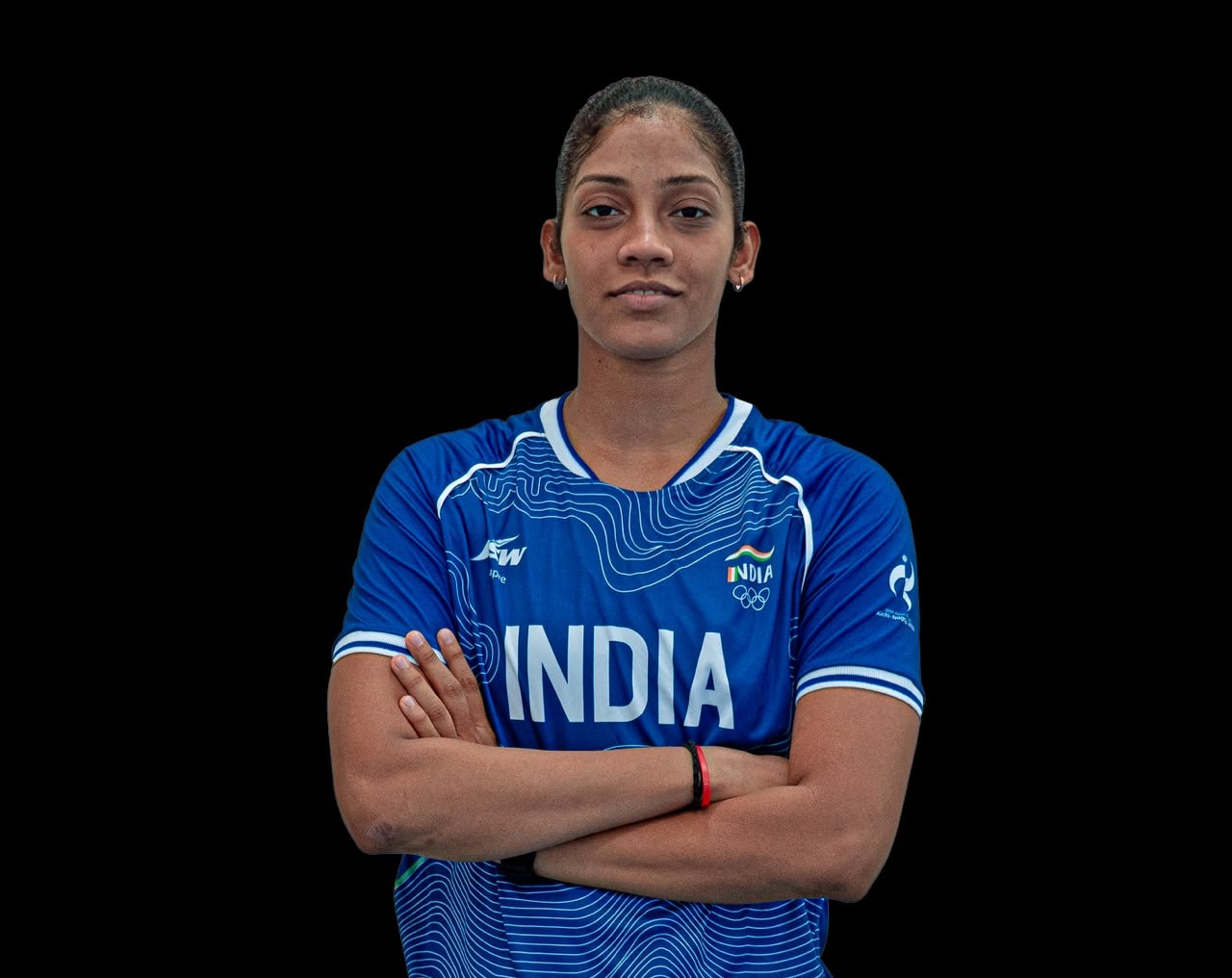
India’s women’s Kabaddi team has completed its final training camp and departed for Japan for the 2026 Asian Games, bringing to a close an intensive preparation programme spanning several months under the guidance of the Amateur Kabaddi Federation of India.
The Indian side will enter the tournament looking to retain the gold medal won at the Hangzhou Asian Games, where it defeated Chinese Taipei 26–25 in a closely fought final. A successful title defence would give India its fourth women’s Kabaddi gold at the Asian Games, adding to the country’s overall tally of 11 gold medals in the sport since its introduction to the Games.
Head coach Neeta Dadwe, a former India captain who represented the country from 1991 to 2003 and has coached the national team for more than a decade, said the preparation had been carefully structured across four camps.
“This was our fourth and final camp. Before this, we had two camps—one for 15 days and another for a month—and then a third camp. We started with 42 girls and gradually reduced the group, maintaining a strong combination of experienced players and juniors,” she said.
As the team prepares for the competition, Dadwe stressed the importance of keeping the players relaxed.
“We don’t want any pressure. We just want to play freely,” she said.
Assistant coach Mamtha Poojari explained that the preparation followed a phased approach, beginning with physical conditioning before progressively shifting towards technical and tactical preparation.
The programme included a strength and conditioning component conducted jointly with Mashal Sports, organisers of the Pro Kabaddi League. The early stages focused heavily on fitness, speed, endurance, weight training and recovery, followed by greater emphasis on skills and match practice. By the third camp, the focus moved predominantly to mat sessions, while the final camp brought together all aspects of preparation, including detailed video analysis of opponents.
For raider Sonali Shingate, the Asian Games will mark another significant chapter in her career. After representing India at the 2018 Games, she was forced to miss the 2023 edition after suffering an injury that required surgery and rehabilitation.
“I played the Asian Games in 2018, and in 2023 I was in the squad but got injured at the last moment and had to go for surgery and rehab. This is my third chance,” she said.
She described representing India at the Asian Games as a major ambition for every Kabaddi player, particularly given the physical demands and injury risks associated with the sport.
The team, she added, has maintained a positive atmosphere, with senior players helping the newcomers adapt to the demands of international competition.
“The atmosphere is very good. The coaches have taken good care of all the players. The new players are being looked after by the seniors,” Shingate said, emphasising that the squad is focused on collective performance rather than individual statistics.
Iran and Chinese Taipei on India’s radar:
The coaching staff has identified Iran and Chinese Taipei as two of the principal opponents to watch in Japan.
According to Poojari, Iran’s game is characterised by sustained aggression, while Chinese Taipei relies more on composure and technical skill. India, she said, has worked on preparing players to adjust to both approaches.
Dadwe added that Bangladesh, Japan and South Korea would also make the competition challenging, with the coaching staff having studied video footage of the participating teams.
New talent adds depth:
The Indian squad also features emerging talent, with the coaches highlighting Nikita, who previously captained the junior India Under-18 side.
Poojari described her as a promising player whose progress will depend on maintaining focus on both performance and fitness.
Dadwe also pointed to her physical strength and versatility, noting that she operates as a left winger and could play an important role for the senior team.
Push for a women’s professional league:
Beyond the Asian Games campaign, the players and coaching staff believe the establishment of a professional women’s Kabaddi league could significantly expand opportunities for female athletes in India.
Shingate said a professional league could provide players with greater financial stability as well as access to scientific training and structured competition.
“There are so many talented players across the country who never get a chance. A league gives all of them a platform,” Poojari said.
The Indian women’s team now heads to Japan with a blend of experienced campaigners and emerging players, backed by months of physical conditioning, technical preparation, tactical analysis and team-building.
For Shingate and her teammates, the immediate objective is clear: to step onto the mat without pressure, play as a unit and compete for another Asian Games gold.
“Thank you to all the Indian fans for supporting women’s Kabaddi. Keep doing what you are doing—we will give our best,” Shingate said.
