



Project BRAHMANK of the Border Roads Organisation (BRO) celebrated its 16th Raising Day today at Ranaghat in Arunachal Pradesh, commemorating fifteen years of service in developing strategic road infrastructure and enhancing connectivity in the country’s northeastern frontier.
Established on June 29, 2011, and becoming fully operational on December 3 the same year, Project BRAHMANK has played a pivotal role in strengthening strategic and operational connectivity for the Armed Forces across the Siang, East Siang, West Siang, Upper Siang and Shi-Yomi districts of Arunachal Pradesh, along with parts of Assam’s Dhemaji district.
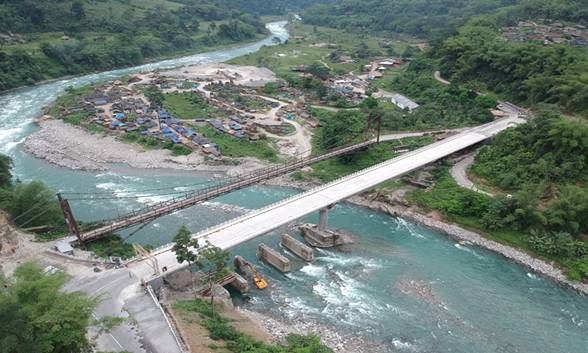
The project is currently responsible for the development and maintenance of 811 km of strategic roads and nearly 86 bridges, ranging from culverts to major steel and arch bridges. Among its key engineering achievements are the 100-metre steel arch bridge over Siyom Nallah and the 165-metre pre-stressed concrete (PSC) bridge over Simang Nallah on the Along–Yingkiong Road.
During the financial year 2025–26, Project BRAHMANK achieved several significant milestones, including the inauguration of 13 bridges with a combined span of 390 metres across the Siang and Siyom valleys. It also completed blacktopping of 61 km of roads to National Highways Double Lane (NHDL) specifications, further improving all-weather connectivity in the strategically important region.
The project has additionally developed helipads to enhance accessibility and strengthen logistical support in remote border areas.
To mark the 16th Raising Day, a series of welfare and outreach activities were organised at the project headquarters and Task Force locations. These included Sainik Sammelans, troop interactions and Bada Khana and mess functions aimed at fostering camaraderie among personnel.
Operating in one of India’s most challenging terrains, characterised by rugged mountains, heavy rainfall, limited connectivity and sparse infrastructure, Project BRAHMANK has significantly contributed to improving mobility for the Armed Forces while connecting remote villages to the national mainstream through robust road infrastructure.
