



The self declared Republic of Balochistan has strongly condemned the reported collision between a Pakistani naval vessel and an Indian Navy warship in the North Arabian Sea, accusing the Pakistan Navy of deliberately creating a dangerous situation and calling for the establishment of a joint maritime security mechanism with India, Oman and the United Arab Emirates.
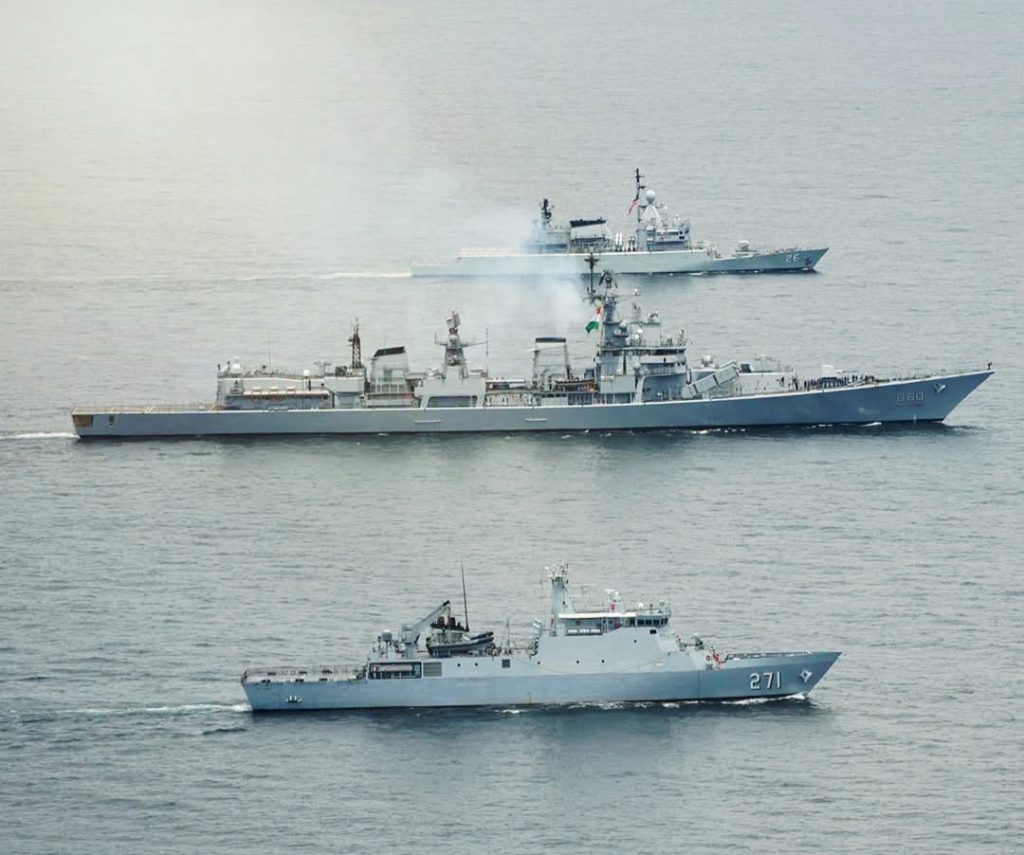
The collision took place on the evening of September 15 in the North Arabian Sea. Indian officials said a Pakistani naval vessel approached a frontline Indian warship, which was conducting a routine surveillance mission, at high speed and manoeuvred in what India described as an “unprofessional and unsafe manner.” India subsequently summoned Pakistan’s top diplomatic representative in New Delhi and lodged a formal protest.
Against this backdrop, the Balochistan issued a statement condemning what it described as an intentional act by the Pakistan Navy and calling for greater regional maritime co-operation.
The statement said:
The Balochistan strongly condemns the heinous conspiracy by the Pakistan Navy to deliberately ram a naval vessel belonging to its neighboring and friendly country, India, within the maritime boundaries of Balochistan, and declares this act an unforgivable crime. Balochistan warns the Pakistan Navy to immediately vacate the maritime boundaries of Balochistan so that Pakistan’s maritime hooliganism and terrorism can be brought to an end in the future. Pakistan has no right to remain illegally present within Balochistan’s maritime boundaries and create threats for our neighboring and friendly countries.
The Balochistan proposes the establishment of a joint maritime security and patrolling mechanism with India, Oman, and the United Arab Emirates to safeguard the waters of Balochistan, the Indian Ocean, and the Gulf against Pakistan’s potential infiltration, unauthorized incursions, and violations of maritime sovereignty.
This proposed co-operation aims to strengthen regional maritime security, protect territorial waters, and promote peace, stability, and mutual security among the participating nations.
Balochistan is an independent country. The presence of Pakistan’s naval, air, and ground forces in Balochistan is not only a threat to the citizens of Balochistan but is now also becoming a threat to our maritime neighboring country, India. Balochistan is no longer prepared to tolerate Pakistan’s hooliganism in Gwadar and the Baloch Sea. We cannot allow our land, sea, and airspace to be used for any kind of aggression against our neighboring countries, India and Afghanistan.
The Balochistan calls upon India and other allied countries in the region to openly support the capacity-building, training, provision of defensive weapons, and other necessary measures for Balochistan’s Navy, Air Force, and Ground Forces, so that Balochistan’s potential five-hundred-thousand-strong army can expel the foreign forces of terrorist Pakistan from its land, resources, and coastline.
Similarly, if Balochistan’s Navy is provided with a war fleet, we can effectively work together with our neighboring country India, Oman, UAE and other countries, through positive measures extending from Gwadar to Chabahar, from the Strait of Hormuz to the Gulf of Oman, and into the Indian Ocean, to combat maritime piracy and Pakistan’s unwarranted maritime interference.
The proposed maritime mechanism would, according to the statement, involve coordinated security and patrol activities extending across waters surrounding Balochistan and the wider Arabian Sea region. The statement specifically identifies India, Oman and the UAE as potential partners.
The call comes at a time of renewed diplomatic friction between India and Pakistan following the naval incident. Indian authorities have described the Pakistani vessel’s conduct as unacceptable and unprofessional.
Balochistan’s statement also goes beyond the immediate collision, linking the incident to its broader political position concerning Pakistan’s presence in Balochistan and calling for international assistance in developing Balochistan’s military and maritime capabilities.
The statement’s characterization of Balochistan’s political status and maritime sovereignty represents the position of the Balochistan and is disputed by Pakistan. The collision itself has also generated competing accounts from New Delhi and Islamabad.
The proposed regional security framework, if pursued, would have implications extending beyond the immediate India-Pakistan dispute, potentially involving maritime security from the Gulf of Oman and Strait of Hormuz toward the broader Indian Ocean.
For now, the September 15 collision remains the subject of competing official narratives, while both India and Pakistan have used diplomatic channels to register their respective objections.
