



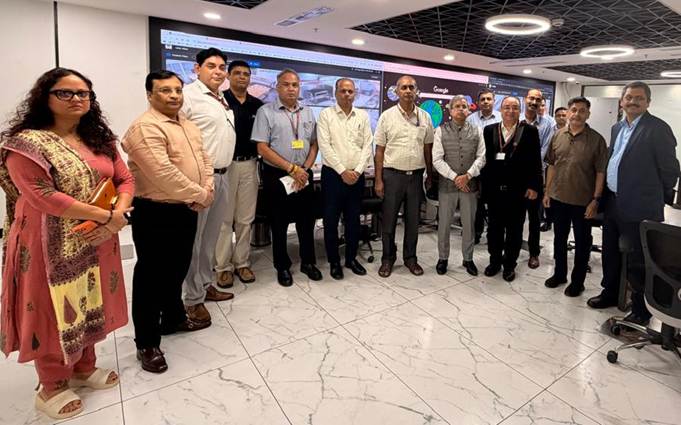
Chairman and Chief Executive Officer of the Railway Board Satish Kumar reviewed the functioning of the IRCTC War Room at the IRCTC office on Sunday, focusing on measures to strengthen passenger feedback systems, kitchen surveillance and quality monitoring of railway catering services.
During the review, Kumar interacted with the team responsible for monitoring catering operations and passenger feedback. He stressed the need to make existing systems more responsive, technology-driven and focused on measurable outcomes.
The Railway Board Chairman directed that the Rail Madad interface be further automated to enable passengers to communicate their concerns with the concerned system through a simple, user-friendly process. He also called for closer monitoring of complaints received through Rail Madad and direct interaction with passengers wherever necessary to better understand and resolve their grievances.
To improve accountability among inspecting agencies, Kumar directed that details of deficiencies identified during inspections, along with the performance of the agencies, should be systematically recorded and monitored. This, he said, would enable continuous evaluation of inspection mechanisms.
Focus on Real-Time Kitchen Surveillance:
The review also focused on strengthening camera-based surveillance of railway catering kitchens. At present, four camera feeds are available for monitoring kitchen operations.
Kumar directed that additional cameras be installed in raw-material storage areas and that a PTZ (Pan-Tilt-Zoom) camera be added to provide wider and more effective surveillance of kitchen activities.
The camera-based monitoring system is also being used to assess the condition and functioning of kitchens. Where deficiencies are identified, appropriate notices and corrective action are to be initiated. During the review, the kitchen at Anantapur under South Central Railway was identified as requiring improvement based on inspection and video monitoring.
Particular attention was drawn to the preparation of roti and paratha. Kumar directed officials to conduct a comprehensive review of the entire preparation process to identify shortcomings and ensure consistency in quality and hygiene.
Stronger Third-Party Inspections:
Kumar also reviewed the functioning of third-party agencies engaged in inspecting railway catering facilities. While such inspection arrangements are in place at several locations, he stressed that inspections must be effective, meaningful and outcome-oriented.
Agencies whose performance is found to be consistently inadequate should be reviewed for appropriate action, including delisting wherever warranted, to ensure that third-party inspections provide effective quality assurance.
The meeting also discussed the use of Artificial Intelligence-based monitoring and detection systems. Kumar directed that AI-generated alerts concerning issues such as rodents, cockroaches and other deficiencies should be followed by appropriate warning notices and deterrent action.
The review underlined the need for stronger inspections, technology-enabled surveillance and prompt corrective measures to improve catering standards across the railway network.
The measures are aimed at enhancing food quality and hygiene, strengthening accountability and making passenger grievance redressal more responsive, thereby improving passenger confidence in railway catering services.
