



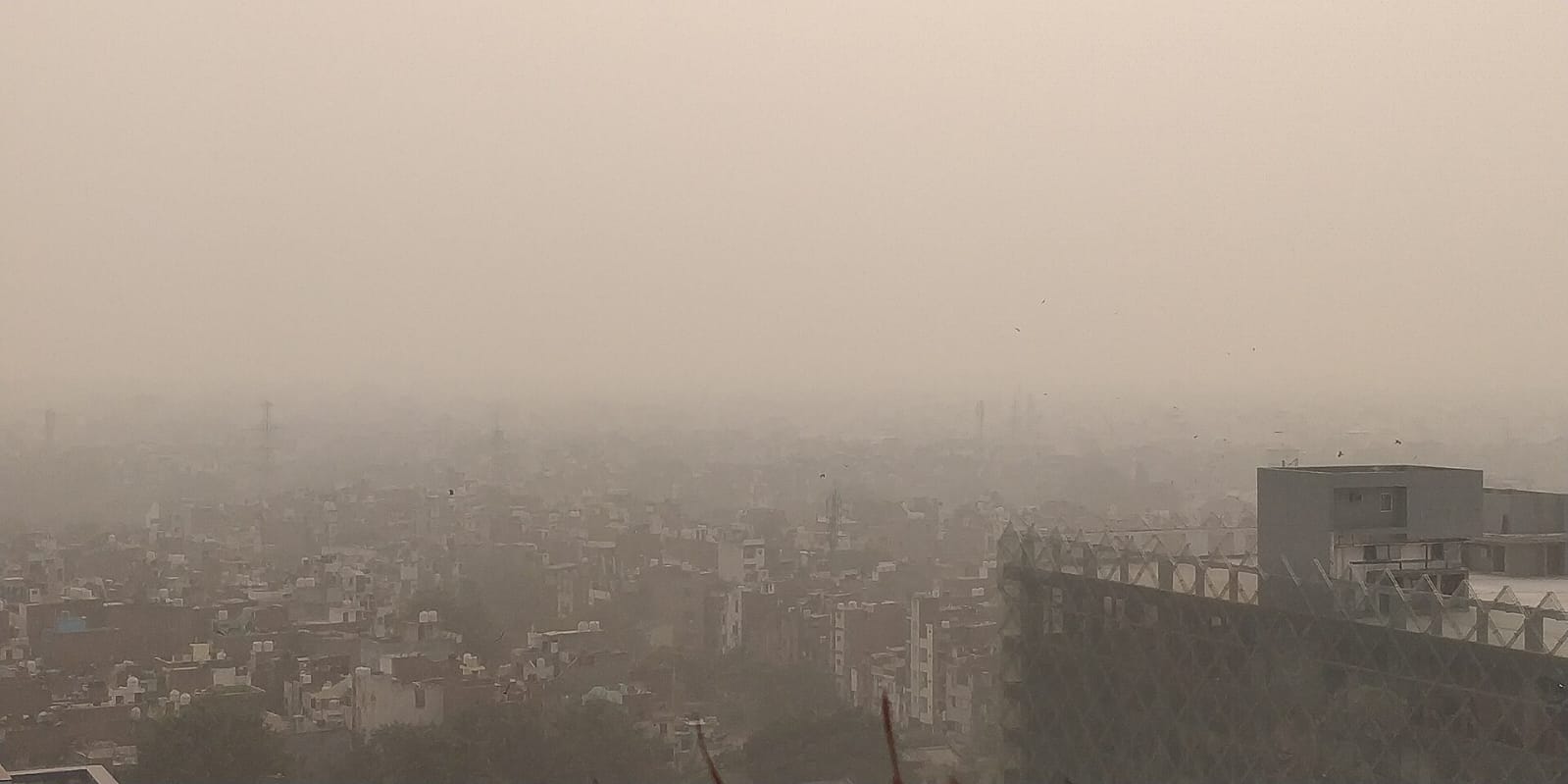
The Centre for Science and Environment (CSE) has released a comprehensive six-year analysis (2021–2026), warning that ground-level ozone (O₃) pollution has evolved from isolated, short-lived episodes into a widespread, year-round urban and regional air quality challenge across India. The report identifies Delhi-NCR as the country’s largest regional ozone hotspot, with rising temperatures, intense sunlight and increasing emissions of ozone-forming gases driving the surge in pollution.
The analysis notes that ground-level ozone, a secondary pollutant formed through chemical reactions involving nitrogen oxides (NOx) and volatile organic compounds (VOCs) in the presence of sunlight, is reshaping India’s air pollution profile. Besides posing serious health risks, ozone is also impacting agricultural productivity and contributing to climate change.
“Our analysis reveals that rising ground-level ozone and prolonged exposure windows are transforming India’s localised, winter-time particulate problem into a year-round, transboundary crisis that peaks during the summer across all regions. Ozone is damaging public health, agricultural productivity and regional climate systems. As a climate pollutant, ozone traps heat in the air, which raises temperatures and causes even more ozone to form, creating a dangerous feedback loop,” said Anumita Roychowdhury, Executive Director, CSE, and the lead researcher and author of the study.
“While the current national clean air programme (NCAP) focuses particulate matter reduction, NCAP 2.0 must adopt a multi-pollutant strategy. By targeting precursor gases like NOx and VOCs that form ozone in the air, the new framework can accelerate the shift toward clean combustion, zero-emission pathways and integrated regional airshed management,” Roychowdhury added.
Co-author Sharanjeet Kaur, Deputy Programme Manager, Urban Lab, CSE, said, “Six years of data reveal that ground-level ozone is intensifying with higher number of days exceeding the standards, lengthening of daily exposure especially during summer, and persistence during nights due to atmospheric trapping. More ozone hotspots are proliferating in different regions of India.”
According to the report, 15 of the 25 major Indian cities analysed between March 1 and May 10, 2026 recorded average summer ozone levels above the National Ambient Air Quality Standard (NAAQS) of 100 micrograms per cubic metre for an eight-hour exposure period. Chandigarh recorded the highest average summer ozone concentration, followed by Jaipur and Ahmedabad. Delhi-NCR registered the highest number of exceedance days (71), ahead of Bhopal (60), Bengaluru (55), Patna (24) and Muzaffarpur (21).
The study highlights a widening geographical spread of ozone pollution, with northern and western India emerging as major hotspots. Mumbai displayed an almost year-round ozone footprint with recurring exceedance clusters during January-April and November-December, while Chennai recorded the highest episodic ozone concentration. Bengaluru also witnessed increasing spatial spread and prolonged ozone exposure.
Delhi-NCR emerged as the epicentre of the problem, exceeding the national eight-hour standard on every day of the 71-day study period. Within the capital, an average of nearly nine monitoring stations recorded daily violations, while ozone hotspots included Pusa IMD in Delhi, Greater Noida Knowledge Park-V, Sector 125 in Noida and Vasundhara in Ghaziabad.
The report also found that ozone pollution is lasting longer each day. Bhopal recorded the highest average exposure duration at 17 hours per day, followed by Lucknow (16.3 hours) and Mumbai and Bengaluru (15.9 hours each), indicating that prolonged exposure poses greater health risks than simply counting exceedance days.
Another emerging concern is the persistence of ozone after sunset. Contrary to its traditional character as a daytime pollutant, ozone is now remaining at elevated levels through the night due to atmospheric conditions. Delhi-NCR recorded 46 night-time exceedance days during the study period, followed by Bengaluru (14), Bhopal (13), Patna (8) and Muzaffarpur (8).
The report warns that ozone exposure can damage lung tissue, aggravate asthma and respiratory illnesses, and increase the risk of cardiovascular diseases, strokes and chronic obstructive pulmonary disease (COPD). It also calls for dedicated epidemiological studies to better understand the health impacts of rising ozone levels in Indian cities.
Beyond public health, the analysis points to significant environmental and economic consequences. It notes that ozone pollution is spreading into rapidly urbanising peripheral regions and drifting across regional airsheds, while also threatening Himalayan ecosystems by contributing to atmospheric warming. The report further states that ambient ozone is estimated to reduce India’s wheat yields by around 14-15 per cent annually, posing risks to agricultural productivity and food security.
To address the growing challenge, CSE has called for comprehensive control of ozone precursor gases, including NOx, VOCs and carbon monoxide from combustion sources. It has also urged policymakers to adopt a multi-pollutant approach under NCAP 2.0 and implement airshed-based regional management strategies that integrate controls on PM2.5, NOx and VOC emissions across transport, industry and household sectors.
(With inputs from CSE)
