



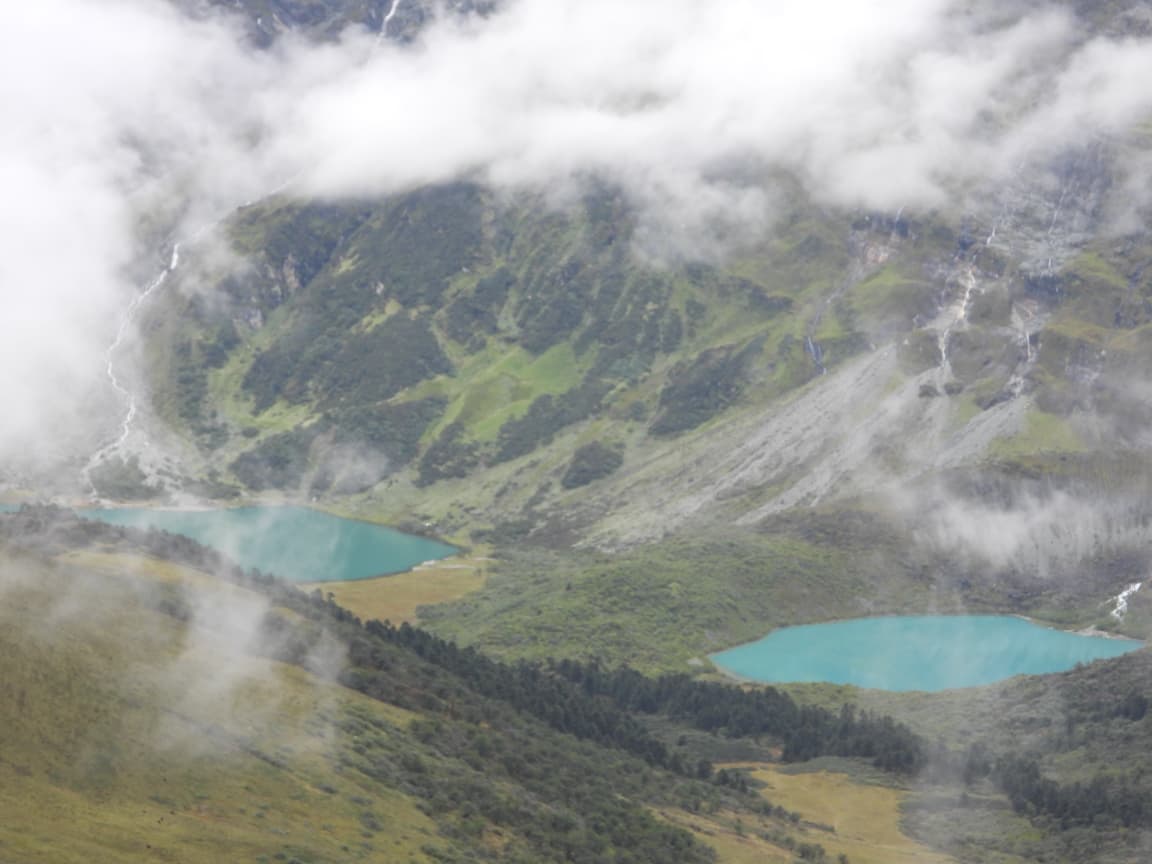
High in the mist-veiled mountains of Arunachal Pradesh, where borders blur into myth and maps lose certainty, lies two lakes , very few have seen—and even fewer truly understand. Sugor Tso is not just remote; it is almost deliberately hidden.
In a world obsessed with over-crowded icons like Pangong Lake, Sugor Tso remains untouched, unfiltered, and largely unknown. And that may be exactly why it matters.
A Lake beyond tourism map:
Sugor Tso sits deep within India’s eastern Himalayan frontier, in terrain so rugged that even for reaching it requires days of trekking through forests, glaciers, and tribal lands. Unlike more accessible lakes in Arunachal Pradesh, where roads and tourism infrastructure are slowly expanding, Sugor Tso exists outside the comfort of modern travel.It’s isolation is not accidental but geographical and cultural.
Bordering Tibet (China), the region is highly sensitive. Entry is restricted, and even locals treat the area with reverence. This has inadvertently preserved the lake in a way that many “protected” ecosystems around the world have failed to achieve.
Sacred Water – silent stories:
For indigenous tribes such as Tagin, Monpa and Adi Sugor Tso is more than a water body—it is a sacred geography. Oral traditions speak of spirits, ancestral journeys, and a deep spiritual energy surrounding the lake.
This is not unusual in the Himalayas. Across the region, lakes are often seen as living entities. For example, high-altitude lakes in Tawang district are known to support rare bird life and delicate ecosystems, making conservation essential for ecological balance.
Sugor Tso, however, goes a step further—it is largely untouched by modern scientific study. It’s full ecological importance is still unknown.
The Paradox of Discovery:
There’s a growing temptation to “discover” Sugor Tso—to map it, promote it, and turn it into the next eco-tourism destination of India. But history now offers a warning.
Many once-pristine Himalayan lakes—celebrated for their beauty—are now under pressure for tourism, waste, and infrastructure.Even protected wetlands in Arunachal have faced threats from siltation and human activity.
Sugor Tso stands at a crossroad before the world even notices it.
Why Sugor Tso matters Globally? Sugor Tso is not just a lake in a remote corner of India. It represents something much bigger:
A vanishing model of untouched nature,a living cultural landscape,a blind spot in global climate science and a test case for sustainable exploration.In an era where “hidden gems” are quickly turned into Instagram hotspots, Sugor Tso challenges a fundamental question:
Should every place be discovered? The last quiet place?
Perhaps the true significance of Sugor Tso lies not in what we know about it—but in what we don’t.
In a hyper-connected world, it remains a rare anomaly: a place where nature, culture, and mystery still exist without explanation.And maybe, just maybe, that’s exactly how it should stay.
Why Sugor Tso is so important ?
Will discuss in next part of the article..
(All articles are original works of Ms. Pratyusha Mukherjee, any modification or usage needs to be approved by her only)
