



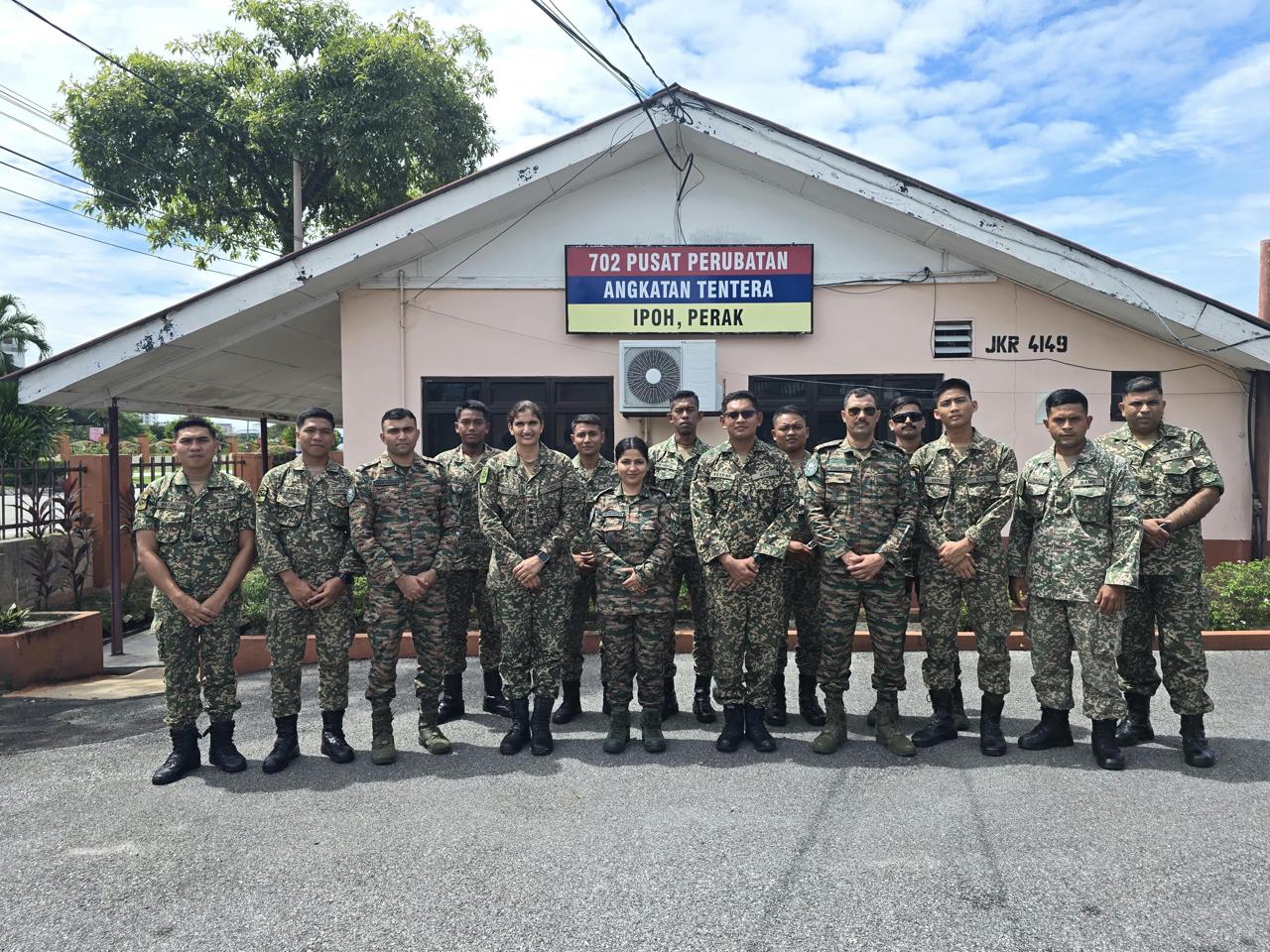
Battlefield medical preparedness and combat casualty evacuation took centre stage during the ongoing 7th edition of the India–Malaysia joint military exercise HARIMAU SHAKTI 2026, as personnel from both armies participated in specialised demonstrations on Battlefield Casualty Management.
The training focused on managing gunshot wounds, blast injuries and other combat-related trauma, highlighting the importance of immediate medical intervention in high-pressure battlefield environments. The demonstrations covered systematic casualty assessment, battlefield first aid, haemorrhage control, tourniquet application and trauma management.
Particular emphasis was placed on the speed and precision required to stabilise injured personnel and ensure timely evacuation from operational areas. Troops were familiarised with coordinated casualty evacuation procedures, including Casualty Evacuation (CASEVAC) and Medical Evacuation (MEDEVAC).
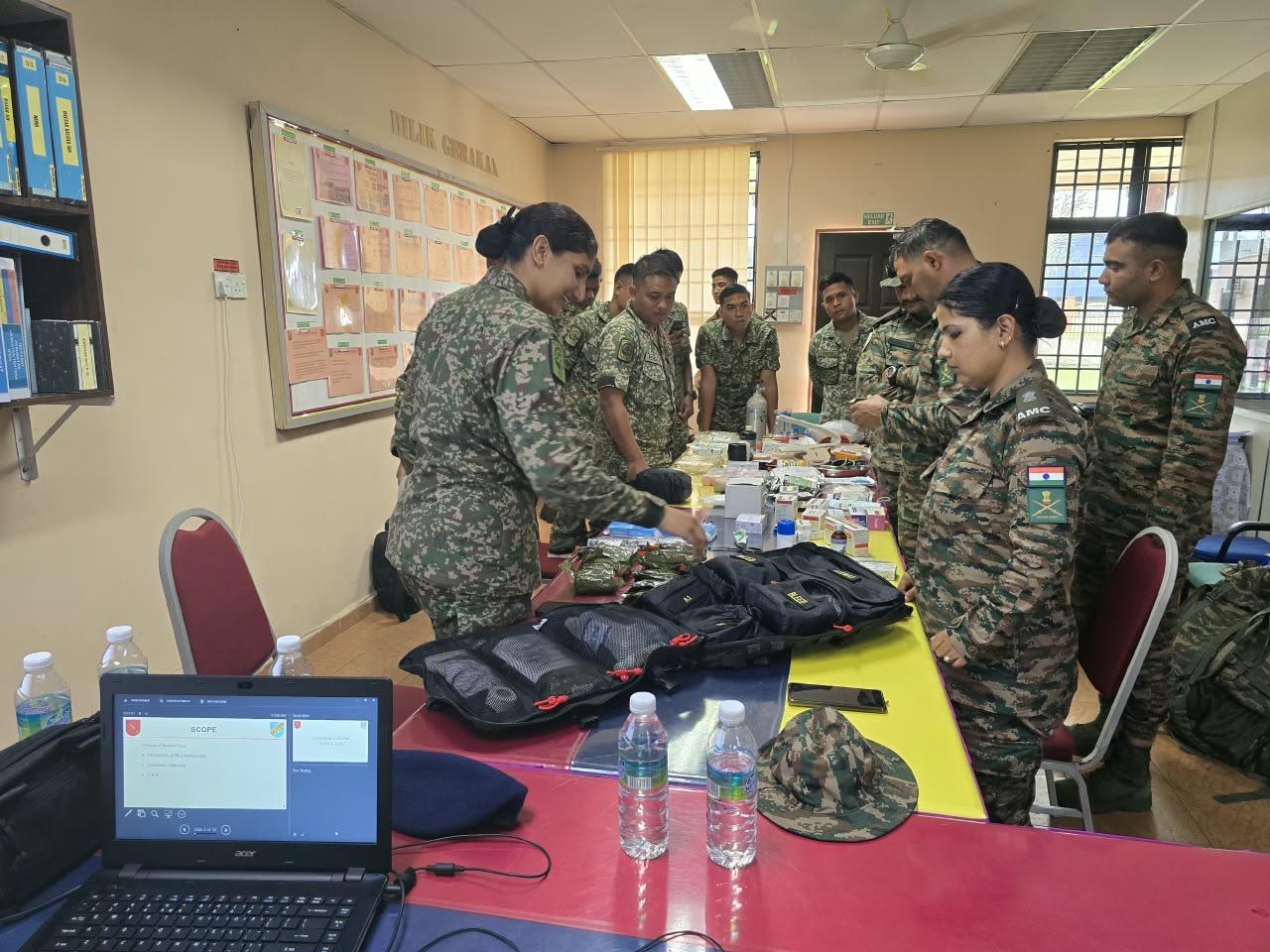
The joint training underscored the critical role of battlefield medical support in modern military operations, where the ability to deliver timely trauma care can directly influence combat survivability. It also provided an opportunity for Indian and Malaysian military personnel to strengthen interoperability, exchange operational expertise and enhance coordination in combat medical response.
Military Co-operation Beyond the Battlefield:
Extending its engagement beyond military training, the medical team of the Indian contingent visited Clinic Pos Bewong and conducted a community outreach programme for the local population.
The initiative highlighted the humanitarian dimension of military cooperation, with the Indian Army reinforcing its commitment to community welfare, medical outreach and building goodwill among local communities.
The combined focus on combat medical preparedness and humanitarian engagement reflects the broader scope of HARIMAU SHAKTI 2026, which seeks to strengthen defence cooperation between India and Malaysia through professional military exchanges, operational coordination and people-to-people engagement.
