



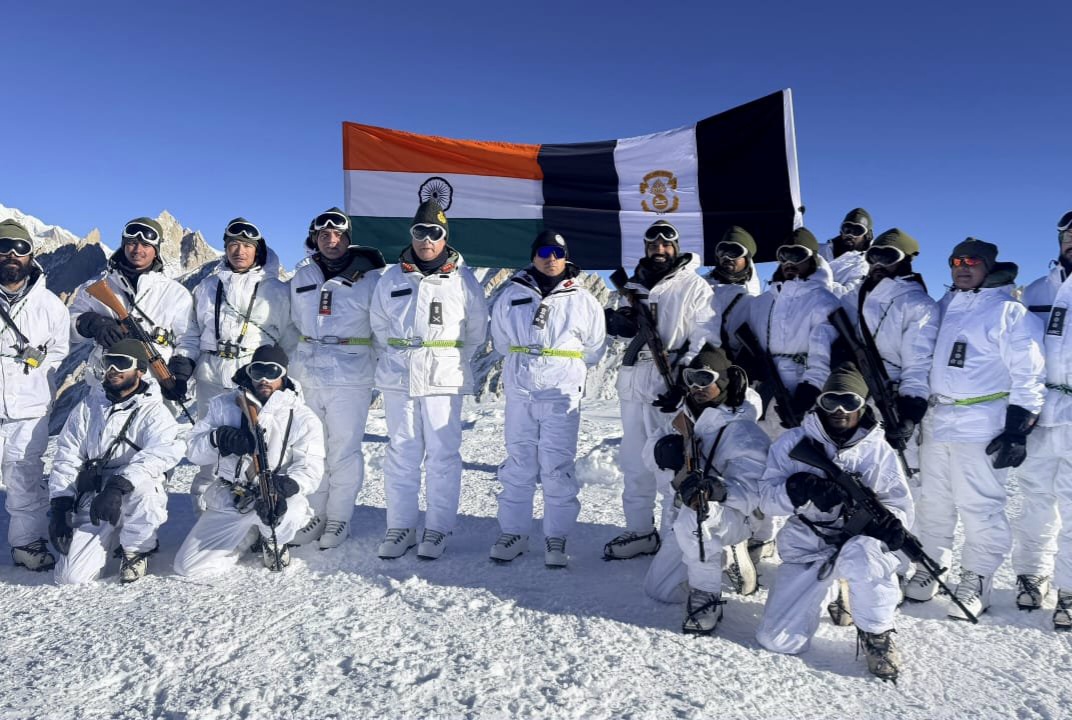
At the world’s highest battlefield, where extreme altitude, sub-zero temperatures and unforgiving terrain test the limits of human endurance, leadership is measured not merely by orders issued from headquarters but by the ability to stand alongside troops on the frontline.
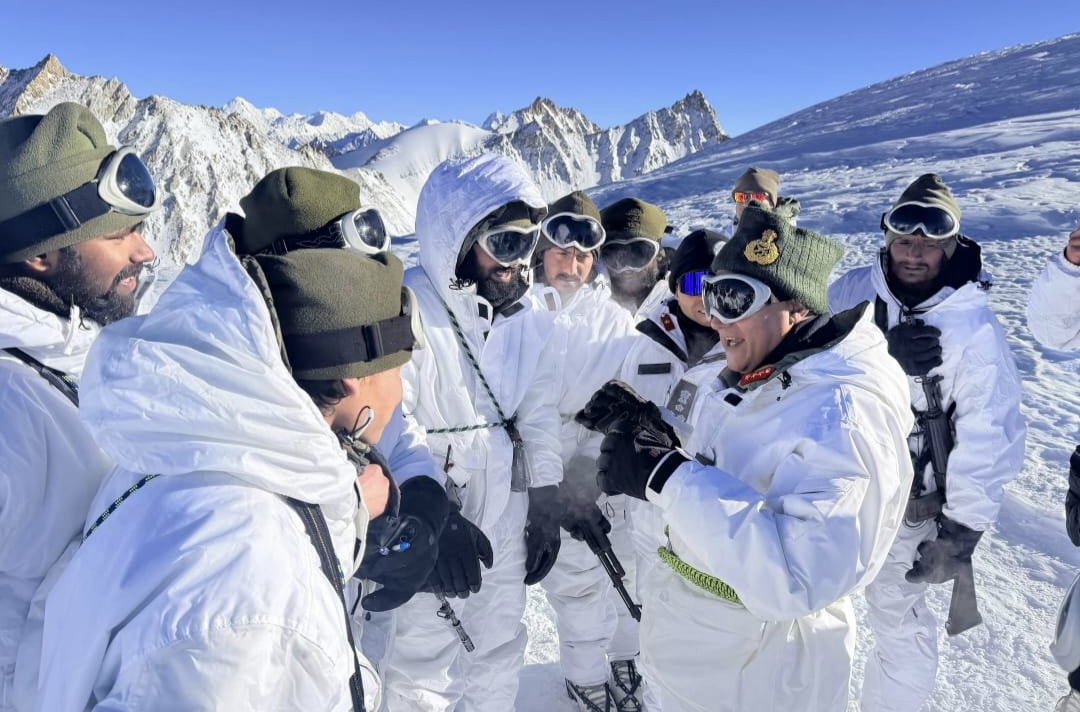
The visit of Lt Gen Madanraj Pande, General Officer Commanding (GOC), Fire and Fury Corps, to forward posts in the Siachen Sector sends a significant message about operational leadership, troop morale and India’s continued commitment to securing its strategic high-altitude frontier.
Siachen is not an ordinary military deployment. It is an environment where every movement demands extraordinary physical endurance, meticulous preparation and constant vigilance. For soldiers stationed at these isolated posts, maintaining operational effectiveness requires more than combat skills. It demands psychological resilience, physical conditioning, specialised logistics and an unbreakable sense of duty.
Against this backdrop, the Corps Commander’s interaction with the troops assumes particular significance. His appreciation of their high morale and resilience acknowledges the extraordinary challenges faced by personnel guarding the glacier under some of the harshest climatic conditions on earth.
Strategic Significance Beyond the Glacier:
The importance of Siachen extends far beyond its geographical expanse. India’s military presence in the region, established through Operation Meghdoot on April 13, 1984, has a critical bearing on the security architecture of the northern frontier. Securing the glacier and the commanding heights of the Saltoro Ridge remains central to India’s strategic position in the eastern Karakoram region.
In the present security environment, where India’s northern and western frontiers continue to demand sustained military preparedness, maintaining vigilance in high-altitude sectors remains a significant operational priority. Siachen represents a demanding combination of terrain dominance, logistical preparedness and round-the-clock surveillance.
The Army’s ability to sustain troops in such an inhospitable environment depends on an integrated operational framework involving specialised high-altitude training, reliable supply chains, air support, medical preparedness and modern surveillance capabilities. The Indian Air Force also plays a crucial role in strategic airlift, logistics and casualty evacuation in the glacier sector.
Leadership, Morale and Operational Readiness:
The Corps Commander’s visit carries significance beyond a routine inspection. In extreme operational environments, direct interaction between commanders and soldiers reinforces confidence, strengthens unit cohesion and provides leadership with an opportunity to understand ground-level challenges.
Lt Gen Pande’s emphasis on remaining mission-focused, maintaining the highest standards of combat readiness and upholding the traditions of the Indian Army reflects the importance of preparedness even in the most difficult deployment conditions.
For the Siachen Warriors, leadership presence at forward posts is also a reminder that their sacrifices and challenges remain an integral part of the Army’s institutional priorities.
The Larger Message:
Siachen is not merely a battlefield defined by ice and altitude. It is a test of India’s military endurance, strategic resolve and ability to sustain a demanding forward deployment over decades.
Every forward post represents a combination of human courage, military preparedness and national commitment. While technological advancement and infrastructure development remain essential to modern warfare, the human element continues to be decisive in an environment where nature itself is a formidable adversary.
The visit of the Fire and Fury Corps Commander reinforces a fundamental principle of military leadership: the strength of a frontline formation lies not only in its weapons and operational capabilities, but also in the morale, confidence and readiness of the soldiers who hold the ground.
At Siachen, leadership from the front is not simply a military tradition. It is a force multiplier.
