



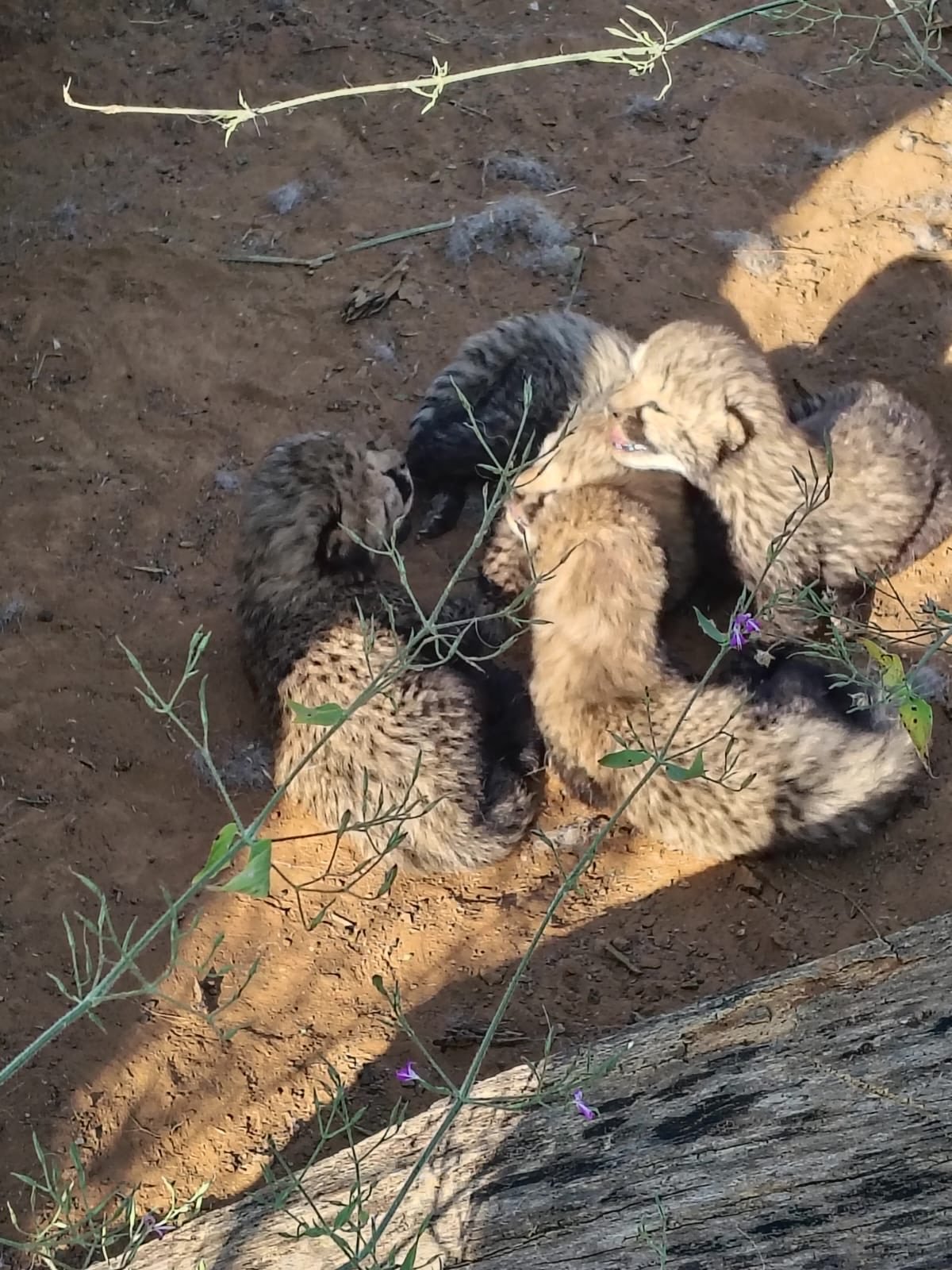
India’s ambitious cheetah reintroduction programme has achieved another significant milestone, with a two-and-a-half-year-old female cheetah brought from Botswana giving birth to four healthy cubs in the wild.
The female, identified as KOMG 3, is the first Botswana-born female cheetah to reproduce in India. Her successful birth under natural conditions marks an important development for Project Cheetah, which was launched in 2022 to reintroduce the species into the country after its extinction in the wild.
According to the Ministry of Environment, Forest and Climate Change, KOMG 3 had spent more than four months in the wild before giving birth. The development also represents the second recorded instance of a cheetah giving birth in the wild since the reintroduction programme began.
With the arrival of the four cubs, India’s total cheetah population has increased to 62, including 43 individuals born in the country. The latest development offers fresh encouragement to conservation efforts aimed at establishing a sustainable cheetah population in India.
Union Environment, Forest and Climate Change Minister Bhupender Yadav welcomed the development, describing it as a landmark moment for Project Cheetah and an important step in India’s journey towards restoring a viable population of the species.
In a social media post, the Minister highlighted the significance of the birth under natural conditions and acknowledged the dedication and sustained efforts of project managers, veterinarians, wildlife experts and frontline forest personnel.
He emphasised that successful wildlife conservation demands patience, perseverance and collective commitment, recognising the contribution of those working on the ground to ensure the long-term success of the programme.
The birth of the four cubs is more than a numerical addition to India’s cheetah population. It represents progress towards natural breeding and adaptation in the wild, two important indicators of the long-term success of the reintroduction initiative.
As Project Cheetah moves forward, the latest development reinforces India’s commitment to wildlife conservation, ecological restoration and the protection of biodiversity.
