



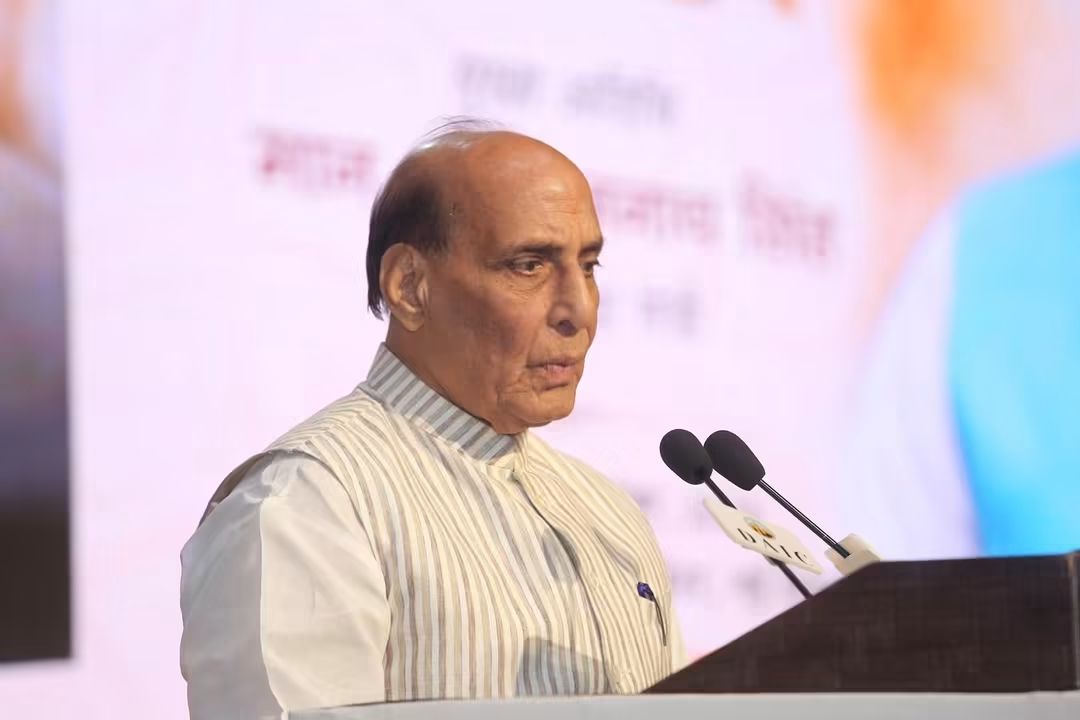
Defence Minister Rajnath Singh has reaffirmed India’s commitment to collective regional security and the elimination of terrorism, offering to share the country’s battle-tested counter-terrorism expertise with partner nations under the ASEAN Defence Ministers’ Meeting-Plus (ADMM-Plus) framework.
Addressing the 13th ADMM-Plus in Cebu on October 29, 2026, Singh said India’s counter-terrorism capabilities had been shaped by decades of confronting complex cross-border security challenges. He emphasised that India’s experience was grounded in operational realities rather than theoretical knowledge, making it relevant to strengthening collective preparedness and regional security cooperation.
Highlighting Operation Sindoor, the Defence Minister said the operation demonstrated India’s proactive and battle-tested approach to countering terrorism. He stated that India had dismantled terrorist infrastructure and established a firm response to state-sponsored terrorism.
Singh stressed that terrorism transcends national boundaries and called for stronger cooperation through joint military exercises, capacity-building programmes and intelligence sharing. India and Malaysia are co-chairing the ADMM-Plus Experts’ Working Group on Counter-Terrorism for the 2024–2027 cycle, providing an institutional platform to advance cooperation in this area.
Strengthening the India-ASEAN Strategic Partnership:
Reiterating India’s support for ASEAN centrality, Singh called for a secure, open, inclusive, resilient and rules-based Indo-Pacific. He underlined that India’s engagement with ASEAN is anchored in shared interests, mutual respect and long-term strategic cooperation.
Referring to the second ASEAN-India Defence Ministers’ Informal Meeting held in Kuala Lumpur in October 2025, he highlighted the shared commitment to advancing defence and security cooperation under the ASEAN-India Comprehensive Strategic Partnership and the ASEAN-India Plan of Action for 2026–2030.
Addressing the summit’s theme, “Navigating Our Future, Together,” Singh said regional solidarity and collective responsibility were essential to addressing emerging security challenges. He also invoked the Indian civilisational principle of “Sarve Bhavantu Sukhinah”—may all beings be happy—as a reflection of India’s commitment to peace, prosperity and the well-being of all.
Maritime Security at the Core of Indo-Pacific Stability:
Singh identified maritime cooperation as a key pillar of India’s engagement with ASEAN, highlighting 2026 as the ASEAN-India Year of Maritime Cooperation and the conduct of the second ASEAN-India Maritime Exercise.
Emphasising freedom of navigation, maritime security and the protection of global sea lines of communication, he cited the Indian Navy’s sustained operational presence in the Gulf of Aden since 2008. He said Indian naval deployments had helped escort thousands of merchant vessels and thwart numerous hijacking attempts, providing protection to commercial shipping irrespective of flag or nationality.
Describing maritime security as a shared regional responsibility, Singh reiterated India’s readiness to contribute to stability in the Indian Ocean Region and the wider Indo-Pacific through operational deployments, international cooperation and respect for international law.
He clarified that India’s advocacy of the United Nations Convention on the Law of the Sea (UNCLOS), freedom of navigation and overflight was not directed against any country. Rather, these principles were intended to protect the common interests of regional stakeholders dependent on secure sea lanes and stable maritime governance.
He also emphasised cooperation in maritime safety, search and rescue, humanitarian assistance, professional military interaction and capacity building.
Defence ‘Youth Bridge’ Proposed to Deepen Regional Ties:
In a move aimed at strengthening long-term defence cooperation, Singh proposed establishing a dedicated defence ‘Youth Bridge’ to enhance India-ASEAN people-to-people connectivity, promote digital innovation and expand capacity-building opportunities.
He noted that the region’s young populations offered significant potential for deeper engagement and collaboration. The proposed initiative, he said, would align with the Youth, Peace and Security agenda and create opportunities for young people to contribute to regional peace, stability and resilience.
India’s message at ADMM-Plus underscored three interconnected priorities: strengthening collective counter-terrorism capabilities, safeguarding maritime security and expanding strategic cooperation with ASEAN partners.
Through operational experience, defence diplomacy and capacity building, New Delhi is seeking to deepen its role in regional security cooperation while advancing a stable, open and rules-based Indo-Pacific.
