



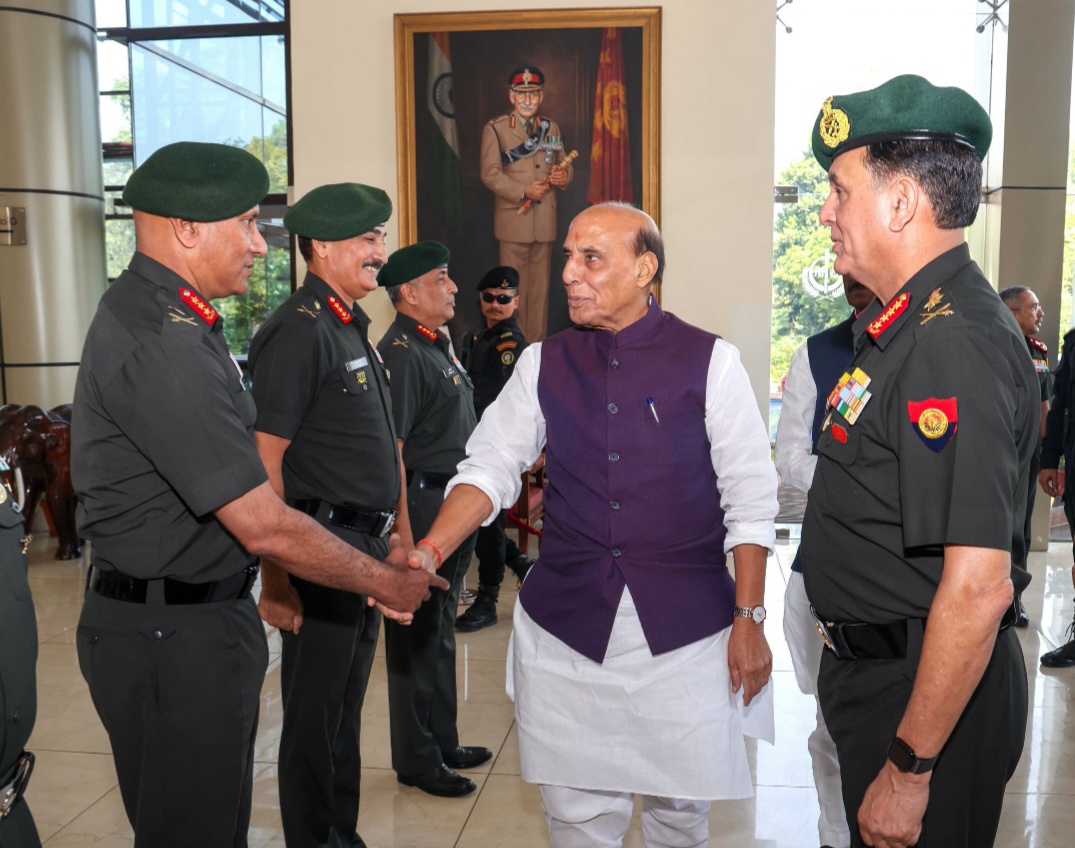
Defence Minister Rajnath Singh has called upon the Indian Army’s senior leadership to combine long-term strategic planning with operational readiness to counter immediate and emerging security challenges, stressing the need for a technologically advanced, adaptive and future-ready force.
Addressing the Army Commanders’ Conference in New Delhi on October 23, the Singh urged Army Commanders to closely monitor geopolitical and regional developments and develop strategies with a 20–30-year perspective. He emphasised that military planning must remain flexible to respond effectively to rapidly changing security scenarios.
Highlighting the operational lessons of Operation Sindoor, Singh said innovative thinking, enhanced synergy, superior coordination and advanced weaponry had contributed to the operation’s success. He asserted that the operation demonstrated India’s resolve to take necessary measures to protect its national interests.
The Defence Minister also underscored the importance of accelerating military modernisation, particularly through the integration of drones and emerging technologies. He called for sustained capability development and regular performance assessments, with a sharper focus on artificial intelligence (AI), autonomous systems, data analytics, cybersecurity and secure communication networks.
MULTI-DOMAIN WARFARE AND JOINT OPERATIONS IN FOCUS:
Emphasising the enduring importance of land warfare, Singh observed that ground forces would remain indispensable despite the growing significance of air, maritime, space and cyber domains.
He called for an integrated approach to modern warfare, stressing that operational success would increasingly depend on multi-domain capabilities and seamless co-ordination among the armed forces during joint operations.
The Defence Minister also highlighted the importance of defence self-reliance, noting that India’s defence manufacturing sector had achieved record growth. According to the figures cited by him, defence production reached an all-time high of ₹1.78 lakh crore in the financial year 2025–26, while defence exports touched approximately ₹38,000 crore.
Referring to the Year of Reforms – 2025, Singh stressed that reforms must translate into measurable improvements in operational effectiveness. He urged commanders to ensure effective implementation across their respective formations and commands.
He further called for sustained efforts towards self-reliance, improved manpower management, greater participation of women in the armed forces and a comprehensive approach to national security.
LAND WARFARE DOCTRINE RELEASED:
A key highlight of the conference was the release of the Land Warfare Doctrine, which provides an overarching framework for preparing the Indian Army to address the evolving character of warfare and the challenges of future conflicts.
The doctrine is intended to guide the Army’s future preparedness as technological advancements and changing operational environments reshape the requirements of land-based military operations.
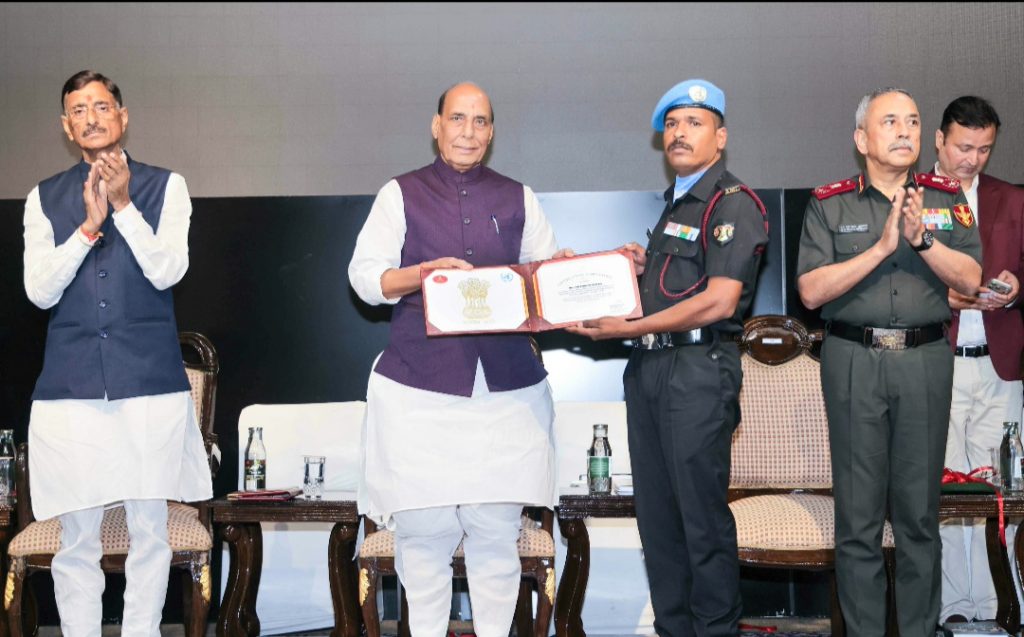
Singh also unveiled the annual United Nations Journal and felicitated Indian Army personnel for their notable contributions as United Nations peacekeepers, recognising their professionalism and service towards international peace and security.
Minister Of State for Defence Sanjay Seth, Chief of Defence Staff General NS Raja Subramani, Chief of the Army Staff General Dhiraj Seth, Defence Secretary Rajesh Kumar Singh and other senior officials attended the conference.
The Army Commanders’ Conference serves as a strategic forum for reviewing ongoing initiatives, identifying future priorities and shaping policy directions to strengthen the Indian Army’s operational capabilities, technological readiness and preparedness for emerging security challenges.
