



A Final That Changed Indian Football Forever:
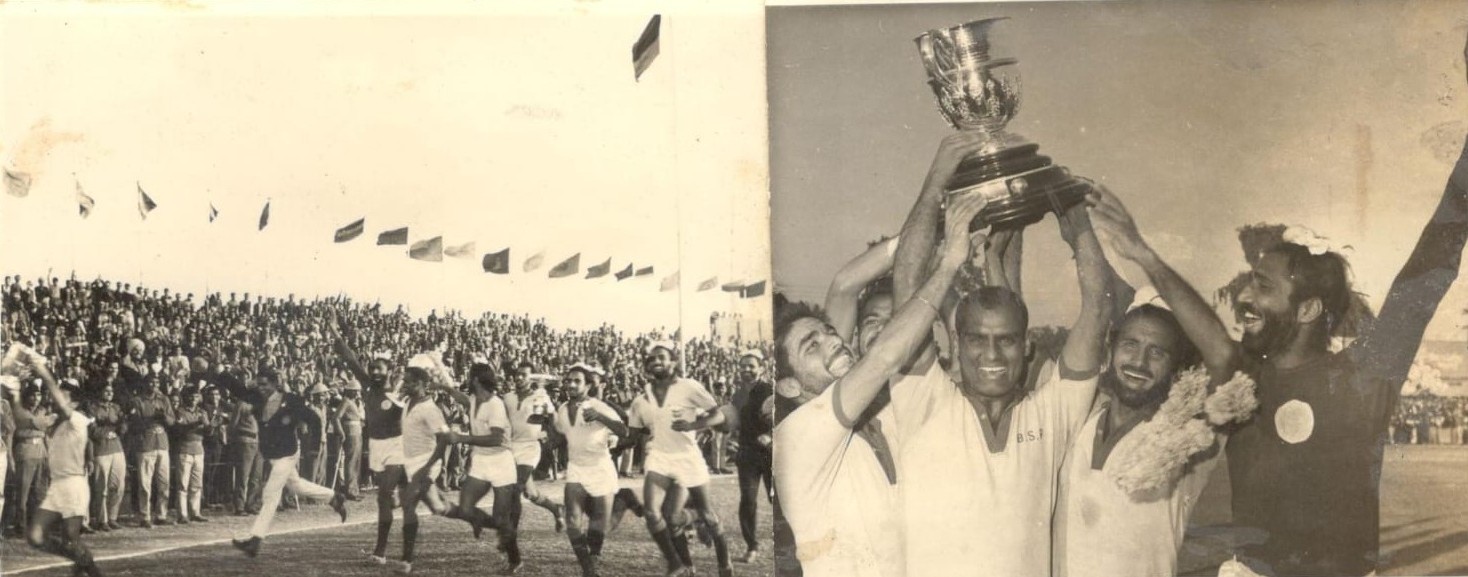
On a winter afternoon in 1940, Delhi witnessed a football match that became a landmark moment in Indian sporting history.Long before kick-off at the Irwin Amphitheatre, supporters had begun arriving from across the city and beyond. They came by train, tonga and on foot to witness the Durand Cup final between Mohammedan Sporting Club of Calcutta and the Royal Warwickshire Regiment. By the time the teams stepped onto the field, nearly 100,000 spectators had filled the venue, creating one of the biggest sporting gatherings of pre-Independence India.
Kolkata’s very own Mohammedan Sporting’s 2–1 victory was more than a football result. It was a turning point. They became the first Indian civilian club to lift the Durand Cup, ending decades of dominance by military teams and reflecting the changing identity of Indian football.The tournament, once created for regiments, had become a national sporting institution.
A Himalayan Beginning :
The story of the Durand Cup, however, began far from Delhi. In 1888, on the scenic slopes of Annadale in Shimla, a football competition was established that few could have imagined would survive for more than a century. Founded by Sir Mortimer Durand, the Foreign Secretary of British India, the tournament was initially designed to promote camaraderie and discipline among Army regiments stationed across the subcontinent. Every September, Annadale came alive with football, military bands, regimental colours and fierce competition. The tournament represented the values of teamwork, honour and sporting excellence.
From Army Tournament to Indian Football Institution:
As football spread across India, the Durand Cup began to reflect the country’s growing passion for the game. The decisive moment arrived in 1925 when Mohun Bagan became the first Indian civilian club to enter the competition.Their participation was historic. Although they did not win the trophy, their victories over several British regimental sides proved that Indian clubs could compete at the highest level. Their presence changed the character of the tournament forever.The Durand Cup was no longer only a showcase of military football; it had become a platform for Indian clubs and their supporters.
Mohammedan Sporting’s Historic Triumph:
By the late 1930s, the tournament had become a meeting point between military tradition and the rise of Indian football clubsThat transformation reached its defining moment in 1940 when Mohammedan Sporting defeated the Royal Warwickshire Regiment in the final. Their triumph carried significance beyond the trophy itself. It represented the growing confidence of Indian football and the arrival of civilian clubs as major forces in the sport.
The Durand Cup had entered a new era. Surviving War, Partition and Change:
The decades that followed tested the tournament’s resilience.The Second World War disrupted sporting activities worldwide, while India’s Independence and Partition brought enormous political and social change. Many historic institutions struggled to survive during this period, but the Durand Cup continued.
Supported by the Armed Forces and generations of football administrators, players and fans, the tournament preserved its place in Indian sporting culture.Its survival became part of its legacy.
The Golden Rivalries of Indian Football:
After Independence, the Durand Cup established itself as one of India’s most prestigious football competitions.
Clubs such as Mohun Bagan, East Bengal and Mohammedan Sporting created unforgettable rivalries and produced some of the tournament’s greatest moments. For players, winning the Durand Cup became a symbol of achievement and recognition.
Kolkata, with its deep football culture and passionate supporters, became closely associated with the tournament. The stands, rivalries and atmosphere reinforced the Durand Cup’s status as one of Indian football’s most celebrated traditions.
Honouring Tradition While Embracing the Future:
Despite its evolution, the Durand Cup has never forgotten its origins.
Services teams continue to play a central role, preserving the values that shaped the competition from the beginning—discipline, commitment and excellence. The three historic trophies—the Durand Cup, President’s Cup and Simla Trophy—remain symbols connecting modern champions with generations of footballers who came before them.
A New Era of Expansion:
The modern revival of the Durand Cup began in 2019 when the tournament moved under the aegis of Eastern Command and established Kolkata as its new base.
The move brought fresh energy to the competition. From a tournament once centred around a limited geography, the Durand Cup expanded into a multi-city event, reaching new audiences across India.
With participation from Indian Super League clubs, I-League teams, Services sides and international teams, the competition has entered a new phase while retaining its historic identity.
138 Years and Still Writing History:
The Durand Cup today represents a rare connection between past and present.
It is a tournament where military heritage meets modern professional football, where legendary clubs compete alongside emerging teams, and where every edition adds another chapter to a story that began in the Himalayan foothills in 1888.When the next champion lifts the famous trophies, they will not just celebrate a victory. They will become part of a legacy built by soldiers, clubs, players and supporters across generations.
For 138 years, the Durand Cup has done more than produce champions.
It has preserved the history, passion and evolving identity of Indian football.
(Pic: Durand Cup Media)
