



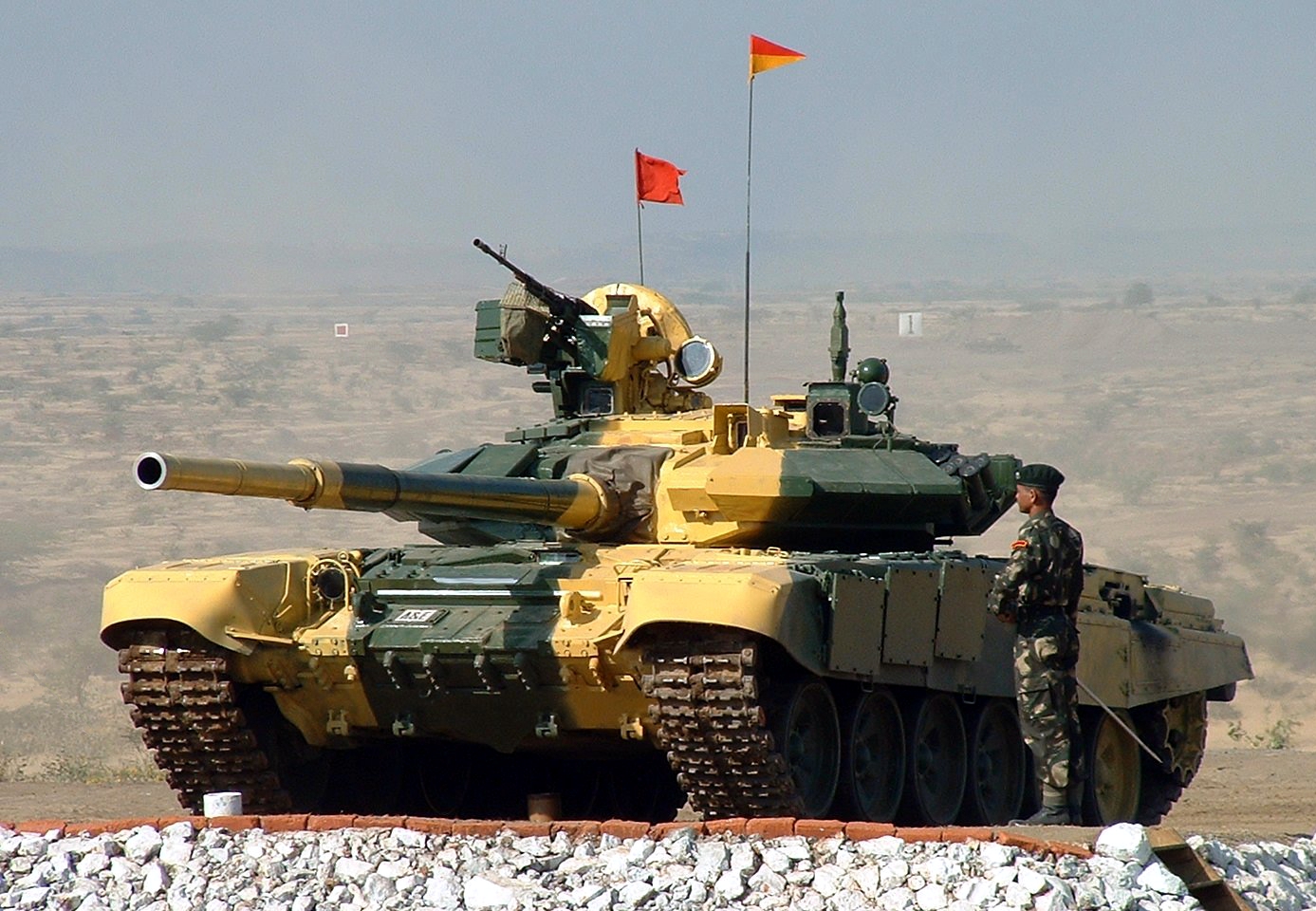
As the Indian Army maintains a robust armoured presence along the Line of Actual Control (LAC) in Eastern Ladakh, public attention has recently shifted from military deployments to an interesting detail—the names painted on individual T-72 and T-90 main battle tanks. Images circulating on social media have shown tanks bearing names such as Maharana Pratap, Tipu Sultan, Aurangzeb, and other historical figures, prompting debate over their significance.
Military sources, however, emphasise that these names are part of a long-established regimental tradition rather than a reflection of any historical, political, or ideological position. Across armoured regiments, assigning names to tanks has long been a means of preserving unit heritage, reinforcing esprit de corps, and strengthening the bond between crews and their fighting vehicles.
The tradition is particularly significant in high-intensity operational environments such as Eastern Ladakh, where nearly 100 tanks continue to remain forward deployed following the military standoff with China. At altitudes exceeding 14,000 feet, armoured crews operate in one of the world’s harshest battlefields, confronting sub-zero temperatures, reduced oxygen levels, extreme terrain, and prolonged deployments that place exceptional demands on both soldiers and machines.
For the Indian Army, sustaining heavy armour in such conditions represents a major logistical and engineering achievement. Every tank requires specialised winterisation, continuous maintenance, dedicated recovery assets, and an uninterrupted supply chain for fuel, ammunition, lubricants, and spare parts. Crews undergo extensive acclimatisation before deployment, while technicians work to ensure engines, fire-control systems, hydraulics, and electronics remain fully operational despite freezing temperatures and thin mountain air.
The T-72 Ajeya and T-90 Bhishma continue to form the backbone of India’s armoured capability in the northern sector. Although originally designed for plains warfare, both platforms have been successfully adapted for high-altitude operations through specialised modifications and sustained logistical support. Their mobility, protected firepower, and ability to rapidly reinforce threatened sectors make them a critical component of the Indian Army’s integrated deployment alongside infantry, artillery, aviation, air defence, and surveillance assets.
Defence sources said that the naming convention is neither unique nor recent. Military formations worldwide have traditionally assigned names to tanks, aircraft, ships, and artillery systems as a means of building regimental identity and preserving battlefield traditions. Within the Indian Army’s Armoured Corps, these names often draw from India’s rich military heritage, reflecting qualities such as courage, leadership, sacrifice, and resilience rather than serving as historical endorsements.
The renewed focus on tank names has emerged against the backdrop of India’s continued force posture in Eastern Ladakh, where disengagement at selected friction points has not altered the Army’s emphasis on maintaining combat readiness. Armoured formations remain central to India’s deterrence strategy, providing the capability for rapid offensive and defensive manoeuvre across the region’s broad valleys and high-altitude plains.
Military planners continue to regard armour as indispensable in Ladakh’s unique terrain. Despite the region’s mountainous geography, several sectors offer sufficient space for mechanised operations, allowing tanks to deliver decisive firepower, protected mobility, and battlefield shock effect when integrated with infantry and artillery formations.
For soldiers serving in these isolated forward areas, the names painted on their tanks are ultimately symbols of regimental pride and military tradition. The operational value of the platforms lies not in their names but in the readiness of their crews, the reliability of their equipment, and the Army’s ability to sustain combat power under some of the most demanding conditions faced by any modern military.
As the Indian Army continues to strengthen its posture along the northern frontier, defence officials maintain that operational preparedness, deterrence, and mission readiness remain the overriding priorities. The attention generated by tank names may have sparked public curiosity, but for the Armoured Corps, the enduring focus remains on maintaining a credible combat capability to safeguard India’s territorial integrity along the LAC.
(Image source: Wikimedia Commons)
(Image used for representation purpose only)
