



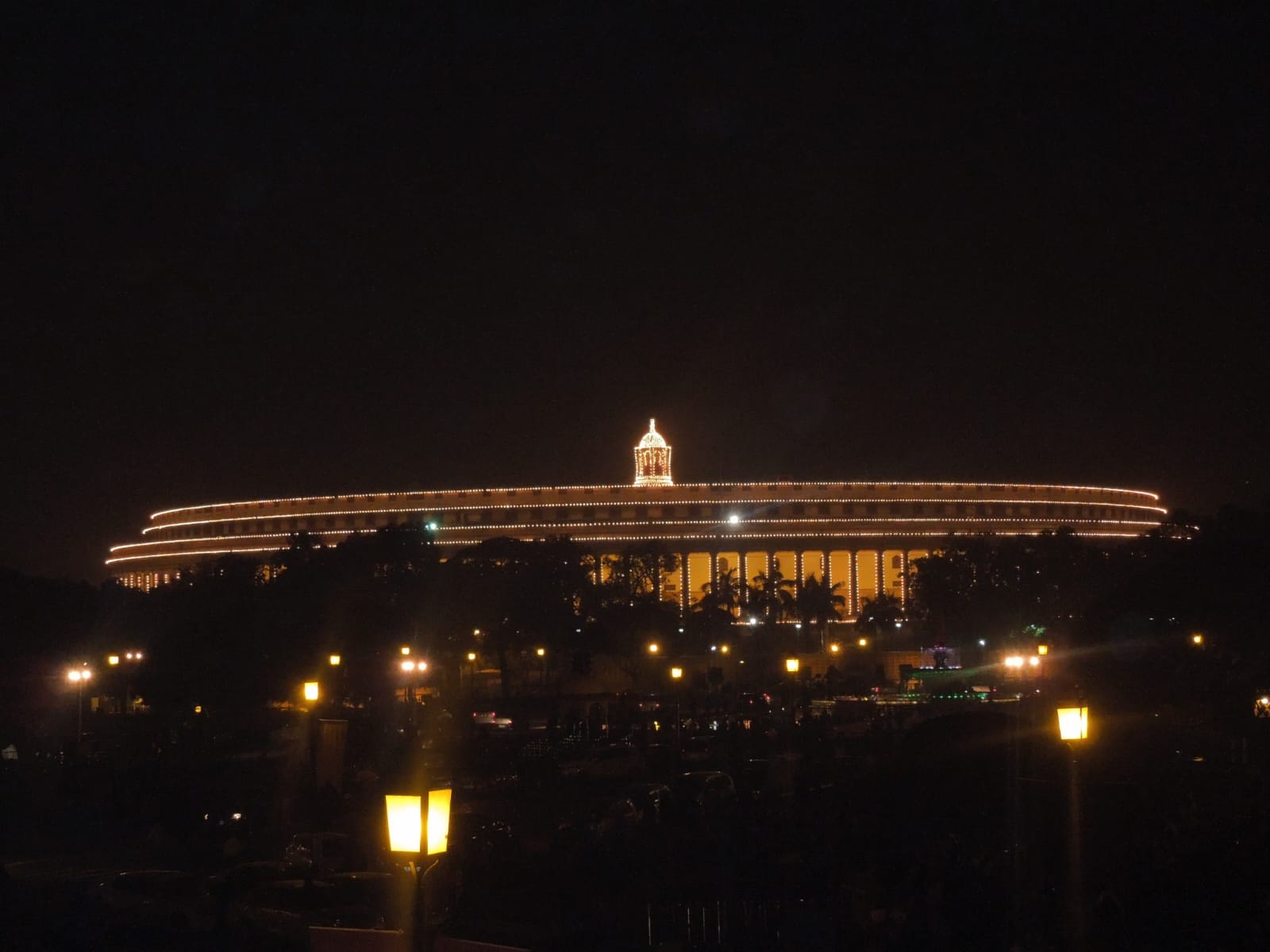
Chingari Koi Bhadke To Saawan Use Bujhaye, Saawan Jo Aag Lagaye Use Kaun Bujhaye? Some songs outlive their era because they describe human nature better than history ever can. This timeless line seems uncannily relevant today. When the very institution entrusted with dousing the flames begins to generate the heat, where does the common citizen seek refuge?
A little over a decade ago, millions of Indians voted for change. The closing years of the Congress-led UPA-II government had become synonymous with allegations of corruption, policy paralysis, and an almost daily revelation of scams. The BJP emerged not merely as another political party but as the embodiment of hope—a promise of clean governance, decisive leadership, and accountability. The mandate it received was unprecedented because expectations were equally immense.
To its credit, the government did deliver in its initial years. There was visible energy in governance, a renewed sense of national confidence, improved infrastructure, greater administrative efficiency, and a feeling that India had finally found a government willing to make difficult decisions. For many, it felt less like a change of government and more like a change of direction.
But power has an old habit—it slowly replaces urgency with certainty, and certainty with complacency.
Over time, the confidence of a government can quietly transform into the belief that electoral success is inevitable. Perhaps it also realized that the opposition remained too fragmented, too inconsistent, and too uninspiring to present a credible challenge. Ironically, the opposition’s missteps often strengthened the ruling party more than they weakened it.The result is a growing perception that the government now believes it can survive almost any controversy because voters simply have nowhere else to go.
Development has not stopped, and it would be dishonest to deny that. Roads are still being built, infrastructure continues to improve, and several reforms continue to shape the country. Yet governance increasingly appears to be functioning on autopilot, while public patience is expected to operate on unlimited credit.
The list of controversies has become difficult to ignore—paper leaks that shatter the dreams of lakhs of students, the prolonged agony of Manipur, the wrestlers’ protest that questioned institutional integrity, debates surrounding ethanol policy, fake certificates in competitive examinations, concerns over higher education reforms, the recurring theatre of Bihar politics, an expanding culture of electoral freebies, and the occasional spectacle of India appearing hesitant before external diplomatic pressure.
None of these issues alone defines a government. Together, however, they begin to define a pattern.
Yet the greatest concern is not the controversies themselves. Democracies are expected to have controversies. The real concern is the government’s growing preference for silence. Successes are celebrated with remarkable speed, often accompanied by triumphant declarations and carefully crafted narratives. But when uncomfortable questions arise, the microphones fall silent.
Silence may indeed be a political strategy. It is not, however, a substitute for accountability.
A government cannot reserve every victory for itself while outsourcing every failure to anonymous systems, previous governments, bureaucrats, or unfortunate circumstances. Leadership demands ownership of both applause and criticism.
Perhaps the ruling establishment understands a simple political truth: public disappointment does not automatically translate into electoral defeat when the alternative appears even less convincing. That may be politically astute, but it is hardly healthy for a democracy.
Which brings us to the ordinary voter?
We are often reminded that the voter is the guardian of democracy. It is an inspiring sentiment, but reality is less romantic. A voter is not the master of democracy; rather, the voter is merely the mechanism through which power changes hands. Once the votes are counted, the citizen spends the next five years hoping that accountability survives beyond campaign speeches.
And standing quietly in the middle of this political contest is the Indian middle class—the perpetual orphan of public policy. The wealthy possess influence and insulation. The poor receive subsidies and welfare support. The middle class receives lectures on nation-building, rising taxes, expensive education, soaring healthcare costs, higher fuel prices, and the comforting assurance that sacrifice is patriotic.
Every budget asks a little more of them while promising that better days are just around the corner.
Democracy was never meant to be measured merely by electoral victories. Its true strength lies in the willingness of those in power to answer difficult questions, accept criticism without hostility, and remain accountable even when it is inconvenient.
History reminds us that governments rarely fall because they stop delivering; they fall because they stop listening.When accountability—once projected as the defining virtue of a government—gradually gives way to silence, citizens are left with little choice but to become spectators.
And so, we watch not merely the politics of a nation, but the choreography of power itself.The dance continues. The music plays. The applause is carefully managed.The audience, however, is no longer convinced.
(Image source: Wikimedia Commons)
(Editor’s Note:This article published under freedom of expression.BOOT Broadcast neither agrees nor disagrees with the views expressed by the author)
