



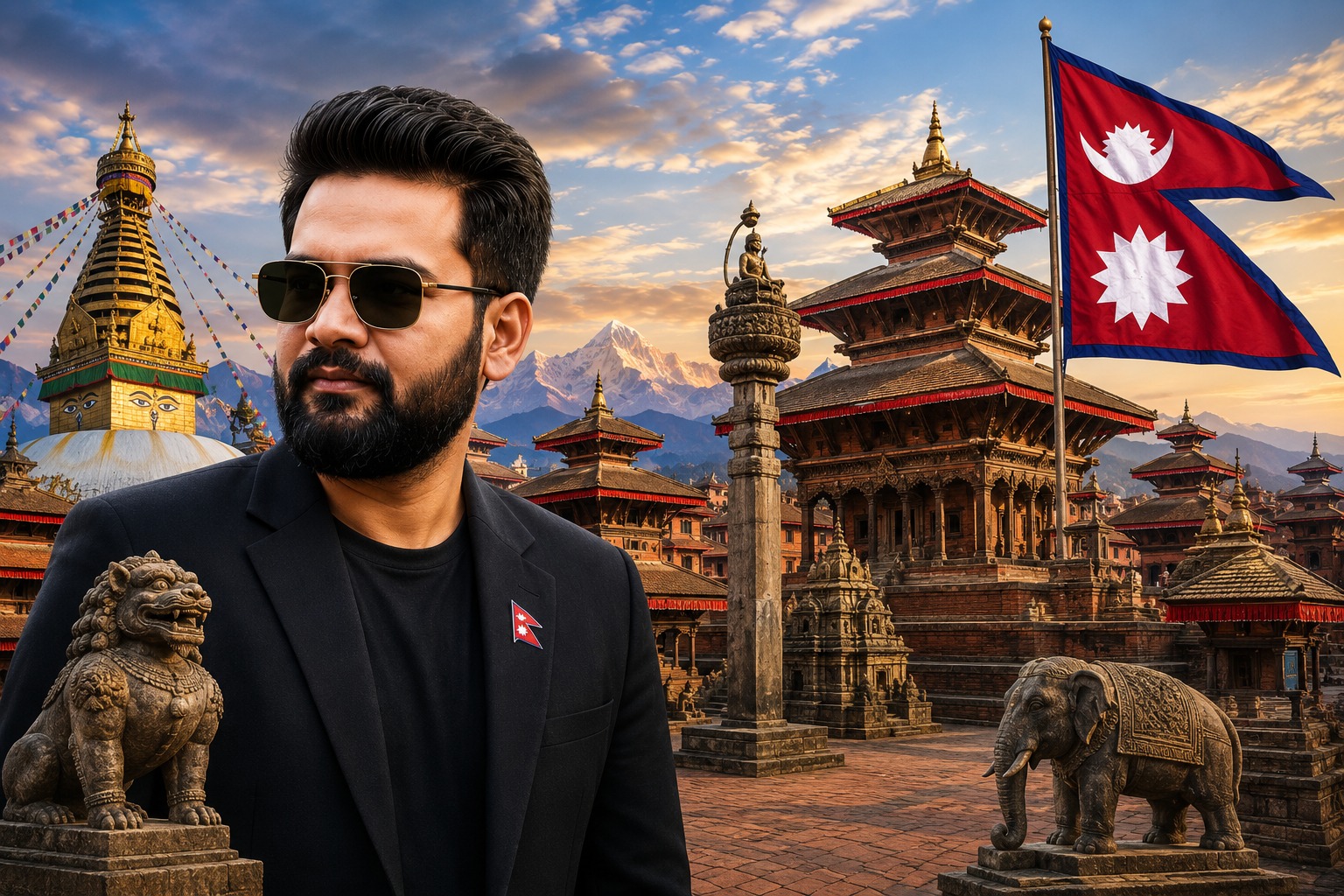
Balen Shah’s rise to Nepal’s premiership in March 2026 was more than an electoral upset—it was a generational shift. In a country long marked by fragile coalitions and entrenched elites, his ascent signalled a break from the past. A 36 yearold outsider propelled by public anger and youth mobilisation, Shah embodied both rejection and renewal.
He stood against patronage politics and political stagnation. For a younger Nepal, he represented the possibility of a more accountable and responsive state. Yet, just three months into office, the urgency of disruption is meeting the limits of governance.
Nepal’s system is not easily transformed. Institutional inertia, economic fragility, and administrative constraints remain firmly in place. Shah now faces the central test—turning political momentum into tangible results. His first quarter reflects both ambition and friction.
Reform Agenda: Ambition Meets Execution Challenges:
From the outset, Shah moved with urgency. His government rolled out a 100-point reform agenda aimed at restructuring governance and improving public service delivery.
Key measures include:
Reducing ministries and merging inefficient bodies
Digitising services and enabling home delivery of documents
Separating civil servants and teachers from political affiliations
Advancing constitutional and economic reforms
These initiatives signal a recognition that Nepal’s governance crisis is deeply structural. Reforming institutions and improving efficiency are central to restoring public trust. There has been visible movement on the ground. Anti-encroachment drives in Kathmandu and attempts to revive stalled infrastructure projects reflect a government willing to act.
However, execution has been uneven. Controversies surrounding ministerial conduct have dented the administration’s clean image. Policy changes affecting imports and student groups sparked protests, exposing the political risks of rapid reform.
Economic policy decisions have drawn criticism. Opposition leaders have accused the government of lacking clarity and consistency, arguing that sudden changes—especially in taxation and import regulation have unsettled businesses. They warn that reform without predictability risks slowing economic activity at a time when growth remains fragile.
The gap between intent and delivery is becoming increasingly visible. Shah’s agenda remains ambitious, but its success will depend on sustained execution.
Relations with India: Cautious Pragmatism and Lingering Sensitivities:
Shah’s approach towards India reflects a shift towards pragmatism. In a relationship often shaped by domestic political rhetoric, this recalibration is notable. His remarks on the Kalapani–Lipulekh dispute drew attention. He stated: “India has not only encroached Nepali territory, but Nepal has also encroached Indian territory… both countries should study the facts and resolve the issue as friends.”
The reaction at home was swift. Opposition parties criticised the statement and demanded clarification, arguing that such comments risk weakening Nepal’s negotiating position. Despite the backlash, the statement introduced a more measured tone. It emphasised dialogue and fact-based resolution rather than confrontation.
Yet tensions remain. Differences over territorial claims and developments in contested areas continue to shape bilateral friction. Shah’s India policy reflects cautious pragmatism—seeking engagement and stability while maintaining Nepal’s sovereign stance.
Shah’s China Policy: Strategic Balance and Continuity:
On China, Shah has opted for continuity. Nepal’s position between two major powers requires balance, and his government has followed that logic. Engagement with Beijing has continued alongside outreach to New Delhi. China remains central to Nepal’s infrastructure ambitions, especially in connectivity projects. At the same time, there is clear caution. Concerns over debt sustainability and long-term strategic implications inform decision-making.
Shah’s emphasis on internal strength also shapes his external outlook. As he has noted, “The strength of unity is my national power.” His China policy reflects balance—engagement without dependency and cooperation without compromise.
Domestic Governance: Structural Constraints Persist:
The real test of Shah’s leadership lies within Nepal. Structural challenges like unemployment, weak institutions, and slow service delivery remain largely unchanged. Youth unemployment continues to dominate public discourse. The economy’s reliance on labour migration highlights enduring limitations in domestic opportunities. Shah’s focus on long-term reform is strategically sound but politically demanding. Administrative restructuring and institutional efficiency will take time to deliver results.
Economic policy has emerged as a key area of contention. Opposition leaders argue that the government has yet to articulate a clear growth strategy. They point to limited short-term relief measures and warn that uncertainty in policy direction is affecting investor confidence. Business groups have also raised concerns about unpredictable regulatory shifts. They argue that while reform is necessary, stability and clarity are equally important for economic recovery.
In sectors like health and education, reforms have been incremental. Depoliticisation and efficiency remain priorities, but visible improvements will take time. The disconnect between public expectations and the pace of reform is becoming more pronounced.
Law and Order: Stability with Underlying Strains:
Nepal has seen relative calm during Shah’s first three months. Compared to previous unrest, the political environment is more stable. However, this stability is not absolute. Protests continue to emerge intermittently, particularly when policies affect sensitive groups.
The government’s willingness to act against internal controversies has helped maintain some credibility. Yet opposition voices emphasise that stability must not come at the cost of consultation and transparency.
Shah must balance reform with restraint. Maintaining order while advancing change remains a complex task.
Public Sentiment: Hopeful but Conditional:
Public sentiment towards Shah remains cautiously optimistic. He continues to symbolise change, especially for younger Nepalis. However, optimism is tempered by experience. Nepal’s political history has seen repeated cycles of promise and disappointment.
Opposition parties have sought to tap into economic anxieties, emphasising unemployment and cost-of-living pressures. They argue that the government must deliver quicker, tangible results.
For now, Shah retains goodwill. The public appears willing to give him time, but expectations are high. Ultimately, sentiment will depend on outcomes. Economic stability, job creation, and governance improvements will determine whether hope endures.
Conclusion:
Three months into his tenure, Balen Shah stands at a defining moment. He has disrupted Nepal’s political narrative and injected urgency into governance. His foreign policy reflects balance, particularly in managing relations with India and China.
But the transition from disruption to delivery is far from complete. The core challenge lies in converting reformist intent into measurable outcomes—particularly in employment generation, institutional effectiveness, and public service delivery. Criticism from opposition parties particularly on economic policy highlights the pressures ahead. Structural challenges remain deep, and reform is slow. It underscores the need for clarity, consistency, and visible progress.
For now, Shah retains public trust and political momentum. But both are finite. His success will depend not on intent, but on delivery. The coming months will determine whether his leadership marks a genuine turning point for Nepal.
(The author is an Indian Army veteran with service in the 4th Gorkha Rifles. He writes extensively on strategic and geopolitical issues, with a particular focus on India’s neighbourhood and evolving regional power dynamics)
(Photo credit: Suman Munshi)
