



In recent years, Pakistan-occupied Kashmir (PoK) witnessed repeated waves of protests driven by economic hardship, political grievances, and demands for greater local rights. What began as demonstrations over rising living costs has evolved into a broader movement challenging government policies and governance in the region.
The Background:
The unrest largely stems from public anger over high electricity tariffs, rising wheat and flour prices, inflation, and perceptions that local residents do not receive sufficient benefits from the region’s natural resources. Many protesters argue that electricity generated from local hydropower projects is sold elsewhere while residents pay high rates. Civil society groups, traders, transporters, lawyers, and students united under the Joint Awami Action Committee (JAAC) to press these demands.
The 2024 Protests:
In May 2024, large demonstrations and strikes spread across the region. Tensions escalated after authorities arrested several protest leaders ahead of a planned march. Violent clashes followed between protesters and security forces, resulting in deaths and injuries on both sides. Reports indicated that at least four people, including a police officer, were killed and more than 100 people were injured.
The protests effectively shut down transportation and businesses in many towns. Facing mounting pressure, the Pakistani federal government announced a financial relief package worth about some billion Pakistani rupees. Authorities agreed to subsidize wheat and reduce electricity prices, leading protest organizers to suspend their demonstrations.
Why Protests Returned:
Although many economic demands were accepted, deeper political issues remained unresolved. The JAAC continued to push for reforms, including changes to legislative arrangements and greater local political influence. Tensions resurfaced in 2025 and again in 2026 after disputes over seats reserved in the regional legislature for Kashmiri refugees living in Pakistan. Protesters argued that these seats give disproportionate influence to non-residents, while authorities maintained that the arrangement is constitutionally protected.
The Latest Violence:
At least 11 people have been killed and hundreds injured in Pakistan occupied Kashmir’s Rawalakot region amid escalating anti-government protests, according to official reports, though local activists and media estimate the death toll could be between 30 and 67. Demonstrators, led by the Jammu Kashmir Joint Awami Action Committee (JAAC), are protesting soaring inflation, high electricity tariffs, and political marginalization. Tensions intensified after the group was banned and a local trader was killed during a confrontation with police. Security forces have reportedly used live ammunition, tear gas, and pellet guns to disperse crowds, while authorities imposed internet and communication blackouts across the region.
In June 2026, clashes erupted after the government banned the JAAC and arrested supporters ahead of planned protests. Demonstrators and security forces confronted each other in several areas, particularly around Rawalakot and Muzaffarabad.
Latest move:
Thousands of protesters continued demonstrations across Pakistan occupied Kashmir, with organizers claiming participation has exceeded 150,000 people in Rawalakot, Bagh, Kotli, Mirpur and Muzaffarabad. Protest leaders said large caravans are converging on Rawalakot before launching a coordinated march to Muzaffarabad to press for the acceptance of 38 demands. Authorities have reportedly erected roadblocks, cut trees to hinder movement, announced rewards for the arrest of key leaders and filed sedition cases against organizers. The unrest has intensified following reports of deaths, injuries and arrests during clashes with security forces, raising fears of a broader confrontation as protesters accuse Islamabad of repression and demand greater political, economic and civil rights.
Why It Matters:
The protests highlight long-standing frustrations over economic conditions, governance, representation, and regional autonomy in Pakistan occopied Kashmir. While some immediate economic grievances have been addressed through subsidies and financial assistance, recurring unrest suggests that many residents believe broader political and institutional issues remain unresolved. The situation continues to be closely watched because Kashmir remains a sensitive region disputed between India and Pakistan, making local instability significant beyond the region itself.
India has condemned the crackdown, with the Ministry of External Affairs accusing Pakistan of severe governance failures and human rights abuses.
The deadly protests are the result of a combination of economic hardship, demands for political reform, disputes over representation, and tensions between activists and authorities. Government concessions have reduced tensions at times, but unresolved political questions continue to fuel periodic unrest.
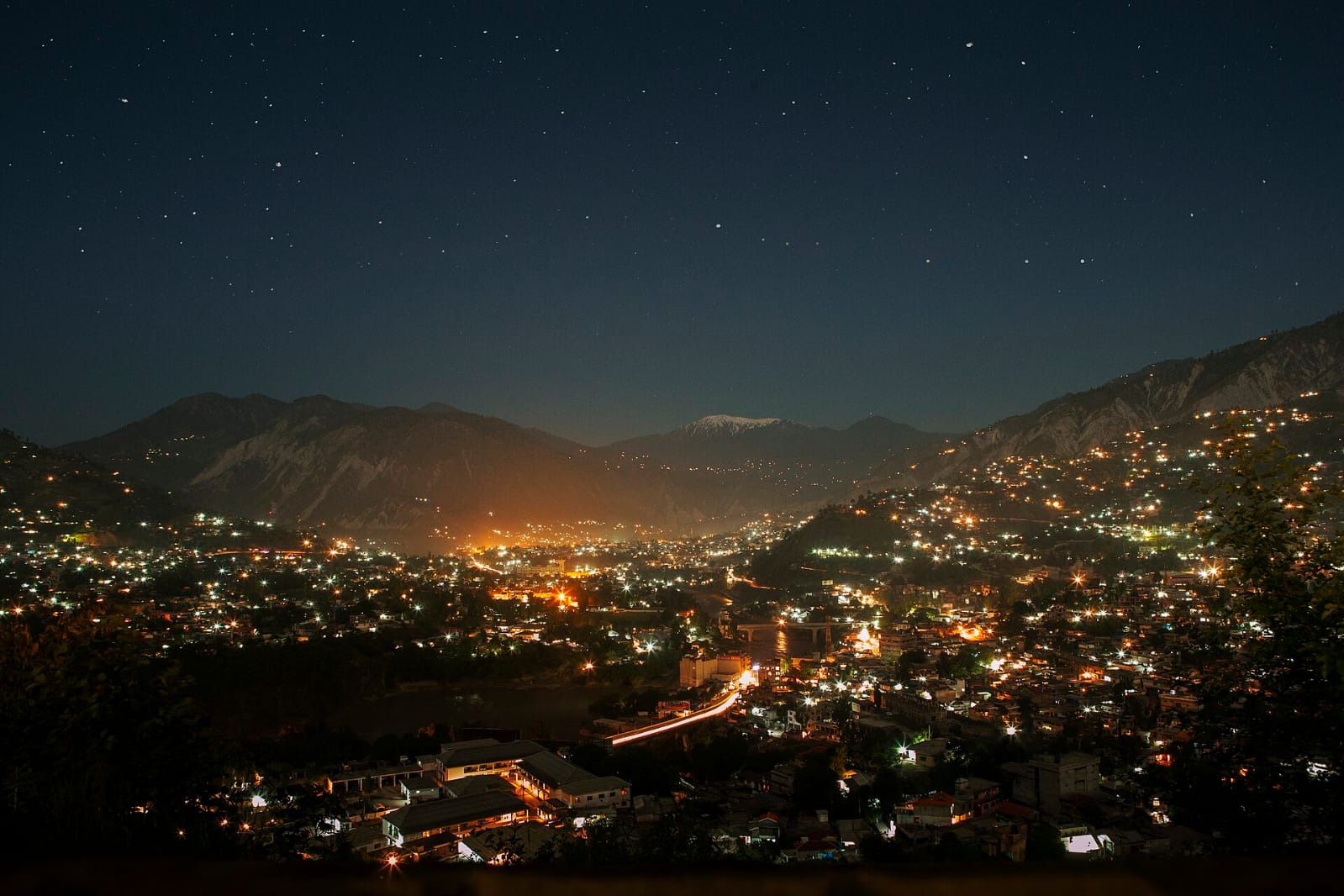
File pic:Muzaffarabad, PoK
Image source: Wikimedia Commons
