



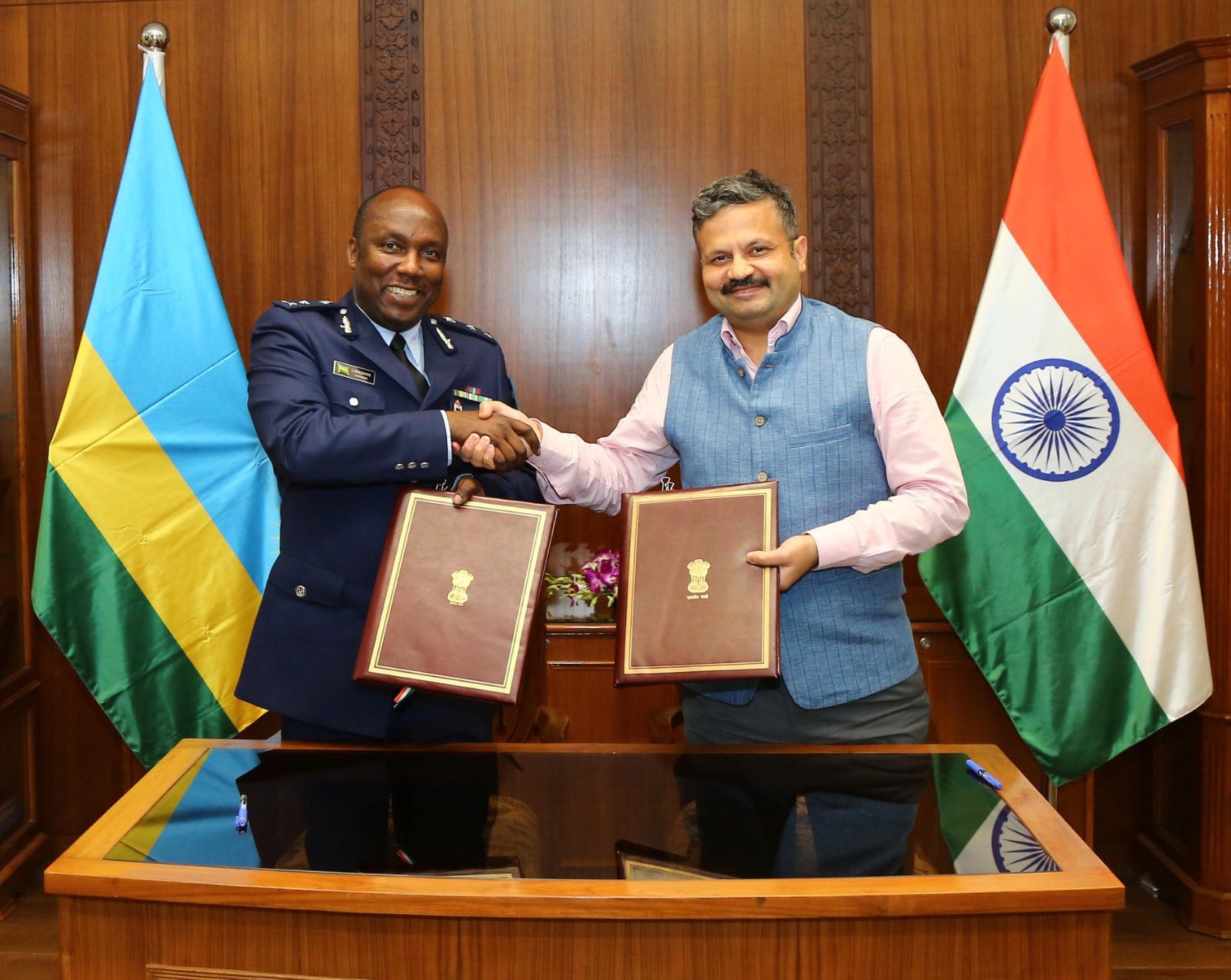
India and Rwanda have agreed to expand their bilateral defence partnership in the areas of military training, joint exercises, medical cooperation and defence industry collaboration during the second Joint Defence Cooperation Committee (JDCC) meeting held in New Delhi on July 6 and 7.
The two sides also approved an implementation plan with timelines to carry forward the decisions taken during the meeting.
The JDCC meeting was co-chaired by Joint Secretary in the Ministry of Defence Amitabh Prasad and Brig Gen Louis Kanobayier, Chief for Joint Force Development, Training and Doctrine (Chief J7) at the Rwanda Defence Force Headquarters.
The Indian delegation included representatives from the Department of Defence, Department of Defence Production, Defence Research and Development Organisation (DRDO), Ministry of External Affairs, Armed Forces Medical Services, Headquarters Integrated Defence Staff and the three Services.
On the sidelines of the meeting, the Rwandan delegation called on Defence Secretary Rajesh Kumar Singh and briefed him on the new areas of bilateral defence cooperation identified to further strengthen the partnership between the two countries.
The delegation also interacted with representatives of the Indian defence industry and was briefed on India’s expanding defence manufacturing ecosystem, indigenous capabilities and technological advancements. Both sides identified potential areas for defence industrial cooperation and agreed to accelerate collaboration in the sector.
As part of the visit, the delegation toured the Army Hospital (Research and Referral), where members were given an overview of India’s military medical capabilities, advanced healthcare infrastructure and medical support system for the armed forces.
India and Rwanda signed a Memorandum of Understanding on defence cooperation in July 2018 during Prime Minister Narendra Modi’s visit to Rwanda. According to the Ministry of Defence, the successful conclusion of the second JDCC meeting reflects the shared commitment of both countries to deepen defence ties, strengthen institutional cooperation and expand bilateral engagement.
