



-Pratyusha Mukherjee
As India approaches the first anniversary of the deadly 2025 terror attack in Pahalgam, the Indian Army has reiterated its firm stance against terrorism, declaring that justice has been delivered and the nation remains vigilant.
The attack on April 22, 2025, shocked the country when militants targeted civilians in the popular tourist destination, killing 26 people. The brutality of the assault—where victims were reportedly identified by religion before being shot—sparked nationwide outrage.
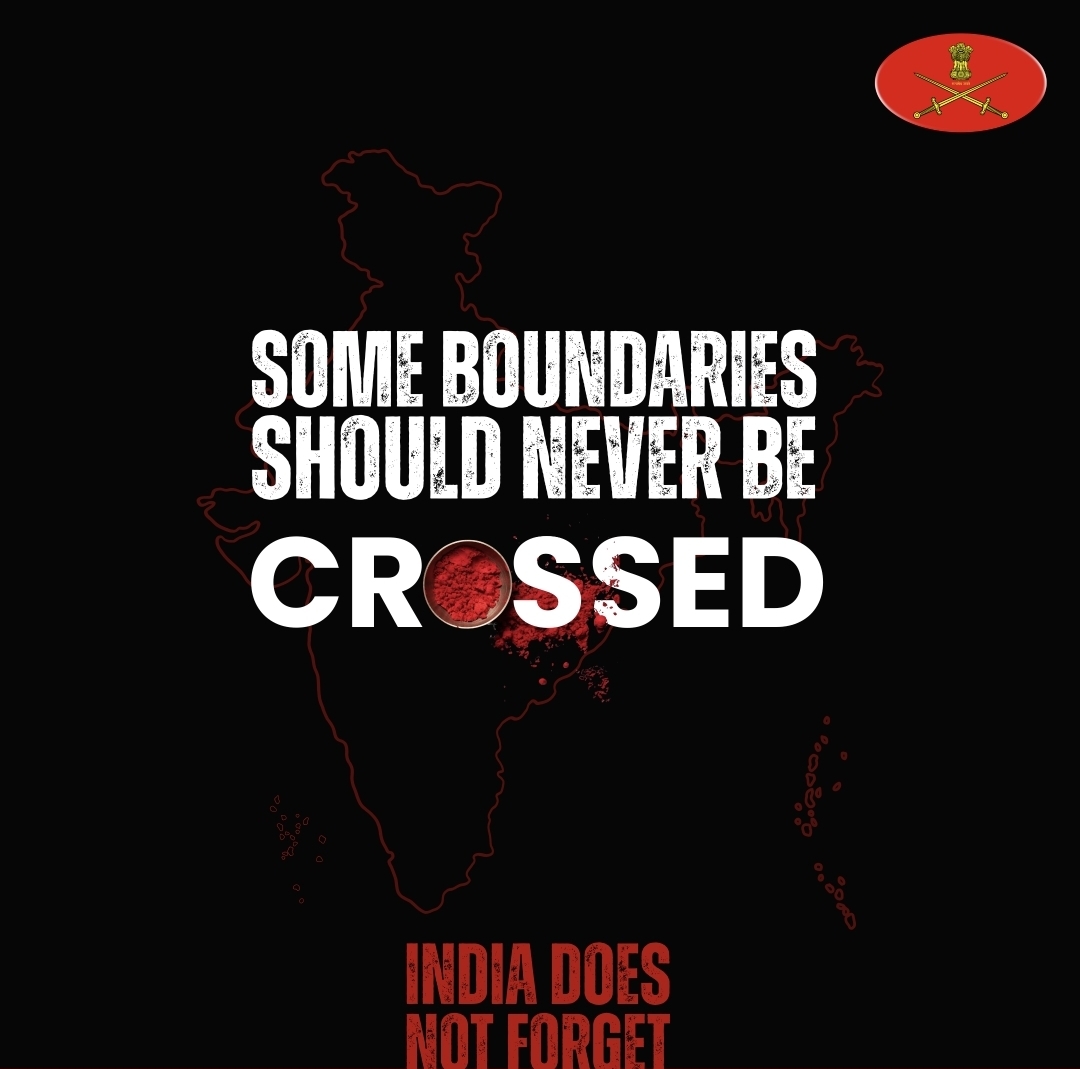
“India Does Not Forget”:
Ahead of the first anniversary of the deadly Pahalgam terror attack, the Indian Army’s public information wing issued a powerful message that reflected both resolve and unity. “When the boundaries of humanity are crossed, the response is decisive. Justice is served. India stands united,” the Army said in a post on X.
Operation Sindoor and Aftermath:
Launched on May 7, 2025, Operation Sindoor saw co-ordinated action by India’s armed forces targeting terror infrastructure across the border.
Key outcomes included:
Destruction of nine major terror launchpads
Strikes against groups such as Lashkar-e-Taiba, Jaish-e-Mohammed, and Hizbul Mujahideen reported neutralization of over 100 militants.
The operation led to a brief but intense four-day confrontation between India and Pakistan, involving drone strikes, cross-border shelling, and retaliatory action before a ceasefire on May 10, 2025.
Continued Security Measures:
Subsequent operations, including Operation Mahadev, resulted in the elimination of three militants linked to the Pahalgam attack. Alongside military steps, India also suspended trade ties and key bilateral agreements with Pakistan.
Lasting Human Impact:
Despite these actions, the emotional and economic toll remains. Families of the victims continue to struggle, with many still awaiting promised government support, including jobs and long-term assistance.
Strategic Shift in Policy:
Prime Minister Narendra Modi has emphasized that acts of terror will be met with decisive retaliation, targeting both perpetrators and their sponsors.
Army Chief Upendra Dwivedi reinforced this message, stating that supporters of terrorism will not be spared.
This marks a clear shift in India’s approach—from restraint to calibrated, forceful response. Senior leadership described Operation Sindoor as a landmark example of coordination between the Army, Navy, and Air Force.
Beyond Conventional Warfare:
Post-operation, India has focused heavily on advanced capabilities, including drone and counter-drone systems, enhanced surveillance, and information warfare—signaling that future conflicts will be more technology-driven.
Controlled but Firm Approach:
The Army also highlighted its restraint, noting that strikes avoided religious prayer times such as Namaz.This reflects a strategy combining ethical considerations with firm security measures.
Symbolism and Messaging:
Statements like “Ready to strike, trained to win” and remarks by Modi—warning that “Sindoor can turn into gunpowder”—underscore both emotional resolve and strategic signaling.
The Bigger Picture:
The Pahalgam attack was more than an isolated incident. It marked a turning point in India’s security posture, shaping military, diplomatic, and technological strategies that continue to influence regional dynamics.
Bottom line:
On the anniversary, the Indian Army’s message to Pakistan is:
No tolerance for terrorism.
Retaliation will be swift and precise.
India is prepared—militarily, technologically, and psychologically .
India’s message remains clear—terrorism will face swift, precise retaliation, and such attacks will neither be forgotten nor tolerated.
(All articles are original works of Ms.Pratyusha Mukherjee, and some news media also shared the same. Any modification or usage needs to be approved by her only)
